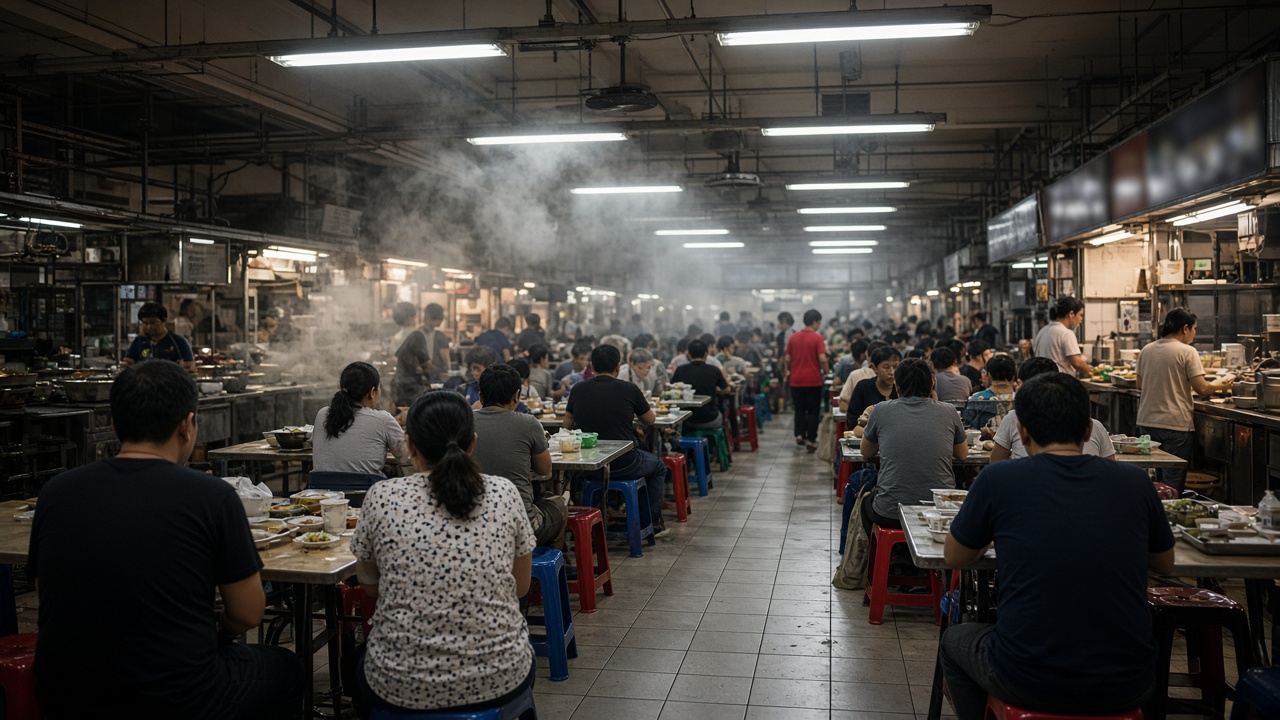
Hawker stalls are quietly changing plate economics as food costs climb, and the Health Promotion Board's latest dish analysis shows the trade-off landing on waistlines: median calories for 182 commonly eaten items rose from about 560 to 600 per serving between 2023 and 2025.
CNA reporting from stall visits and HPB data describes operators trimming beef or lamb portions while topping up fries, coleslaw or rice so customers still leave full without a price hike on the signboard. HPB said larger portions, recipe changes or both could explain the calorie climb.
Stall-level choices
Western food vendors told reporters they cut meat from about 320 grams to 280 grams while increasing cheaper sides. Noodle and rice sellers said they add extra carbohydrates when protein suppliers raise quotes. The pattern matches HPB's observation that when protein prices spike, hawkers often pad meals with rice or noodles to preserve the value proposition heartland diners expect.
About 27 dishes saw fat account for a larger share of total calories, with fat's slice rising an average of seven percentage points as protein or carbohydrate shares fell.
Sodium riding along
Median sodium in dishes without lower-sodium ingredients rose about 10 percent, from 350 milligrams to 390 milligrams per 100 grams. That feeds into a broader National Nutrition Survey picture in which average daily sodium intake reached 4,000 milligrams — double the 2,000 milligram target — even as sugar intake improved.
Consumers interviewed by CNA said hawker food tastes saltier, yet many hesitate to ask for less sauce for fear of offending cooks or getting a bland plate.
Programmes versus pressure
MOH told Parliament earlier this year that more than 9,200 outlets participate in the Healthier Dining Programme, offering at least one lower-calorie or lower-sodium option. Uptake of lower-sodium salt remains uneven; hawkers cite taste risk and higher ingredient prices around S$5 per kilogram versus ordinary salt.
Until demand shifts, HPB's numbers suggest cost inflation is rewriting recipes faster than labelling campaigns. For households eating twice a day at coffee shops, the portion shift is invisible on the menu but visible on the nutrition ledger.
What diners can ask for
HPB promoters encourage customers to request less sauce or half portions of noodles, yet social pressure at crowded stalls makes those requests rare. Nutritionists recommend sharing dishes or choosing stalls that display Healthier Choice identifiers, though those logos cover only a subset of menus.
Rent and utility deposits remain the hidden driver: when town councils pass through costs, stallholders say they cannot absorb protein inflation without changing recipes. HPB's median calorie figure is therefore as much an economic indicator as a dietary one.