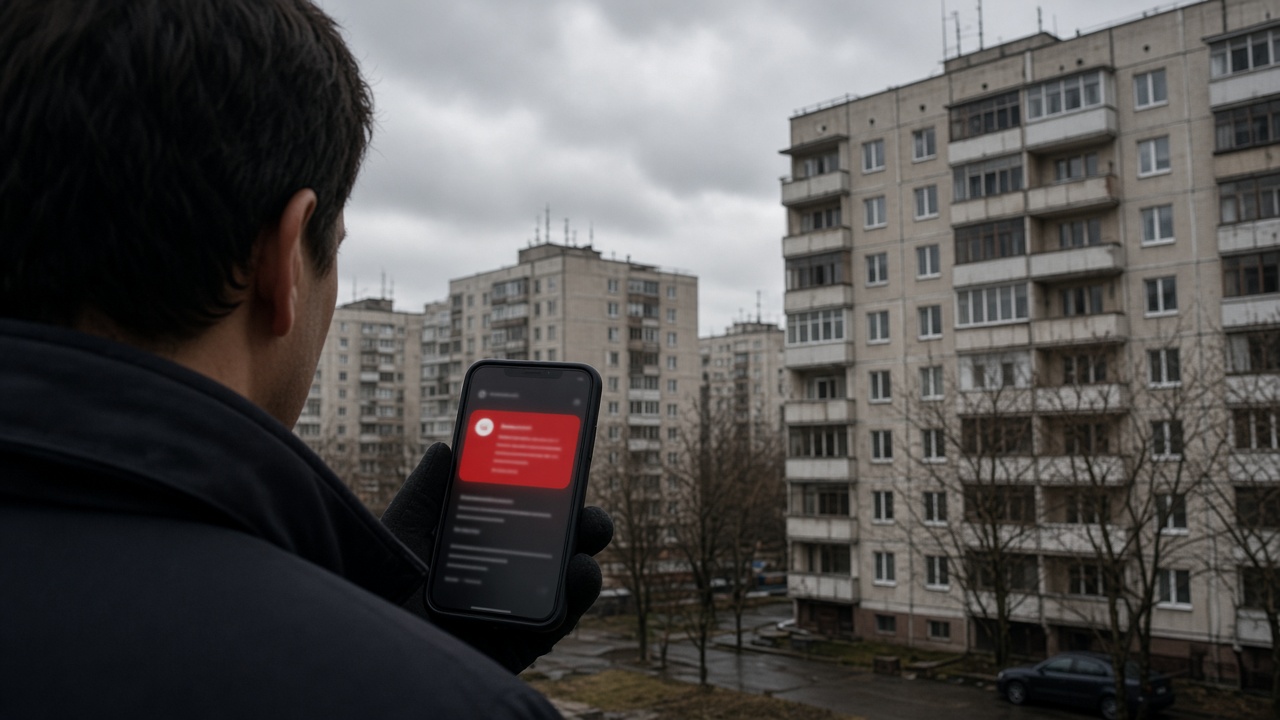
Ukraine and Russia both reported intrusions into government-linked mobile alert services late Sunday, sending fabricated warnings about nuclear weapons, chemical attacks and mass-casualty strikes to millions of phone users on either side of the front line.
The Ukrainian air force said the country’s public air-raid application appeared to have been subjected to “enemy influence” shortly before 11 p.m. local time. Red-level alerts spread nationwide, including messages about radiation, chemical weapons and street combat. One bogus notice claimed Russia had fired an Oreshnik hypersonic missile capable of carrying a nuclear warhead.
What users saw in Ukraine
Air force spokespeople posted on Telegram that there was no radiation threat and urged residents to follow official channels. The Ministry for Digital Transformation said the app was temporarily suspended for maintenance after it was “apparently compromised,” while conventional sirens and other warning systems continued to operate.
Reuters reported that several of the fake messages arrived in Russian, a language Ukrainian law requires agencies to avoid for domestic communications — a detail many users said helped them spot the hoax. All-clear notices followed each false alarm. On the streets of Kyiv, residents told broadcasters they treated the burst as a nuisance layered onto nightly drone and missile alerts rather than a new battlefield escalation.
Parallel breach in Russia
A few hours later, Russia’s Ministry of Emergency Situations told state agency TASS that its mobile application had suffered a “massive cyberattack” that pushed false information to the public. A screenshot circulated by the pro-Ukrainian partisan network Atesh showed a crude alert telling Russians that nuclear warheads mounted on Ukrainian drones were inbound and advising people to hoard three weeks of food.
Moscow stressed that the app is a supplementary channel, not part of the core system of sirens, SMS, television and radio alerts. The ministry said experts were restoring service and asked citizens to rely on its website and verified social accounts. The Washington Post and BBC both noted the informal, profanity-laced wording of the Russian hoax, a pattern analysts associate with hacktivist groups rather than formal military cyber units.
Attribution and what comes next
Neither government linked the two incidents, and independent researchers cautioned against treating them as a coordinated operation without forensic evidence. Ukrainian officials framed the breach as another attempt to panic civilians already exhausted by nearly four years of air raids. Russian statements minimized impact while promising a same-day fix.
Security researchers said the episodes highlight how single mobile apps have become trusted lifelines even where legacy warning infrastructure remains intact. Telecom and civil-defense agencies in both countries face renewed pressure to harden authentication on push-notification systems without slowing legitimate alerts during actual strikes.