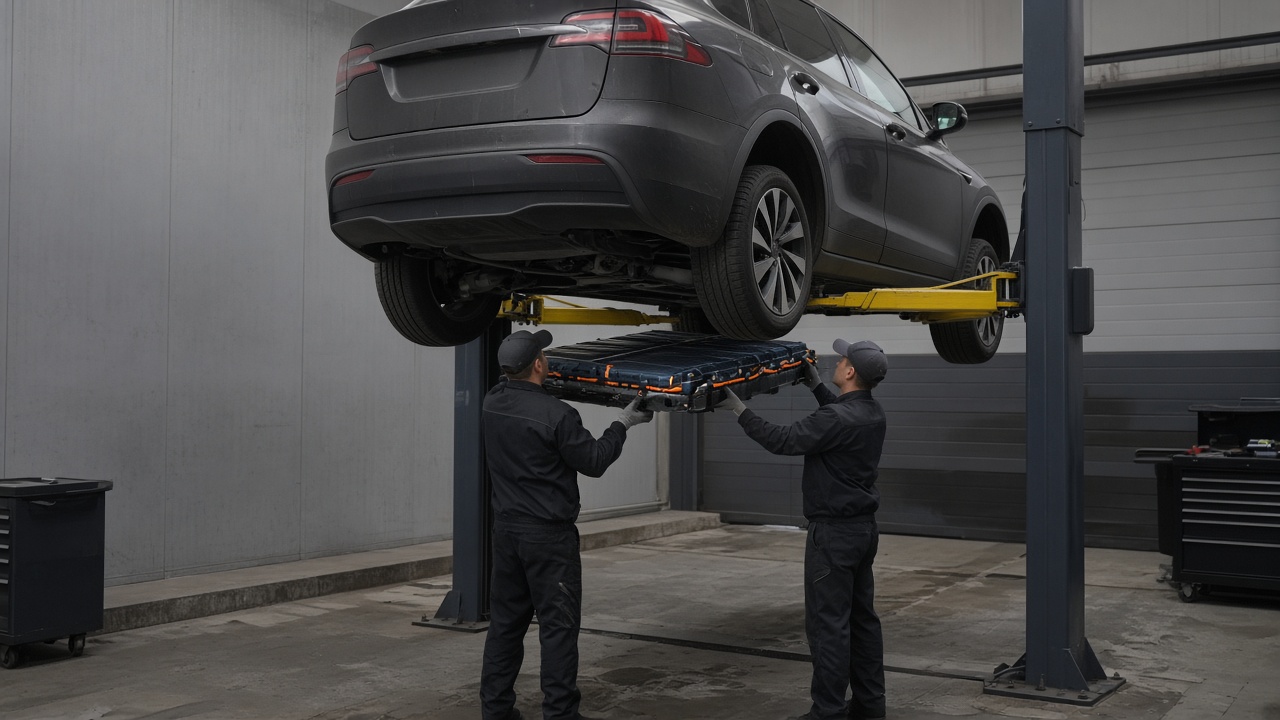
The first commercial-spec battery pack built on the MIH open EV platform arrived at Luxgen’s Miaoli prototype garage Monday, where engineers will mate it to an m7 test mule before winter durability runs on Central Taiwan mountain roads.
Pack specs the consortium published
MIH said the module uses an 800-volt architecture with a nickel-manganese-cobalt chemistry tuned for Taiwan’s humid coastal cycles rather than cold-climate range records. Gross pack energy is 91 kilowatt-hours, with a target curb-weight delta of 540 kilograms versus Luxgen’s prior gasoline crossover baseline—numbers the consortium posted to members Friday so suppliers could align crash structures.
Unlike early concept trays shown at trade fairs, this unit carries production-intent busbars, a service disconnect under the rear seat floor, and pressure vents aimed away from cabin ingress points. Luxgen will log thermal camera footage during fast-charge sessions at a Taichung pilot station the automaker shares with a utility partner.
Why Luxgen goes first
Luxgen is the only MIH member with a running vehicle line and homologation staff in Taiwan. Fitting the pack to an m7 mule lets the consortium test software handshakes between MIH’s battery management stack and Luxgen’s existing domain controllers without waiting for a greenfield model. Industrial Development Bureau grants tied to local content rules also count pack assembly hours in Miaoli toward subsidy thresholds.
Competing members are still on computer-aided design sign-offs; Monday’s delivery is a hardware milestone, not a consumer launch date. Luxgen reiterated that retail m7 EV timing depends on Motor Vehicle Office crash retests after the pack swap.
Motor Vehicle Office reviewers said they will treat the m7 EV as a powertrain swap rather than a new model if crash structures meet prior gasoline test thresholds, a classification that could shorten homologation if December sled data cooperates.
Supply chain notes
Cell modules come from a Kaohsiung plant MIH described as a “pilot tier-one” without naming the corporate parent. Separators and cooling plates are Taiwan-sourced; only the battery management integrated circuit remains an imported part subject to export-license checks. MIH opened a service bulletin channel so independent repair shops can read state-of-health codes once the m7 fleet exists.
Pack logistics crews used escorted flatbeds from Kaohsiung to Miaoli over the weekend to avoid vibration bands that earlier prototypes logged on rough coastal roads. Luxgen filed photographic condition reports at arrival even though the modules moved under domestic automotive R&D exemptions.
Tests on the calendar
Engineers plan a six-week loop: urban stop-and-go in Taichung, sustained grades on Provincial Highway 8, and salt-fog exposure near Budai Harbor. Data feeds back to MIH’s cloud telemetry sandbox. If cell imbalance stays within three millivolts across modules, the consortium will authorize a second pack for a crash sled test at an Hsinchu lab in December.
Test drivers will carry duplicate CAN loggers after a software glitch last month erased ten minutes of uphill data on a prototype mule, a redundancy MIH now mandates for all member road loops.
Luxgen service managers said workshop manuals for the m7 EV variant will not ship to dealers until the crash sled passes, keeping independent garages on gasoline documentation for another quarter. MIH members without vehicle lines may still license telemetry APIs once the sandbox opens read-only dashboards in January.
Crash engineers in Hsinchu said the pack’s service disconnect location forced a redesign of rear seat mounting brackets, a delay Luxgen absorbed rather than pushing homologation dates. MIH posted torque specs for independent shops that convert gasoline m7 fleets to the EV pack under a separate retrofit program not covered by Monday’s delivery.
Industrial Development Bureau staff attended Monday’s handoff and photographed serial numbers for grant compliance files, a step Luxgen said adds bureaucracy but speeds subsidy reconciliation if crash tests slip into January.
MIH’s telemetry sandbox will ingest CAN bus logs from the m7 mule within forty-eight hours of first drive, giving members a preview of state-of-charge curves before the cloud dashboard opens to outsiders.