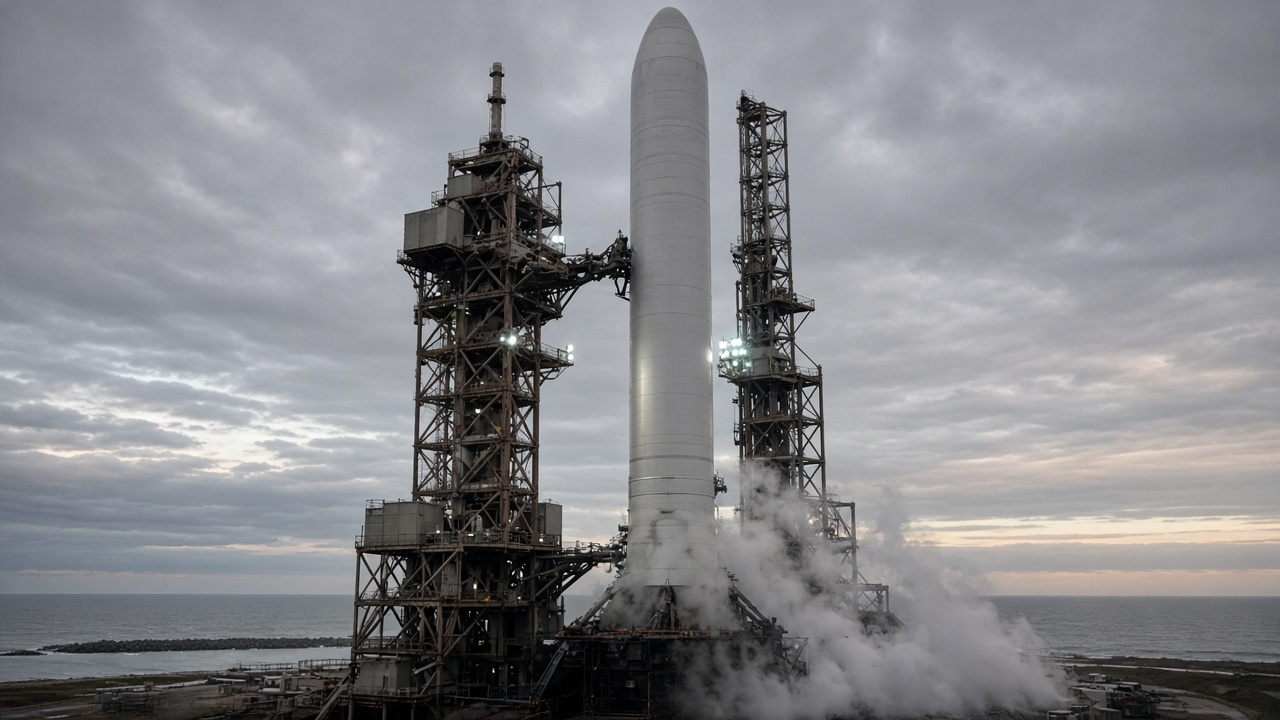
The Indian Space Research Organisation confirmed that the GSAT-7R military communications satellite, also designated CMS-03, separated cleanly from the LVM3-M5 rocket after a Sunday lift-off from the second launch pad at the Satish Dhawan Space Centre on Sriharikota island.
Mission controllers reported normal performance through the cryogenic upper stage burn, placing the spacecraft on a path toward its final geostationary slot over the Indian Ocean region where the Navy operates surface and submarine assets.
Payload capabilities
GSAT-7R carries multi-band transponders designed for secure ship-to-shore links, unmanned aerial vehicle relays and maritime domain awareness feeds. Defence officials said the satellite replaces and expands capacity first introduced with GSAT-7, which has been in service since 2013.
The spacecraft bus was built by ISRO with payloads integrated at facilities in Bengaluru. Weighing roughly 4,400 kilograms at lift-off, it required the full thrust envelope of the LVM3, previously used for Chandrayaan-3 and commercial OneWeb missions.
Launch vehicle track record
Sunday’s flight was the fifth operational LVM3 mission and the seventh consecutive successful launch for the heavy-lift vehicle family. Engineers moved the integrated stack to the pad on 26 October after a standard readiness review, avoiding the monsoon-related delays that sometimes constrain coastal launches.
Commercial customers watching the mission said a clean insertion burn keeps ISRO competitive for future geostationary bids, even as NewSpace firms pitch smaller dedicated launches for low-earth-orbit constellations.
Operational timeline
ISRO will now conduct orbit-raising manoeuvres using the satellite’s own propulsion system before handing operational control to the Navy’s space cell. Tests of encrypted waveforms and hand-offs with existing ground stations in Mumbai and Visakhapatnam are expected to run through December.
Naval planners said improved throughput should reduce reliance on foreign commercial bandwidth when task groups deploy east of the Malacca Strait, though officials declined to detail specific ship classes that will migrate to the new links first.
Broader space stack
The launch caps a busy year for ISRO that included navigation satellite NVS-03 on a GSLV flight and multiple PSLV commercial rides. Budget documents show the Defence Space Agency requesting additional funding for ground segment upgrades tied to GSAT-7R, signalling that the satellite is only one piece of a wider network refresh.
For India's space industrial base, the mission demonstrates that domestically built comms buses can scale to four-tonne class without importing full platforms, a milestone vendors hope will translate into export orders for friendly navies in the Indian Ocean rim.