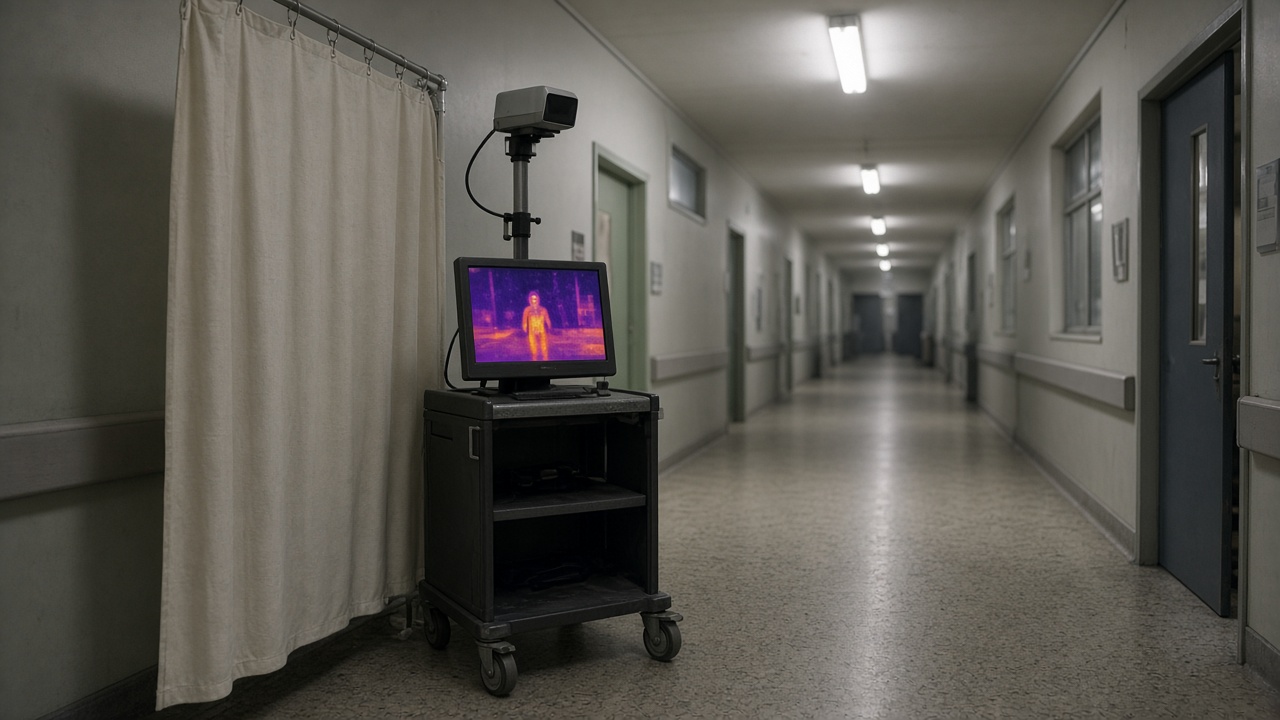
Karnataka’s health department signed an expansion order for Niramai Health Analyser’s artificial-intelligence screening tool, deploying thermal-imaging kiosks in ten district hospitals where mobile mammography vans rarely visit more than twice a year.
The Bengaluru-based startup’s system uses a high-resolution thermal camera and on-device software to flag asymmetries that radiologists review remotely, offering a low-radiation first pass for women who skip formal mammography because of travel cost or stigma.
How the AI stack works
Patients stand before the camera for a few minutes while the model compares heat maps against a normative atlas trained on South Asian body types. Suspicious scans route to partner radiologists over a secure telemedicine link; negative cases receive counselling on self-examination rather than immediate referral for ultrasound.
Niramai has published peer-reviewed work on sensitivity trade-offs versus standard mammography, acknowledging that thermal screening is a triage tool rather than a diagnostic replacement. Karnataka’s order requires dual reading for any positive AI flag before biopsy referral.
Public health economics
District hospitals receive a fixed per-scan fee lower than the cost of operating a diesel mammography van, with the state paying from non-communicable disease budgets rather than the national Ayushman Bharat package. Hospital administrators in Hubballi and Kalaburagi said they can run evening slots without overtime radiologists on site every day.
Women’s health activists welcomed the geography but asked for explicit consent forms in Kannada and Urdu, noting that prior pilots failed when patients did not understand that AI, not a doctor, performed the first read.
Data governance
The contract mandates that thermal images stay on encrypted servers inside India, with de-identified tensors used for model retraining only after patient opt-in. Niramai said it will not share data with insurance underwriters, addressing a concern that screening results could affect policy pricing in voluntary health markets.
Scale beyond Karnataka
Other states watched the tender after Tamil Nadu ran a smaller Niramai pilot in Coimbatore. If Karnataka hits its target of 120,000 scans in the first year, officials said they would bundle the next tender with cervical screening kits from a separate vendor rather than awarding a single digital health monopoly.
For Ananya Krishnan’s beat, the story sits at the intersection of edge AI and primary care: a device that runs without continuous cloud inference, built for towns where fibre backhaul is still uneven. The real test will be biopsy conversion rates three quarters from now, not the launch press release.