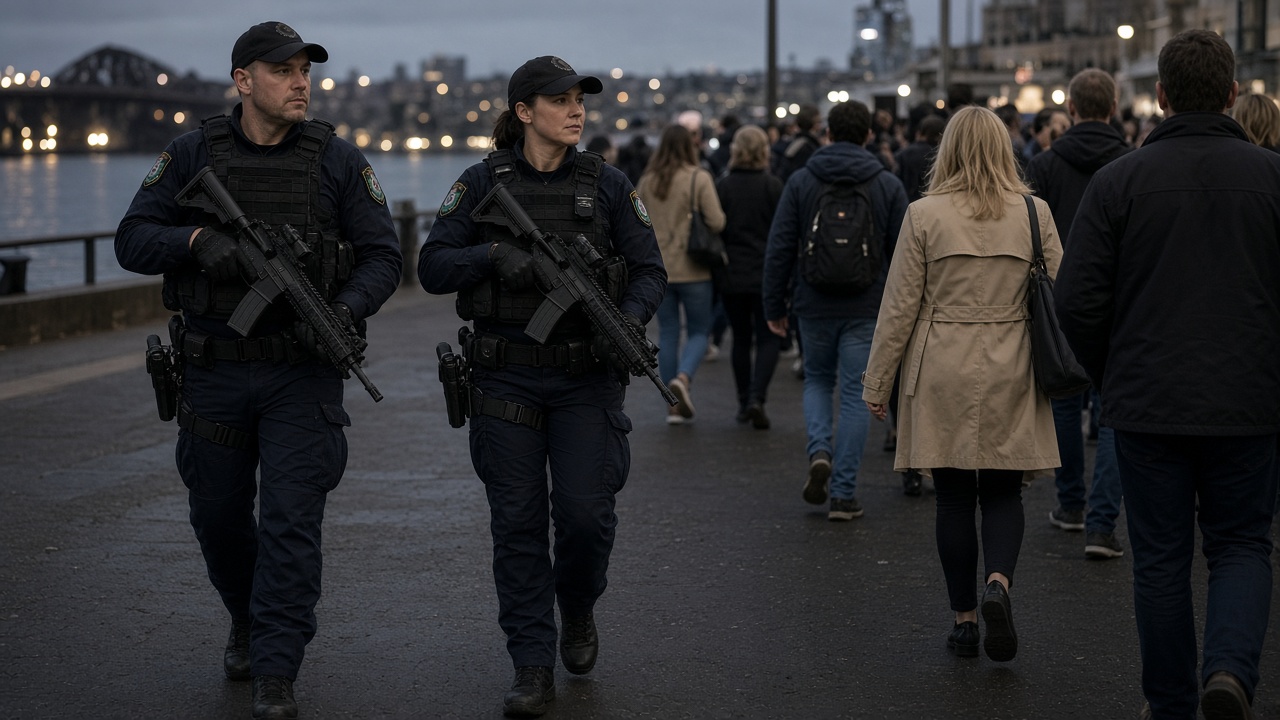
Officers carrying long-arm rifles began visible patrols across Sydney on Sunday as New South Wales rolled out a permanent unit created after the December 2025 mass shooting at Bondi Beach. Police Minister Yasmin Catley said the Armed Response Command went operational at midnight and had already deployed to Liverpool, Parramatta, the eastern suburbs and the central business district by mid-morning.
What the new command is meant to do
NSW Police describe the Armed Response Command as a rapid-reaction capability for active armed offender incidents, not a replacement for general duties officers. Commander Detective Superintendent Andrew Evans told reporters the unit would focus on "priority site fundamentals" and deterrence, using a round-the-clock operations centre in Surry Hills to push intelligence to dedicated vehicles.
Evans said about 100 officers completed six-and-a-half months of training that included rifle work, high-speed driving and tactical first aid. The command is budgeted to grow to 250 officers and 28 civilian intelligence staff by 2027, supported by A$94.3 million in state funding.
Patrols are scheduled at crowded public spaces, major events, sporting venues and places of worship. Evans said the unit logged more than 70 tasks and about 60 hours on site in its first 24 hours of operations.
Why ministers cite Bondi
The December 14, 2025 attack on a Hanukkah celebration at Bondi Beach killed 15 people, including a child, in Australia's deadliest mass shooting in nearly three decades. Royal Commission evidence aired in May included testimony that uniformed officers at the scene carried standard sidearms while assailants used long guns.
Catley said NSW Police studied overseas responses to major attacks before proposing the command. "This was a response that the NSW Police came to us with, after going overseas and really getting down into the weeds of what is happening globally," she told a Sunday press conference.
Commissioner Mal Lanyon said last month the command would not be used for protest policing or prolonged sieges. Catley has declined to rule out deployments at demonstrations, saying risk assessments would sit with police commanders.
Support and scrutiny
Sections of Australia's Jewish community have welcomed the increased capability. Alex Ryvchin of the Executive Council of Australian Jewry told broadcasters that while no one wants military-style weapons on suburban streets, "the sight of body bags is far worse."
Amnesty International Australia urged safeguards so the unit cannot intimidate peaceful assemblies. Strategic campaigner Andrew Witheford said the state should guarantee the command will not suppress lawful protest and should face independent scrutiny.
The command will initially operate alongside Operation Shelter, the high-visibility policing program launched amid rising antisemitic and Islamophobic incidents. The government expects Operation Shelter to scale back as the new unit takes on more patrol duties.
Evans said officers would carry Australian Combat Assault Rifles selected after field testing, travelling in purpose-built vehicles designed for faster response across metropolitan Sydney. Catley described the setup as a "step up" while stressing that existing police commands continue their regular work.