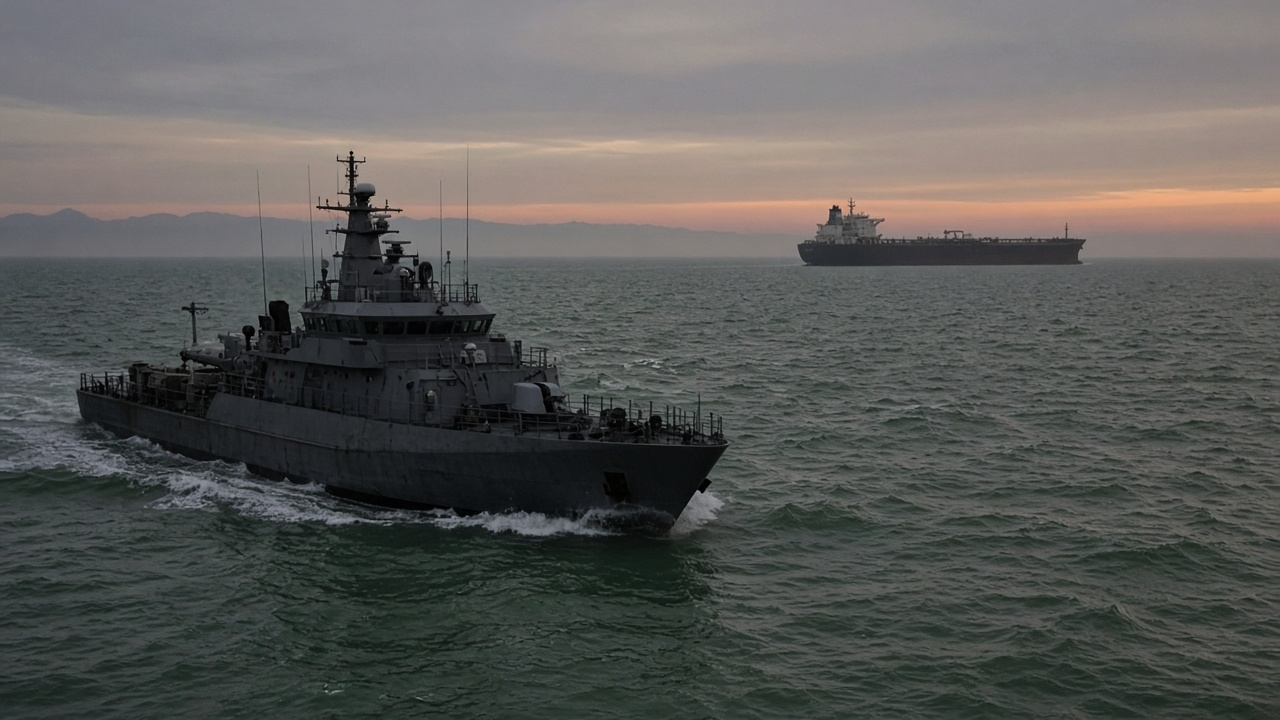
Washington conducted defensive strikes against Iranian targets in the Strait of Hormuz on Monday, a U.S. official told The Associated Press, inserting fresh military risk into a Middle East crisis that has already pushed global oil prices higher and shaped campaign messaging on the eve of U.S. midterm elections.
The official did not specify which assets were hit or whether any U.S. service members were injured. The Pentagon had not published a detailed strike timeline by late Monday Pacific time, leaving open questions about whether the action was tied to shipping safety, retaliatory fire, or broader deterrence messaging as voters prepared to cast ballots Tuesday.
Strait diplomacy and election timing
The strikes landed on the same day Iran said it had a two-day plan to reopen the Strait of Hormuz and resume nuclear talks with the United States. Oil markets have whipsawed for weeks on Hormuz closure threats and partial reopening signals; Brent crude settled sharply lower on Monday even as security incidents continued in the Gulf.
Israeli Prime Minister Benjamin Netanyahu, meanwhile, has been urging the Trump administration to carry out another wave of strikes on Iran, regional officials in the Middle East told the AP. That pressure collides with President Donald Trump’s public emphasis on diplomatic engagement with Tehran in the run-up to the vote, when control of Congress could hinge on pocketbook issues including fuel costs.
Regional spillover
Elsewhere in the region, Yemen’s Iran-backed Houthi rebels said Saudi Arabia struck the port of Ras Isa in Hodeida province and set fire to ships and commercial freight trucks along Yemen’s Red Sea coast. Saudi Arabia did not immediately confirm the claim in AP’s Monday roundup, but the report underscores how Gulf security incidents are multiplying beyond the Hormuz chokepoint.
Anadolu Agency’s Monday briefing also noted a localized ceasefire around the Ukrainian city of Oleshky had expired without reported violations in that pocket, even as fighting continued elsewhere—reminding Washington’s planners that the Hormuz decision sits inside a crowded global security map.
What commanders and voters watch next
For U.S. Central Command and allied navies, the immediate test is whether commercial traffic can move without further escort battles or Iranian harassment. For the White House, the political test is whether voters interpret Monday’s action as necessary defense or as escalation that could raise gasoline prices before polls open.
Congressional candidates in energy-producing states have already framed Middle East risk as a kitchen-table issue. A strike disclosed without a full Pentagon account could fuel demands for classified briefings if either chamber changes hands after Tuesday’s results.
Iran’s two-day reopening timeline and the U.S. strike report together suggest neither side is stepping fully back from coercive pressure. Diplomats meeting in Qatar and other Gulf capitals will watch whether shipping insurers treat the strait as navigable by midweek or whether premiums spike again after the U.S. action becomes clearer.
Until the Defense Department releases imagery, casualty figures, or a named operation, analysts caution against treating early official characterizations as the full story. In Hormuz crises, the first hours often mix confirmed naval engagements with claims from militia partners and adversary media.