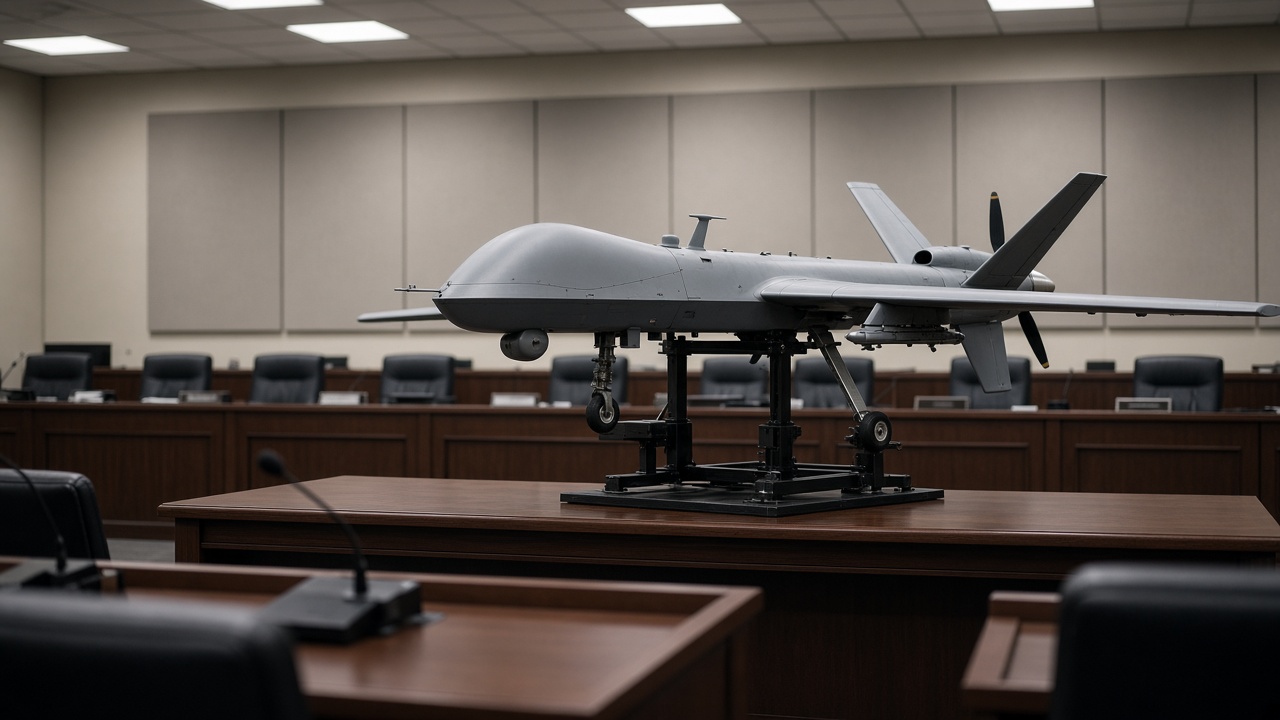
Lawmakers on the Legislative Yuan’s foreign and defense affairs subcommittee questioned a proposed sustainment tranche for Shield AI V-BAT unmanned aircraft Monday, drilling into spare propulsion modules, ground-station telemetry contracts, and whether overseas training sorties require a separate appropriation line.
What the ministry asked for
Defense officials tabled a NT$1.86 billion package covering three fiscal years of parts, firmware support, and contractor field service for V-BAT units already accepted into test squadrons. The request excludes new airframes; it funds keep-alive for electro-optical turrets, satcom relay pods, and battery swap cycles the ministry logged during summer exercises off Orchid Island.
Shield AI’s local agent testified that sustainment pricing follows U.S. Foreign Military Sales manuals with a Taiwan addendum for humidity sealing on avionics bays—a line item lawmakers asked to compare against domestically built rotary-wing UAV programs.
Committee friction points
Opposition legislators pressed on dual-use telemetry: whether maintenance servers phone home to U.S. clouds during downtime. Ministry counsel said logs stay on Taiwan-controlled racks except for encrypted firmware bundles delivered quarterly. Proponents countered that delaying sustainment would idle simulators purchased in the prior capital bill.
Ministry logistics officers testified that spare propulsion modules shipped from California in August already show corrosion on connector boots, evidence they said supports buying the three-year sustainment bucket now rather than spot-ordering parts after failures.
Budget office staff noted the tranche sits inside the broader “asymmetric air” envelope rather than naval hull accounts—a classification choice that affects how much slack remains for indigenous cruise missile production lines.
Training offshore
A separate annex lists twelve instructor-led sorties in U.S. desert ranges for tactics the ministry said it cannot replicate in congested Taiwan airspace. Minority members asked why those slots were not bid among allied trainers in Japan or the Philippines; officials answered that V-BAT schoolhouses exist only in California and Utah today.
Ministry budget writers said the sustainment tranche assumes forty flight hours per airframe annually, a figure opposition staff called optimistic given Orchid Island weather cancellations in summer.
Timeline
The subcommittee passed a motion to report the package to the plenary with a nonbinding request to publish redacted telemetry audit results within ninety days of first payment. Full chamber debate is scheduled after the autumn recess, when coalition leaders expect a bundled vote with submarine communication cable redundancy funds.
Defense researchers outside the ministry told committee aides that V-BAT sustainment pricing embeds assumptions about flight hours that may not match Taiwan’s coastal humidity maintenance cycles, a mismatch proponents promised to address in quarterly expenditure reports if the tranche passes.
Shield AI’s field team will embed two contractors at Orchid Island simulators through December to train ministry technicians on humidity sealing checks before the first payment tranche clears.
Accounting officers asked whether sustainment payments should hit the books monthly or quarterly; ministry witnesses said quarterly bundles match Foreign Military Sales invoice cycles and reduce currency hedging costs on NT dollar appropriations.
Defense budget staff said reprogramming language would allow shifting up to NT$120 million from unused drone spares lines if telemetry audits slip, a fallback minority members said still leaves too little room for indigenous counter-UAS prototypes awaiting the same appropriation envelope.
Shield AI’s Taiwan counsel submitted redacted maintenance manuals showing humidity sealing steps differ from desert deployments, a nuance proponents said justifies the tranche even if airframe counts stay flat. Auditors asked for video logs of those steps on Orchid Island exercises before signing first payment.
Committee staff will publish a bilingual FAQ on how sustainment interacts with software export controls, answering lobbyists who confused firmware patches with new platform sales subject to separate approvals.
Plenary whips said the bundled vote with submarine cable redundancy funds may slip a week if telemetry audit language triggers a filibuster, a delay Shield AI’s agent said would not pause spare shipments already cleared by U.S. export licenses.
Coalition negotiators floated a side letter requiring the ministry to brief legislators if firmware updates change telemetry endpoints, a compromise minority members said they might accept if audit publication deadlines stay intact.