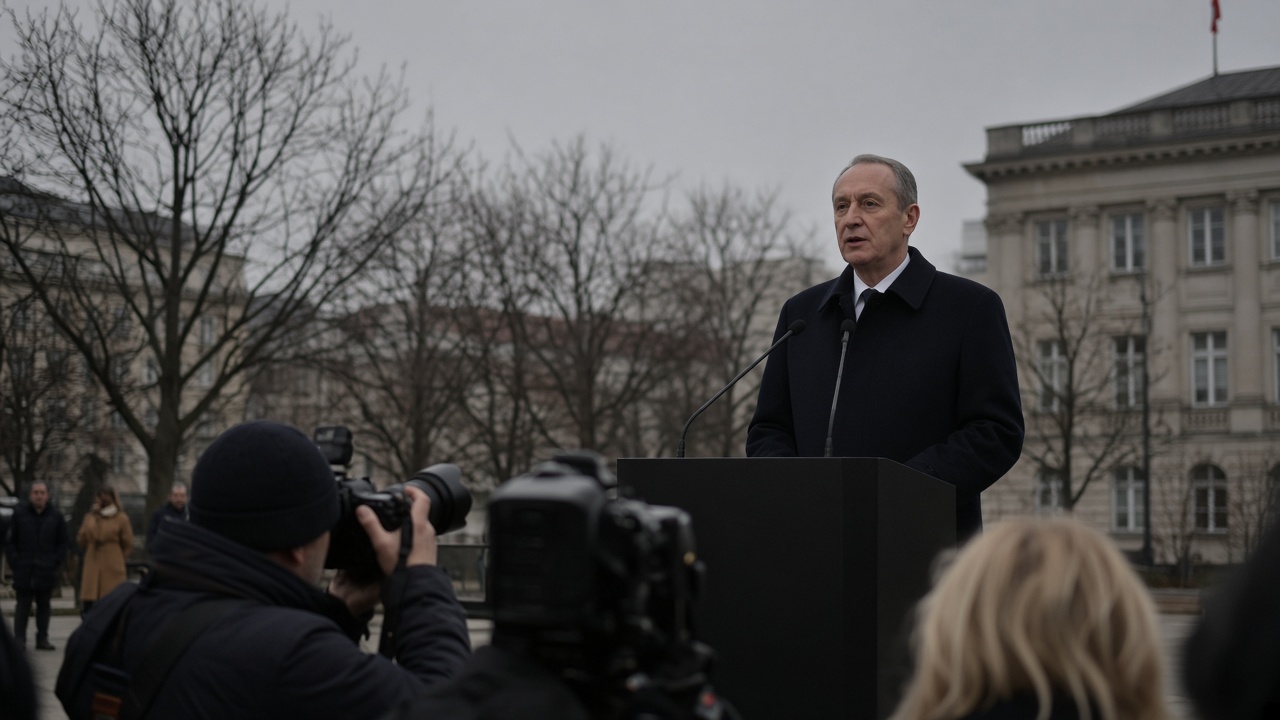
Polish Prime Minister Donald Tusk on Sunday accused President Karol Nawrocki of choosing a “forceful confrontation” over the judiciary and called on him to recognise judges elected by the lower house of parliament, the Sejm, as lawful members of the bench.
The public clash is the latest turn in a years-long dispute that has left Poland’s Constitutional Tribunal and Supreme Court divided over who may sit, who may rule, and which appointments Nawrocki will swear in. Tusk’s government argues that Nawrocki, a conservative allied with the former Law and Justice administration, is blocking nominees backed by the current coalition and prolonging a legal vacuum that affects everything from EU fund disbursements to ordinary civil cases.
What Tusk asked for
Speaking after a meeting of his Civic Coalition, Tusk said Nawrocki had “opted for a forceful confrontation” rather than accept the Sejm’s choices for open seats on the Constitutional Tribunal. Tusk urged the president to confirm those judges immediately, saying Poland cannot afford another winter in which two parallel benches each claim authority.
European Union officials have repeatedly warned Warsaw that unresolved rule-of-law questions could delay payments under the bloc’s recovery fund. Tusk’s team has framed judicial normalisation as a precondition for unlocking money meant for rail, energy and digital projects. Nawrocki’s office has countered that the president is defending the constitution against what it calls politically stacked appointments.
How the standoff reached this point
The conflict dates to the previous government’s overhaul of the judiciary, which the European Court of Justice and the Court of Justice of the European Union have said violated EU law. After Tusk returned to power in late 2023, his coalition passed legislation to unwind parts of that overhaul and to replace discredited members of the National Council of the Judiciary.
Nawrocki, elected president in 2025 with backing from Law and Justice, has refused to publish several acts tied to the reforms and has sworn in alternative judges to the Constitutional Tribunal. The result is dueling panels: one recognised by the government and EU institutions, another backed by the president’s camp. Lower courts have sometimes received contradictory guidance on which chamber to follow.
What happens next
Tusk said he would ask the Sejm to reassert its nominations and explore constitutional tools to compel publication of judicial appointments, though he did not detail a timeline. Opposition leaders aligned with Nawrocki accused Tusk of trying to capture the tribunal for his coalition, setting up a likely autumn of street protests and parliamentary obstruction.
Brussels is watching closely. The European Commission has kept Poland under an Article 7 procedure and has tied disbursements to milestones on judicial independence. Diplomats in Warsaw say neither side appears ready to compromise before local elections scheduled for next spring, when both camps will test whether voters reward confrontation or conciliation.
For now, the immediate question is whether Nawrocki will meet Tusk halfway on even a single batch of Sejm-elected judges. Until he does, Poland’s highest courts remain split—and the prime minister’s accusation of “forceful confrontation” signals that the fight is entering a louder, more public phase.