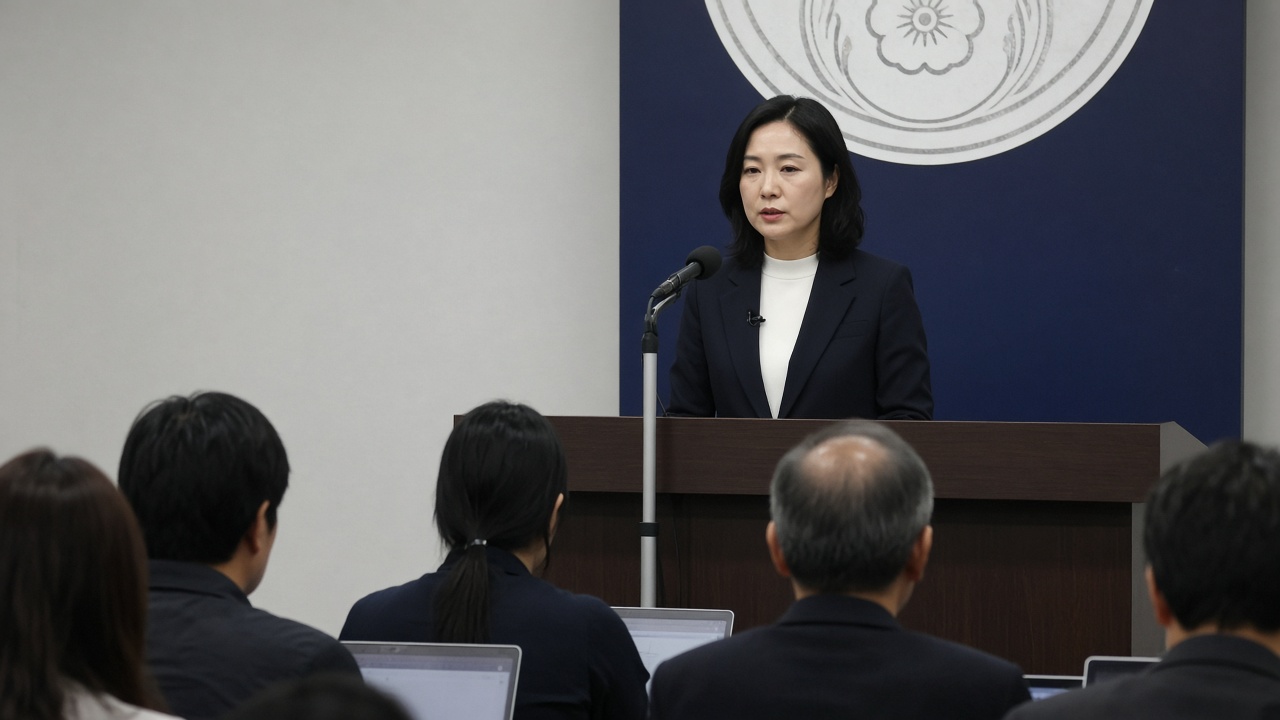
South Korea’s Foreign Ministry said Tuesday it is reissuing passports for all 168 people whose personal information was exposed online, including President Lee Jae Myung and first lady Kim Hea Kyung, after a passenger manifest tied to the presidential aircraft surfaced on a paid cybersecurity platform.
Ministry spokesperson Park Doo-soon told reporters in Seoul that officials requested investigations as soon as they confirmed the exposure and are working with the National Police Agency to determine how the file was disclosed. Park said the ministry currently views the incident as a data leak rather than a hacking case, while technical reviews of computers and email accounts linked to Lee’s June overseas schedule continue.
What the file contained
According to Korean broadcasters and follow-up reporting cited by English-language outlets, the uploaded material included Korean and English names, affiliations, job titles, dates of birth, passport numbers, and passport issuance and expiration dates. The list covered Cabinet members, Blue House and Foreign Ministry officials, presidential security personnel, and journalists traveling with the delegation.
KBS reported that the file was posted on June 2—about a week before Lee departed Seongnam’s Seoul Air Base on June 9 for a 10-day trip to Belgium, Italy, and France that included the Group of Seven summit. The data reportedly remained accessible for months before broader public disclosure this week prompted an emergency presidential office meeting and the passport replacement drive.
Operational and political fallout
Park said the ministry had the information removed from the site and is checking whether any additional personal data was exposed. He added there are no confirmed indications so far that the file spread further, but investigators will examine how the protocol office handled documents managed for the trip.
Reissuing passports for the president, the first lady, and senior security aides is a rare visible response that underscores how sensitive travel manifests are for protective details. Opposition lawmakers are likely to press for answers on whether an employee uploaded materials to an external scanning service—a scenario some Korean media raised pending the ministry’s internal probe.
Next steps for investigators
Police have opened a preliminary investigation, and the Foreign Ministry is running a parallel review of protocol-office procedures. Any finding of deliberate disclosure could trigger disciplinary action and broader reforms to how diplomatic security documents leave classified systems.
For Lee, the leak arrives as his government emphasizes “growth for all” budget messaging and prepares for high-profile foreign travel schedules. Clearing compromised passport numbers quickly reduces identity-theft risk, but the five-month gap between upload and public crisis will dominate National Assembly questioning about who knew what, and when the Blue House was informed after KBS flagged the file.
Industry groups say any framework will be judged on enforceable digital-trade chapters and clear disaster-cooperation drills, not signing ceremony optics alone.