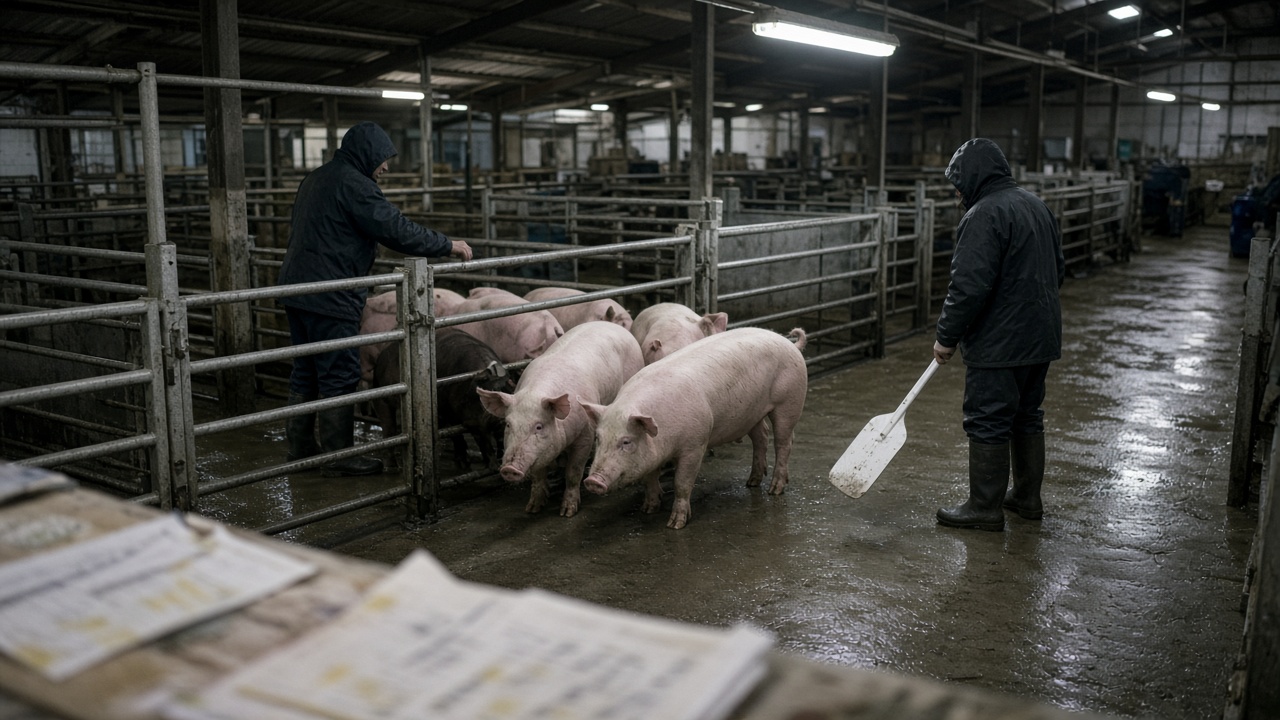
CJ CheilJedang notified franchise operators Monday that wholesale pork belly and shoulder contracts will reset higher after live hog auction prices climbed for a third straight week, forcing meat-heavy restaurant chains to choose between narrower margins and menu price hikes before winter grilling demand arrives. The food affiliate said the adjustment reflects feed and logistics costs tracked at national auction halls, not a discretionary marketing move.
What franchisees received
Letters sent overnight to CJ Foodville and other franchise meat counters spell out new transfer prices effective with November deliveries. Unit owners said the notice arrived without a grace period on frozen inventory already in store freezers, a timing issue franchise associations plan to raise at a meeting with the supplier this week. CJ CheilJedang told investors the repricing aligns with Ministry of Agriculture auction averages and trucking surcharges on refrigerated routes from Jeolla producers.
Auction floor dynamics
Livestock traders reported tighter supply as smaller farms delayed shipments while feed mills raised corn and soybean meal quotes linked to the weak won. Auction staff in Iksan and Yangsan logged heavier buyer participation from integrated processors competing for the same hogs that supply franchise butchers. Independent farmers said disease-control transport rules added hours to each load, shrinking the number of animals offered per session even when herd counts were stable.
Restaurant margin math
Franchise meat counters typically pass only part of wholesale moves to dine-in menus because parent brands cap promotional set meals during weekday lunch rushes. Operators in Suwon and Daegu said they may trim portion sizes on pork-heavy lunch boxes before touching headline prices, a tactic used during the 2022 feed spike. CJ’s letter reminded stores that parent-funded discount coupons will not expand to cover the full wholesale gap, pushing margin pressure back to owners.
Market structure
Other conglomerate meat suppliers have kept prices steady through early November, according to wholesale market sheets circulated on Nonghyup’s trading platform. Franchise consultants said CJ’s move could shift some operators toward alternate suppliers if parent-brand marketing requirements loosen. Emart Traders and Homeplus butcher counters are not bound by the same franchise contracts but watch CJ pricing as a benchmark for their private-label pork promotions.
Policy and consumer optics
Consumer groups asked the Fair Trade Commission to review whether simultaneous franchise repricing across regions limits independent bargaining. CJ responded that each contract allows quarterly cost pass-throughs tied to published auction indices. Government inflation reports already show pork contributing to dining-out inflation; another wholesale step makes it harder for the Bank of Korea to argue food prices are cooling even as energy costs ease.
What comes next
CJ CheilJedang scheduled a supplier webinar for mid-November to review herd outlooks and feed contracts into the Lunar New Year prep season. Franchise owners want clarity on whether promotional pork sets for office catering will receive partial rebates. If auction prices retreat, contracts allow a downward reset, but traders said winter demand usually keeps hog quotes elevated through December. Investors will read the change as a small working-capital shift inside the food affiliate rather than a group-level earnings swing, unless menu prices move widely enough to affect traffic counts at CJ-owned retail formats.
Supply chain detail
Feed mill operators in Jeonnam said soybean meal import costs rose when the won weakened against the dollar in late October, pushing up compound feed quotes that hog farmers pass through auctions within days. Cold-chain truckers added fuel surcharges on routes into greater Seoul, another line item CJ CheilJedang cited in its franchise bulletin. Smaller butcher franchises without parent support said they may rotate menu items toward chicken temporarily, though brand guidelines limit how far substitutions can go without approval.
Investor read-through
Equity analysts covering CJ CheilJedang treat protein inflation as a pass-through when franchise revenue shares hold steady. The listed food affiliate’s margin sensitivity depends more on seasoning and prepared meal mixes than on raw pork alone, but investor calls still ask management about protein volatility every quarter. Bondholders note working-capital swings when inventory values re-mark upward at franchise subsidiaries.