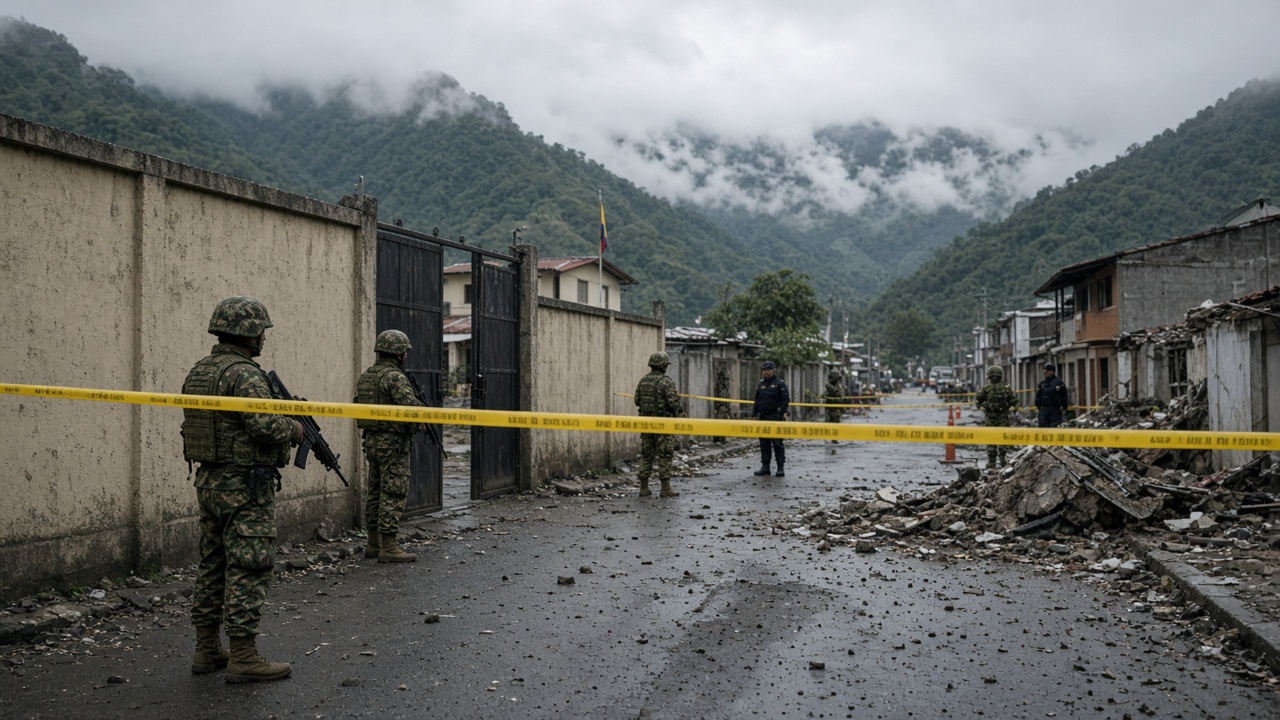
A coordinated blast in Planadas, Tolima, killed four civilians, among them a two-month-old girl, and wounded at least 18 others when explosives detonated near a Colombian army battalion and the town’s central hospital, authorities said. The attack, which struck on Sunday night, has prompted a surge of troops, bomb technicians and investigators into a municipality already contested by FARC dissident factions.
What detonated and where
Mayor Juan Camilo Hueje told reporters that assailants used a dump truck loaded with explosive cylinders and drones carrying additional charges. Three devices went off around 9:45 p.m. local time in the Aeropuerto neighborhood, close to Infantry Battalion No. 17 General Domingo Caicedo, part of the army’s Sixth Brigade.
The shock wave tore through residential blocks facing the base and damaged the Centro hospital, where a pharmacy fire broke out, regional health officials said. Tolima’s governor’s office said 177 homes were damaged and that three injured people required transfer to larger hospitals. Hueje and national officials have not publicly confirmed a single armed group’s claim of responsibility.
Who authorities are pursuing
Intelligence summaries circulated to Colombian media on Monday and Tuesday linked the strike to dissident structures operating under Iván Mordisco’s network, particularly the Ismael Ruiz and Gerónimo Galeano fronts that compete for mobility corridors in southern Tolima. Military reporting names commanders known as alias Amazonas, “Yamaha” and “Chapolo” as figures with prior presence in Planadas, Rioblanco and Chaparral, though prosecutors stressed that attributions remain under investigation.
The army said it deployed two platoons of special forces and explosive ordnance teams to secure evidence and support residents clearing debris. President Gustavo Petro’s government has faced repeated pressure in Tolima as extortion and retaliatory strikes against security forces have climbed since the 2016 peace accord frayed in the region.
What happens next
Attorney General officials opened a unified investigation with military criminal judges, while humanitarian agencies catalogued shelter needs for families whose roofs and walls failed inspection. Hueje urged residents to report drone activity and suspicious vehicles, and the defense ministry promised additional air mobility to reach mountain villages that dissident groups use to move supplies.
Neighboring municipalities tightened checkpoints on the road toward Rioblanco, fearing copycat attacks during the army’s repositioning. International observers monitoring Colombia’s conflict data will watch whether the Planadas toll pushes Bogotá to expand joint operations with U.S. counter-narcotics units already active along Pacific supply lines, or whether the government prioritizes negotiated demobilization offers that have stalled for Mordisco’s bloc.
For civilians in Planadas, the immediate question is repair: hospital staff resumed limited services only after fire crews contained the pharmacy blaze, and municipal engineers must certify hundreds of cracked walls before families can return. The death of an infant in the blast has dominated local radio, amplifying calls for witness protection for residents who cooperate with investigators.