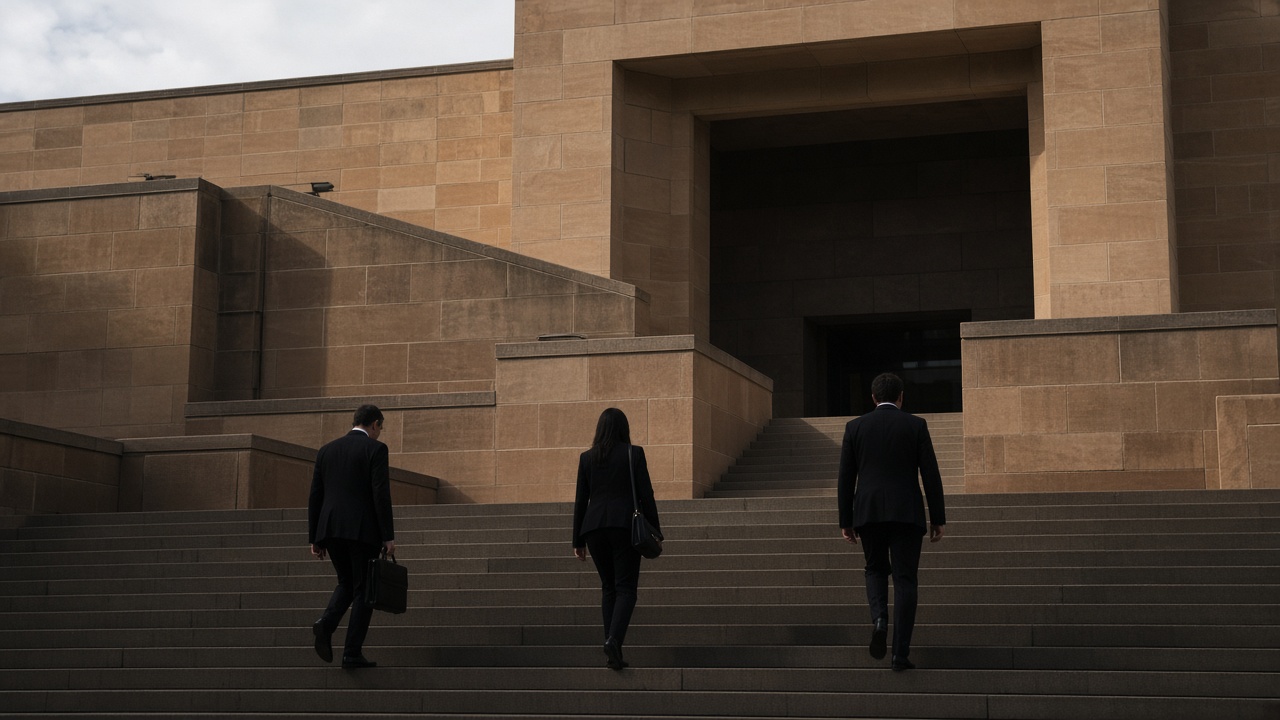
Australia’s High Court began two days of hearings Tuesday on whether the federal government can lawfully block children younger than 16 from major social media platforms—a world-first restriction that took effect last year and is now facing coordinated constitutional challenges from Reddit and digital-rights groups.
The seven-judge bench must decide if the ban’s age-verification regime and platform penalties strike the right balance between protecting minors and preserving political speech, commerce and parental choice. Prime Minister Anthony Albanese’s government has defended the law as a response to harms ranging from algorithmic addiction to extortion, while opponents say it treats every teenager like a passive consumer rather than a citizen who organizes protests, accesses health information and follows news online.
Platforms in scope—and what the ban requires
Legislation covers Facebook, Instagram, Reddit, Kick, Snapchat, Threads, TikTok, X, YouTube and Twitch. Services must take “reasonable steps” to prevent under-16 accounts, with fines for systemic failures. The eSafety Commissioner can issue compliance notices, and platforms have rolled out age-estimation tools, document checks and device-level prompts that critics say leak sensitive data and push teens toward less moderated corners of the internet.
Reddit’s barrister Perry Herzfeld told the court the ban is “ill-targeted” and “over-broad,” according to coverage of the opening session. He argued the government failed to show that shutting all covered platforms to every 15-year-old is the least restrictive way to reduce harm, especially when evidence suggests many younger teens remain active months after enforcement began.
Constitutional fault lines
Challengers lean on implied freedoms of political communication that the High Court has read into Australia’s constitution, contending that teenagers participate in democratic debate and cannot be excluded from public forums without compelling justification. The Commonwealth responds that Parliament may protect children from commercial products that engineers design to maximize engagement, much as it restricts alcohol or gambling.
A second case, brought by digital civil-liberties advocates, raises complementary arguments about whether the ban discriminates between types of speech and whether offshore platforms can be compelled to geofence Australian minors without violating foreign speech laws. Solicitor-General lawyers for the government are expected to emphasize Parliament’s power over telecommunications and online safety, citing the eSafety Commissioner’s mandate.
Evidence on the record
Government filings cite internal platform data and Australian research linking heavy social use to sleep loss, bullying and exposure to self-harm content. Opponents submitted surveys suggesting four in ten children aged 10 to 15 remained on at least one banned service three months after the cutoff, implying enforcement gaps that Reddit says undermine the ban’s necessity.
Outside court, parent groups split: some welcomed a clear age line after years of voluntary industry pledges, while others argued families—not Canberra—should decide when a child receives a phone. Schools reported mixed results; counselors said fewer Year 8 students openly scroll TikTok in class, but teachers still confiscate VPN-enabled devices weekly.
Stakes beyond Australia
A ruling upholding the ban would embolden lawmakers in Europe and the United States who have floated similar age gates, though none has matched Canberra’s blanket prohibition across so many dominant networks. A defeat would force the government back to Parliament ahead of a federal election cycle in which cost-of-living and housing already dominate debate, potentially delaying any revised scheme until after polling.
The court did not indicate when it would reserve judgment. With hearings scheduled through Wednesday, platforms said they would maintain current verification flows while preparing contingency plans—either tighter geoblocks if the law survives, or rapid account reinstatement processes if key provisions fall.