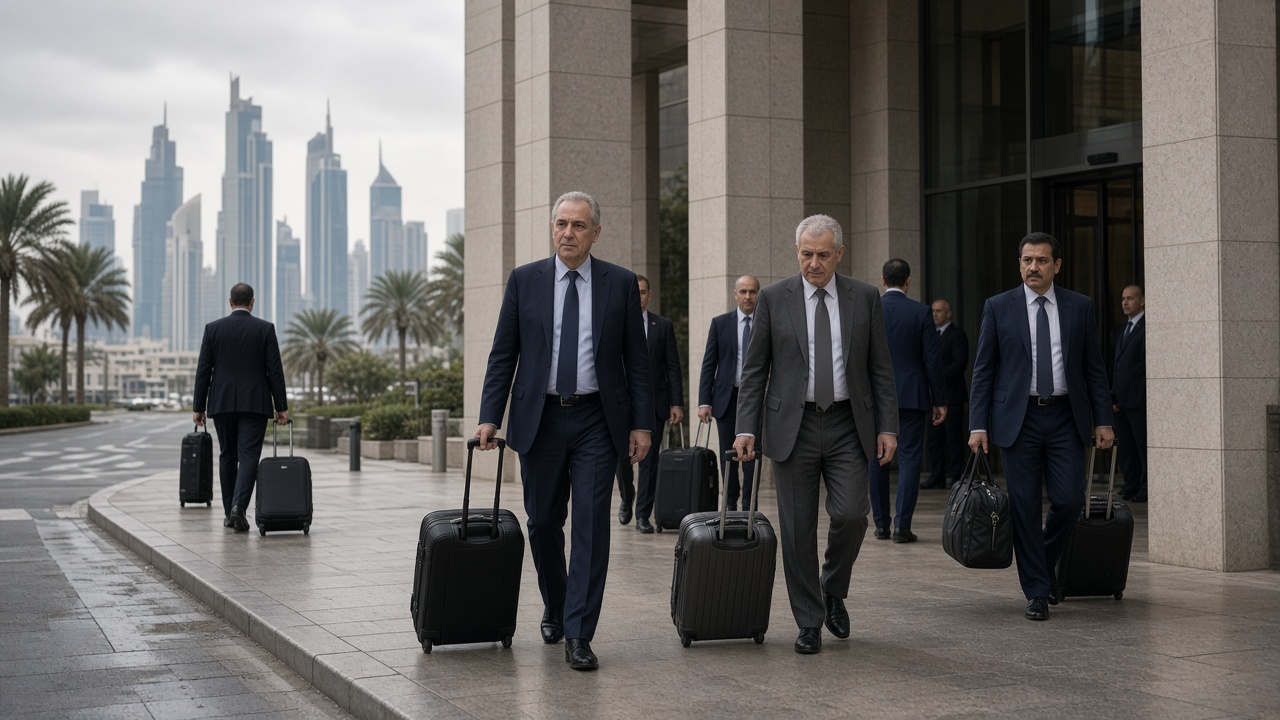
Kremlin spokesman Dmitry Peskov said Tuesday that Vladimir Medinsky will lead Russia's delegation when Moscow, Kyiv and Washington resume working-level talks in the United Arab Emirates on November 10 and 11, confirming dates U.S. special envoy Steve Witkoff announced a day earlier.
Who sits at the table
Medinsky, a presidential aide who has represented Russia in prior rounds that failed to produce a ceasefire, is expected to face Ukrainian negotiators alongside Witkoff and Jared Kushner, the Trump administration's lead envoys. A senior U.S. official told Reuters the American side will press for post-war security arrangements, de-escalation steps and humanitarian measures rather than a single headline concession from either combatant.
The Abu Dhabi session would restart trilateral contact suspended since February, when the U.S. and Israel opened the war against Iran and European capitals warned that munitions and attention were being pulled away from Ukraine. Witkoff said Monday that lower-level U.S. officials will meet NATO and European Union partners in Brussels this week to align on reconstruction financing and long-term security guarantees before the Gulf meetings.
Parallel White House track
Separately, the White House said first lady Melania Trump will host Russian and Ukrainian representatives at the White House on Thursday to discuss a localized ceasefire in the Kherson region, building on a six-day pause around the occupied city of Oleshky that ended Monday as aid convoys finished evacuations. The administration billed the gathering as an extension of the first lady's humanitarian diplomacy, though it did not name attendees and Ukrainian officials have repeatedly insisted that any settlement require Kyiv at the negotiating table.
President Volodymyr Zelenskyy said Monday that Ukraine would raise an energy-sector ceasefire, Black Sea access and accelerated prisoner exchanges in Abu Dhabi, and that any leaders' meeting involving Russia and the United States must also include European participation. Kremlin comments Tuesday that Moscow hopes to finalize plans for a separate U.S.-China-Russia leaders' session have amplified those concerns in Kyiv and Brussels.
Fighting as ballots are cast
Confirmation of the UAE round landed as Russia struck Ukrainian cities overnight, killing dozens and forcing patients to evacuate at least one medical facility, according to Ukrainian authorities. Zelenskyy told reporters Ukraine had intelligence that Moscow might target energy and logistics nodes Tuesday while global attention fixed on U.S. midterm elections, a claim the Kremlin did not address in Tuesday's briefing.
U.S. officials have pointed to recent steps welcomed in Moscow, including eased enforcement on Russian diesel sales, as reasons Putin might engage more seriously than in earlier rounds. Axios reported Tuesday that the parties remain far apart on territory and that Putin has not agreed to a broader halt in hostilities, leaving diplomats with a narrow agenda: test whether incremental de-escalation and humanitarian packages can precede any summit involving presidents.
What comes next
Delegations are scheduled to arrive in Abu Dhabi on November 10 for two days of talks. European officials said they expect readouts from Brussels meetings before the Gulf session begins, and Ukrainian diplomats said Merz and other allies were consulted after Zelenskyy's Berlin appearance Monday. If Medinsky's team repeats maximalist territorial demands, U.S. negotiators may face pressure from both NATO allies and domestic critics to show tangible progress before winter deepens grid attacks across Ukraine.