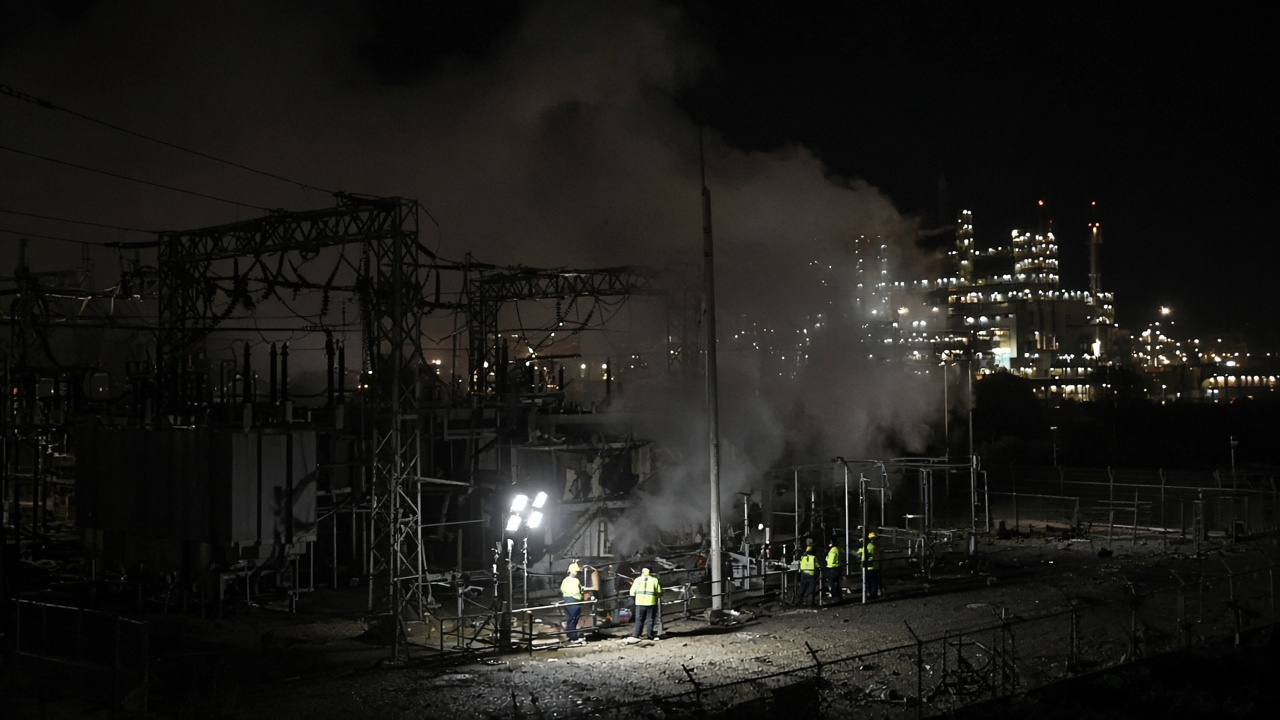
Ukraine's energy minister, Denys Shmyhal, said he had notified the International Atomic Energy Agency after Russian attack drones hit a substation that helps feed electricity from the Khmelnytskyi Nuclear Power Plant into the national grid, calling the strike a step that threatens nuclear safety beyond Ukraine's borders.
Shmyhal disclosed the incident on Monday while briefing ambassadors from the Group of Seven and the European Union. He said three drones targeted the substation as Russia launched what Ukrainian officials described as the heaviest combined assault on energy infrastructure so far this year, pairing 289 attack drones with 59 cruise missiles and 17 ballistic missiles.
What officials say was hit
The Khmelnytskyi facility in western Ukraine operates two reactors with a combined capacity of roughly 2,000 megawatts. Two additional Soviet-era reactors at the site were never completed. Ukrainian authorities have not reported a direct hit on reactor buildings in this wave of strikes, but they have repeatedly warned that damage to switchyards and transmission lines can force plants to curtail output for safety reasons even when reactors themselves remain intact.
Shmyhal said the substation is critical to stable operation of the plant and that disabling it endangers not only Ukrainian consumers but Europe's broader nuclear safety posture. He asked partners to respond to what he framed as deliberate escalation ahead of winter, when last heating season already left millions without reliable power in subzero conditions.
Grid damage far from the plant
Ukraine's Energy Ministry said generation sites, substations, and combined heat-and-power plants across 10 regions came under fire overnight into Monday, including Vinnytsia, Dnipropetrovsk, Zaporizhzhia, Zhytomyr, Rivne, Odesa, Chernihiv, Chernivtsi, Khmelnytskyi, and Kharkiv. Emergency outages rolled through Kyiv and Kyiv Oblast, Poltava, Sumy, Chernihiv, Cherkasy, and Kharkiv as voltage collapsed on high-voltage lines.
DTEK, Ukraine's largest private power company, said Russia halted generation at three of its thermal plants and damaged grid assets in Odesa Oblast during several waves of weapons. Chief executive Maxim Timchenko described the night as one of the most serious attacks the firm has faced and accused Moscow of trying to deny Ukrainians heat and light as cold weather sets in.
In the capital, Mayor Vitali Klitschko reported hours-long power and water disruptions affecting a city of about three million people. City authorities suspended tram and trolleybus service late Monday, opened warming centers where residents could charge phones, and warned that repairs to distribution networks would take time even after air defenses downed part of the incoming salvo.
What happens next
Ukrenergo, the state grid operator, imposed emergency consumption limits while repair crews worked to stabilize the system. Shmyhal said Ukraine had already shared technical details with the IAEA and would continue updates as damage assessments firm up. Western capitals face renewed pressure to accelerate air-defense deliveries and spare grid equipment as diplomats prepare for a Brussels coordination meeting on Ukraine later in the week and for renewed trilateral talks in Abu Dhabi on 10–11 November.
IAEA officials have not yet published a separate statement on the substation incident at the time of this filing. Ukrainian air-force data showed interceptors engaging drones and missiles through the night, but energy officials cautioned that even partial penetration of layered defenses can leave cascading outages when transformers and switchgear fail.