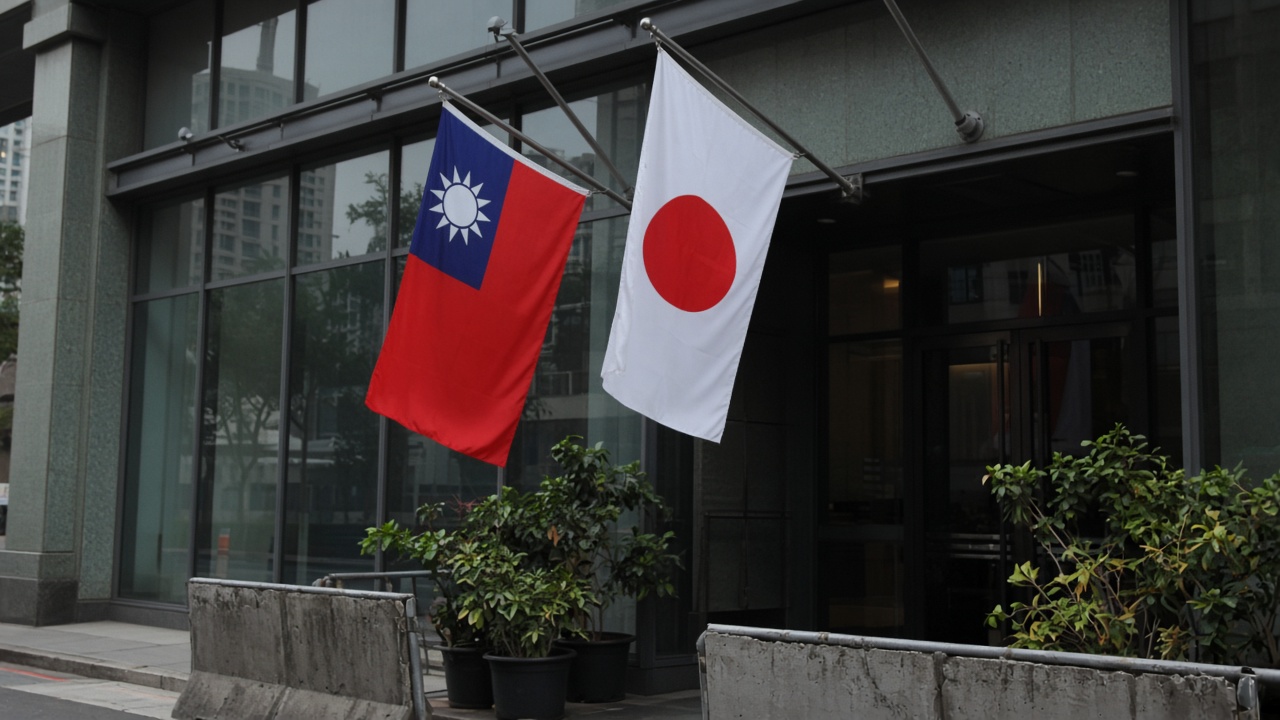
Taiwan and Japan are negotiating a wide-ranging trade agreement that could be signed by the end of this year, Nikkei Asia reported Monday, citing two sources familiar with the talks—a timeline that would give President William Lai’s administration a major diplomatic win if negotiators can close the remaining gaps.
Tokyo is modeling the framework on the Enhanced Trade Partnership Arrangement that the United Kingdom finalized with Taiwan in 2023, according to the report. One source told Nikkei that the U.K. deal “sets a precedent for Japan to follow,” while the structure would leave room for future sectoral agreements and give Tokyo political cover against potential backlash from Beijing.
Five pillars on the table
The current draft covers five cooperation areas: economic resilience and innovation, industry cooperation on disaster risk reduction, digital trade, trade facilitation, and sustainability, Nikkei reported. Disaster risk reduction would include drone cooperation aimed mainly at natural-hazard response—a priority for both islands facing typhoons, earthquakes, and supply-chain shocks.
Katsuya Yamamoto, director of the strategy and deterrence program at the Sasakawa Peace Foundation, told Nikkei that Japan has traditionally been cautious about broad economic frameworks with Taiwan but that economic security and semiconductor supply-chain resilience have shifted Tokyo’s calculus. Taiwan’s chipmakers have already expanded manufacturing investments in Japan, linking factory announcements to bilateral industrial security talks.
Taipei’s public line
Foreign Minister Lin Chia-lung told reporters he would welcome such a development, adding that earlier models with the United States, Canada, and the United Kingdom provide useful references. He noted that Taiwan and Japan maintain exceptionally close trade and investment ties, and that existing semiconductor investments already help safeguard supply chains.
Lin said the two governments have signed nearly 100 cooperation agreements and memoranda of understanding, but that Taipei would still welcome a more structured comprehensive framework. Taiwan’s Office of Trade Negotiations declined to comment on Nikkei’s specifics while emphasizing that Japan remains a key partner and that recent Taiwan-Japan Economic and Trade Conference sessions focused on deepening cooperation.
What a signature would signal
Sources told Nikkei that a Japan deal could encourage Canada and the Philippines to pursue their own frameworks with Taiwan, potentially breaking a broader trade-diplomacy logjam for Taipei. Any signing would not replace WTO membership politics, but it would give Lai a concrete deliverable ahead of local elections where cross-strait pressure and economic security dominate debate.
Negotiators still must translate draft chapters into binding text, schedule ministerial signatures, and manage notification channels with trading partners sensitive to China’s objections. For now, the Nikkei report moves a long-discussed Tokyo-Taipei economic upgrade from background chatter to a dated target—year-end 2026—watchers in Taipei will treat as credible only when both capitals publish matching language.
Industry groups say any framework will be judged on enforceable digital-trade chapters and clear disaster-cooperation drills, not signing ceremony optics alone.