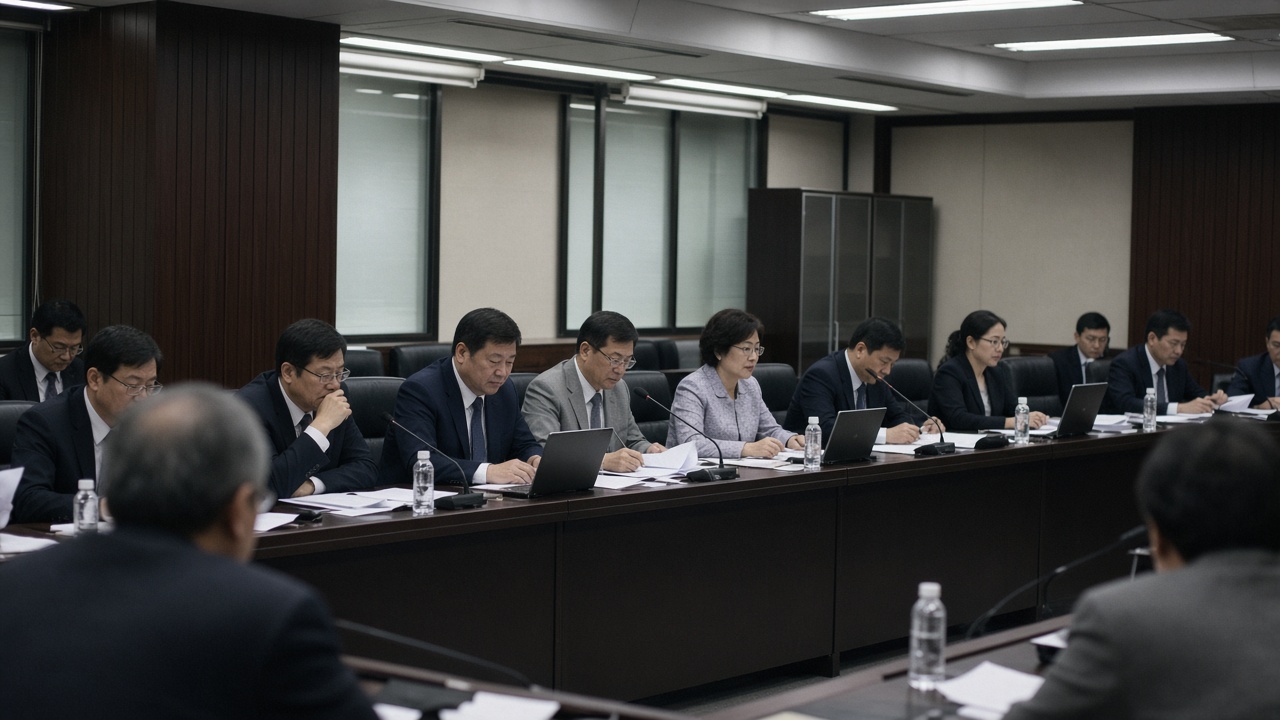
Taiwan’s Legislative Yuan opened a public hearing Monday on a Democratic Progressive Party proposal to criminalize unauthorized exports of advanced integrated circuits and related equipment to mainland China, a step officials say would close a gap exposed when 74 Nvidia B300 servers reached Chinese buyers without an applicable Taiwanese export charge.
What the amendment would do
The draft change to the Foreign Trade Act would require government approval before shipping specified chips, key wafer materials, components and fab tools to China. Violators could face up to 10 years in prison and fines of NT$5 million to NT$10 million (roughly US$155,000 to US$310,000), according to committee materials circulated ahead of the hearing.
The same penalties would apply when controlled goods are routed through third countries, and illegal gains would be subject to confiscation. Supporters argued that Taiwan currently restricts only 12 categories of wafer-fabrication equipment to China by notice, leaving high-end AI servers in a gray zone if paperwork masks the end user.
The Keelung case that triggered the push
Prosecutors in Keelung indicted nine people in August, including the general manager of Flying Tiger Technology and staff at local units of Nvidia and Super Micro Computer. Investigators allege the group diverted 74 B300 servers to Chinese buyers for more than NT$600 million in profit using falsified end-user documentation and a cover story about a rented data center in Taiwan.
Because Taiwanese law did not treat the shipment itself as a criminal export violation, charges rested on breach of trust and document forgery under the Criminal Code. U.S. export rules and the companies’ internal policies were broken, but Taipei could not prosecute the diversion as its own export crime.
Washington’s parallel case
The U.S. Department of Justice in March charged Super Micro co-founder Yih-Shyan “Wally” Liaw, Taiwan sales manager Ruei-Tsang “Steven” Chang and contractor Ting-Wei “Willy” Sun with conspiring to send restricted Nvidia-equipped servers to China. Liaw and Sun were arrested in California; Chang, a Taiwanese citizen, remains at large according to U.S. court records cited in Monday’s debate.
Economy Ministry officials told lawmakers they could alternatively expand controlled-goods lists by administrative notice, but legislators from the ruling party said a statutory criminal penalty would send a clearer signal to brokers and freight forwarders.
Parliamentary math and industry pushback
Opposition Kuomintang and Taiwan People’s Party lawmakers hold a combined majority, and neither bloc has endorsed the DPP text. Some economists warned that overly broad chip lists could chill legitimate re-exports and R&D partnerships, while security analysts said the bill still focuses on hardware categories rather than cloud access or model weights.
Committee staff said further expert testimony would be scheduled before any floor vote. Trade negotiators noted separately that Taipei is discussing a wider economic framework with Tokyo, but Monday’s session stayed on enforcement rather than market access.
Industry testimony
Chip distributors told the panel that legitimate re-export paperwork already takes weeks and that criminal penalties should target brokers who knowingly falsify end-user certificates, not engineers who misread HS codes. National security scholars countered that Taiwan’s role as a choke point for advanced GPUs makes even a handful of successful diversions a strategic leak.
What comes next
Party whips must agree on committee markup language before a plenary reading. If the criminal export article stalls, the economy ministry could still tighten China-bound notices for AI servers, though that path would rely on administrative fines rather than the decade-long prison terms advocates want for repeat smugglers.