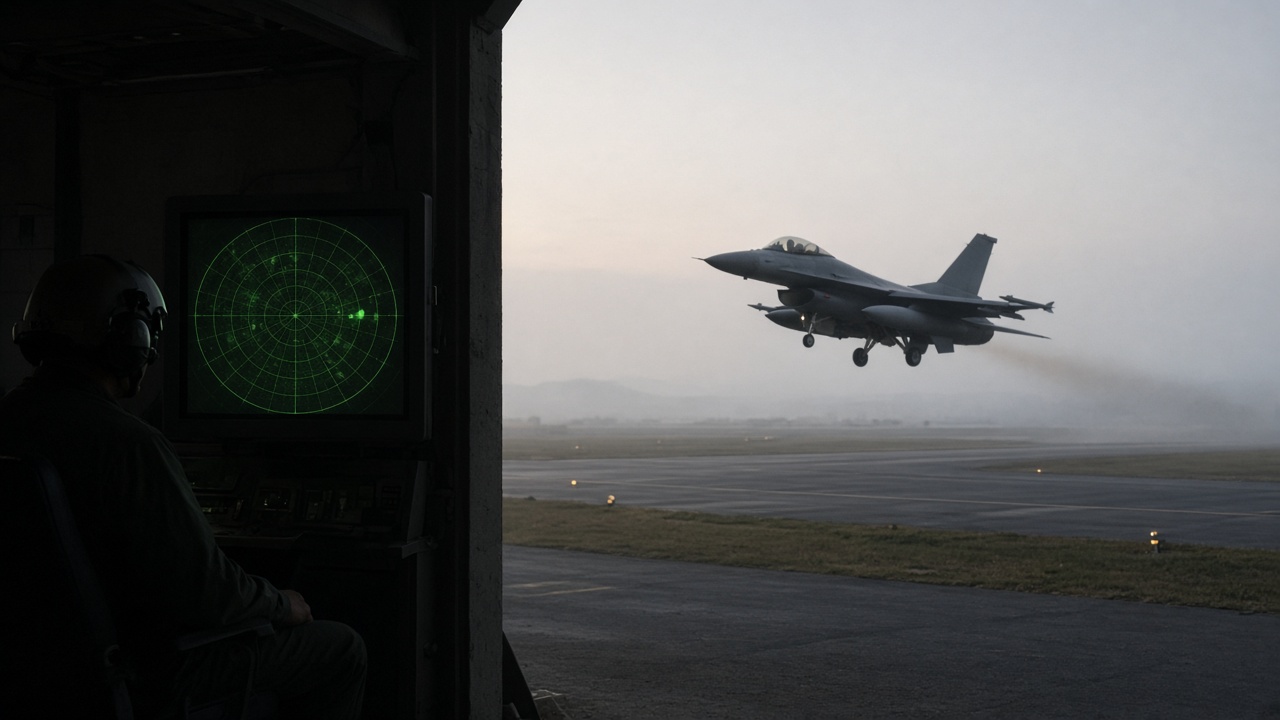
Taiwan’s Ministry of National Defense said it detected 49 sorties by People’s Liberation Army aircraft, six PLAN warships and six Chinese official vessels operating around Taiwan in the 24 hours ending 6 a.m. Tuesday, marking the busiest single-day tally of PLA air activity reported by Taipei so far in 2026.
Thirty-one of the aircraft crossed into Taiwan’s central, southwestern and eastern air-defense identification zone, the ministry said in its daily activity report. The ROC Armed Forces responded with combat air patrols, navy ships and coastal missile systems, the same posture Taipei has used during previous spikes in gray-zone pressure.
What the ministry published
The English-language release on the ministry website listed the counting period as 6 a.m. Monday to 6 a.m. Tuesday, Taipei time. Central News Agency’s Mandarin dispatch matched the figures, noting six PLAN vessels and six official ships alongside the 49 aircraft sorties, with 31 flights entering sensitive sectors of the ADIZ.
TaiwanPlus described the sortie count as a single-day high for 2026, framing the activity alongside broader maritime pressure from China. The broadcast outlet’s morning show paired the tally with coverage of Taiwan’s sea-drone demonstrations, underscoring how Taipei is showcasing asymmetric tools while conventional intercepts continue at scale.
How Taiwan responds
Defense officials did not tie Tuesday’s numbers to a specific exercise name or live-fire event in the public readout, leaving analysts to compare track maps when the ministry releases them. ROC pilots have repeatedly intercepted fighters and slow-moving reconnaissance aircraft that linger east of Taiwan or probe the median line, and coastal missile units publicly train to track those tracks even when no weapons are fired.
The ministry’s statement emphasized monitoring and “employed” assets rather than new rules of engagement, a wording choice that keeps escalation ambiguous while showing domestic audiences that the chain of command is active. Any sustained sortie rate above prior 2026 peaks will test maintenance schedules for Taiwan’s aging fighter fleet and the readiness of navy escorts that shadow PLAN groups.
Regional context
The spike arrives as Taiwan’s cabinet debates how to participate in the Asia-Pacific Economic Cooperation summit in Shenzhen and as U.S. voters head to midterm polls that Chinese state media are covering closely. PLA activity often rises around political calendars on both sides of the strait, though MND data alone cannot prove intent without accompanying PLA announcements.
Japan and the Philippines, which track their own PLA encounters, have not yet published matching spikes for the same window, suggesting the surge was concentrated in the strait and Philippine Sea sectors that Taiwan reports. U.S. Navy transits and allied reconnaissance flights may also have been in the area, but those movements were outside Tuesday’s MND release.
What to watch next
Analysts will compare the next 24-hour MND tally to see whether Beijing is sustaining pressure or reverting to lower baselines after a single-day surge. Taiwan’s legislature is reviewing sustainment funding for unmanned systems and missile stocks, debates that gain urgency when sortie counts set annual records.
For residents in Taiwan, the practical effect remains alert messages and familiar jet noise rather than open conflict. The significance of Monday’s window is quantitative: 49 sorties logged, 31 inside the ADIZ, and a ministry willing to label the pace as the year’s heaviest so far.