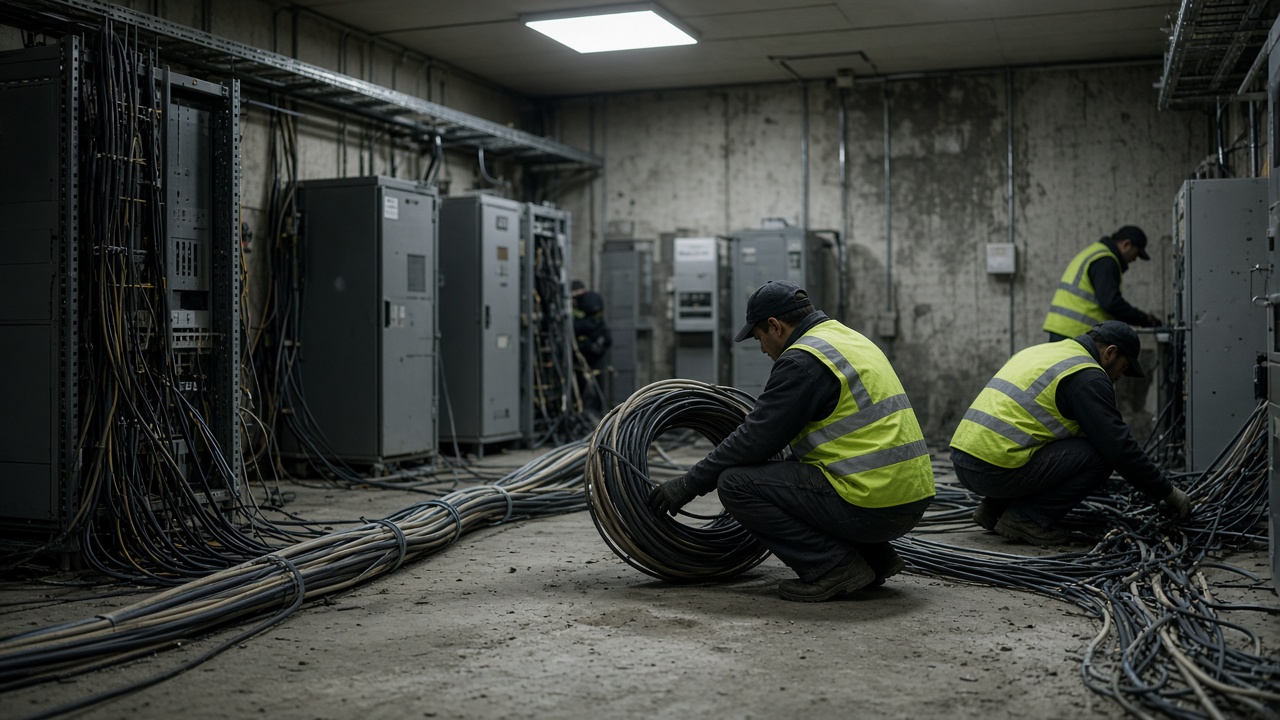
Telstra finished clearing copper distribution gear from its Hobart exchange on Tuesday, removing the last legacy frames that still served a shrinking pool of premises ahead of NBN Co’s December fibre migration window in southern Tasmania.
The work marks one of the final metro-style exchanges in Tasmania where copper pairs still carried voice and DSL services. NBN Co said about twelve thousand premises in the Hobart and southern region remain flagged for disconnection of legacy services once fibre or fixed-wireless alternatives are confirmed live.
What migration means on the ground
Households on the national broadband network do not always notice backend changes, but exchange clearance is the point of no return for copper repair. Once frames are pulled, faults on old lines cannot be fixed in place; customers must move to NBN products. Retail service providers send migration notices with a cutover date, and medical alarm providers require separate registration through NBN’s priority assist processes.
Telstra, still responsible for much of the legacy access network until handover milestones complete, said technicians had reclaimed copper for recycling and documented spare parts for exchanges that remain active in regional Tasmania. NBN Co’s December window aligns with school holidays to reduce business-hour downtime complaints, according to a spokesman.
Fixed wireless and fringe premises
Not every premise gets fibre. Some outer Hobart suburbs and eastern shore pockets remain on fixed wireless or satellite SKY Muster until upgrade programs scheduled for 2027. Those customers are outside this copper clearance but still receive migration letters if they were on interim satellite transitions. Jade Chen’s desk tracks the difference because support call volumes spike when the letters look like marketing spam.
Retail competition after cutover
Once on NBN, customers can switch among Telstra, TPG, Aussie Broadband, and other retailers on shorter churn timeframes. Wholesale line speed tiers have not changed with the Hobart clearance, but providers continue to bundle mobile discounts for Tasmania-only campaigns. The technical milestone does not by itself lower bills; it removes an obsolete layer that was costing both Telstra and NBN Co duplicate truck rolls.
Timeline for remaining exchanges
Burnie and Devonport exchanges remain on a later clearance schedule tied to subsea cable landing redundancy work. Telstra field managers said Hobart lessons would shorten truck-roll times in those cities by reusing the same documentation templates regulators approved for this tranche.
Small business owners on legacy ISDN circuits must migrate before cutover or lose fax and EFTPOS lines that still ride copper pairs. NBN business support teams published a checklist for hospitality venues ahead of the summer tourist peak.
Consumer advocates asked NBN Co to publish a single hotline for medical alarm migrations after mixed experiences in prior state rollouts. Both agencies said they would trial a shared queue ID in Tasmania before expanding nationally.