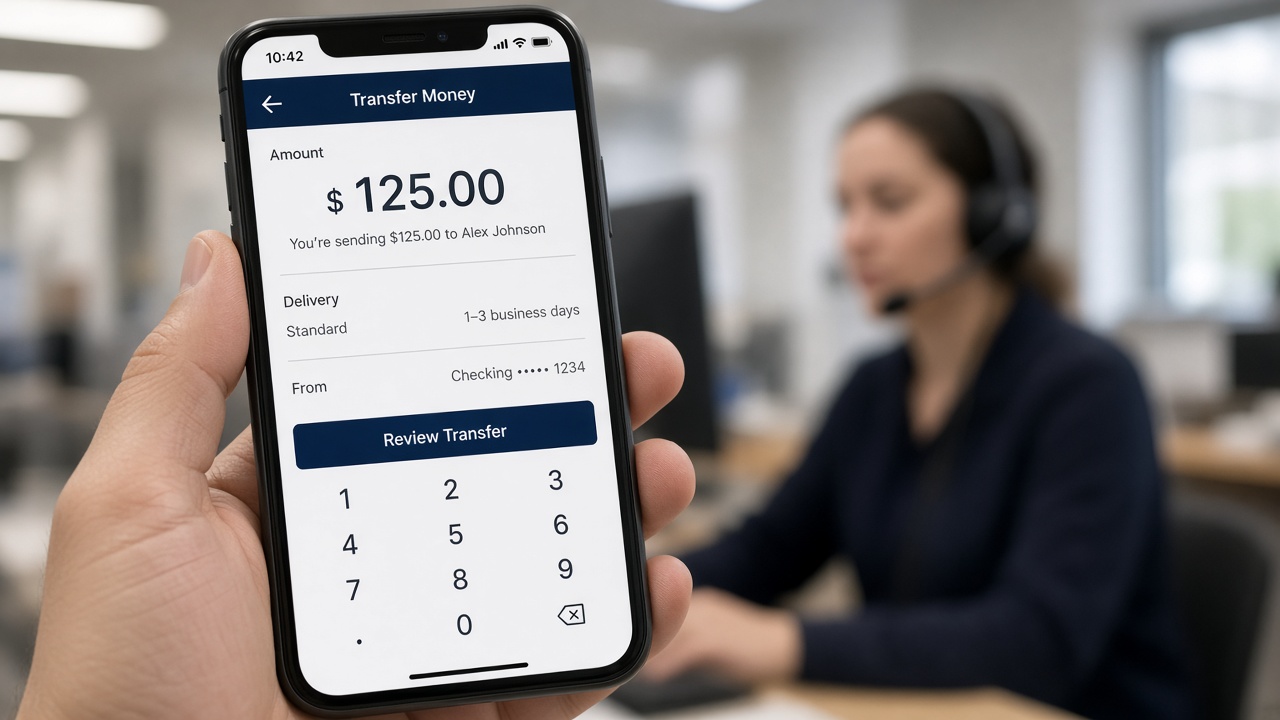
Toss Bank capped same-day peer-to-peer transfer amounts on basic accounts starting Monday after regulators documented a spike in smishing campaigns that trick customers into approving large instant transfers to mule accounts. The digital bank said the limit protects users while it rolls out additional step-up authentication for new payees.
What changed for customers
Basic-tier accounts now face a lower aggregate outbound transfer ceiling until customers complete enhanced identity checks or maintain salary deposit history above published thresholds. Premium tiers retain higher limits but must confirm new recipients with biometric verification. Toss notified users through in-app banners and SMS templates that mirror Financial Supervisory Service alert language.
Regulatory backdrop
The FSS issued a consumer warning last week describing fake delivery and tax-refund messages that deep-link to cloned Toss login pages. Korea Internet and Security Agency telemetry showed hundreds of reported URLs in October, many hosted on short-lived domains. Toss said it cooperated with telcos to block known phishing numbers while law enforcement traced mule account rings.
Industry pattern
Other internet banks tightened limits after similar waves in 2024, but Toss’s large youth user base makes it a frequent target for social-engineering scripts. Consumer counselors said victims often approve transfers believing they are reversing improper inbound credits. Limits frustrate legitimate users sending rent to roommates, a trade-off Toss acknowledged in FAQ updates.
Authentication roadmap
Toss plans device-binding for high-value transfers and delayed settlement when recipients are newly added, similar to card issuer controls on first-time wire destinations. Engineers are testing behavioral scoring that flags transfers initiated seconds after login from unfamiliar devices. The bank expects limits to relax automatically for accounts with clean six-month histories.
Credit and trust
Card analysts said tighter transfers should reduce loss charge-offs but may slow deposit growth if users keep balances at traditional banks for large payments. Toss parent Viva Republica emphasized that limits are temporary operational controls, not capital constraints. Regulators will review whether limits meet proportional risk standards under electronic finance rules.
What users should do
Official guidance repeats that Toss never asks for full passwords via SMS links. Customers who already lost funds should report to police and the bank within 24 hours to improve recovery odds. For the wider market, the episode shows mobile-first banks must treat transfer speed as a liability when phishing volume rises, even if marketing still promises instant peer payments.
Consumer counseling load
Financial consumer counseling centers reported longer hold times after the limit change as users asked whether their accounts were flagged for abuse. Counselors explained the difference between bank-imposed limits and police holds on mule accounts. Toss expanded chat support staffing through November weekends to handle the queue.
Competitive response
KakaoBank and K Bank said they are not matching limits yet but monitoring abuse telemetry. Traditional banks emphasized branch verification for large transfers, a slower but familiar path for elderly customers targeted by voice-phishing calls impersonating prosecutors. Regulators may harmonize minimum authentication standards across internet banks after this wave subsides.
Metrics and rollback
Toss will publish weekly phishing attempt counts anonymized for regulators, a transparency move other internet banks may copy. If smishing volumes fall for thirty consecutive days, executives said basic transfer ceilings could revert automatically while keeping biometric gates for new payees. The bank is also testing carrier-level SMS filtering partnerships that flag known phishing templates before they reach customers.
Branchless banking norms
Because Toss lacks physical branches, customers rely entirely on in-app flows when limits trigger, increasing call-center load. The bank is experimenting with video verification for users who hit caps during legitimate rent payments. Regulators said they will review whether limits discriminate against gig workers paid daily in cash deposits that still need instant outbound transfers to landlords.
Law enforcement coordination
Police cyber units shared mule account identifiers with Toss nightly, enabling faster holds on inbound transfers that bounce through multiple internet banks before cash-out at ATMs.
Seoul analysts said the development fits the Monday morning news cycle but leaves follow-up disclosures to official channels rather than speculation in online forums.