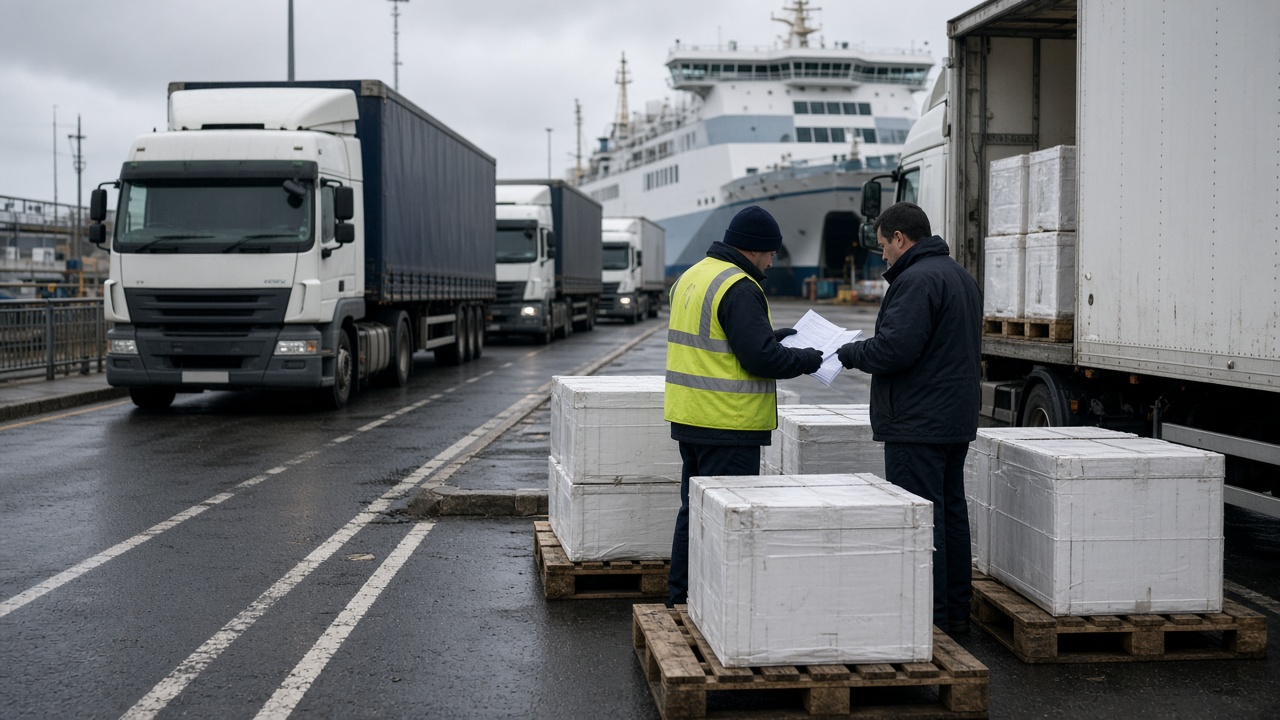
Britain and the European Union have agreed a draft sanitary and phytosanitary pact that would remove large parts of the post-Brexit inspection regime on food and farm goods, according to officials briefed on Tuesday’s text. The 200-page agreement, circulated to EU ambassadors ahead of a Wednesday Coreper session, is the most concrete product yet of Labour’s “Brexit reset” and would shift how exporters from Scotland’s seed-potato fields to Welsh shellfish ports reach continental buyers.
What the draft changes
Government briefings and industry readouts say the deal would end routine requirements for £200 export health certificates and £25 phytosanitary certificates that exporters have paid since the UK left the single market. Inspector fees, organic attestations, port sampling charges and some documentary checks at Dover and Holyhead would also fall away if the pact enters force.
In exchange, the UK would accept dynamic alignment: domestic plant, animal and food standards would track future EU rule changes automatically rather than through treaty renegotiation. Downing Street estimates the package could eventually deliver £5.1 billion in annual economic benefit, though officials caution that implementation would follow ratification and domestic legislation.
Who gains on the ground
Exporters of fresh sausages, burgers, shellfish from UK waters and seed potatoes—products blocked or heavily constrained since 2021—would see paths reopen, trade groups said. Smaller retailers that abandoned continental cheese and charcuterie in one-pallet quantities because certification costs outran margins could resume mixed loads, the British Retail Consortium noted in a cautious welcome.
Northern Ireland’s businesses stand to benefit disproportionately because the region remained inside the EU goods market while Great Britain did not, creating Irish Sea checks on products moving from Liverpool to Belfast. A functioning SPS deal would shrink that paperwork pile, easing pressure on the Democratic Unionist Party and Sinn Féin arguments over east-west trade.
Politics and timing
Prime Minister Andy Burnham is scheduled to meet Commission President Ursula von der Leyen and European Council President António Costa in Brussels on 20 November, when diplomats expect leaders to sign a joint declaration alongside parallel drafts on emissions trading and youth mobility. Conservative leader Kemi Badenoch told broadcasters Tuesday that dynamic alignment crosses a “red line” she could never accept, signaling a Westminster fight even if EU capitals endorse the text.
Environment Secretary Shabana Mahmood’s earlier settlement-policy U-turn dominated morning headlines, but food exporters said the SPS breakthrough matters more immediately for cash flow. The Fresh Produce Consortium warned that easing EU trade while tightening rest-of-world import controls could shift costs onto tropical fruit supply chains—a dispute ministers promised to address in an impact assessment due before committee scrutiny.
Implementation is not instant: officials on both sides talk about a first-quarter 2028 start, reflecting delays after last year’s change of prime minister and the need to rewrite border IT systems. For farmers, precision-breeding rules remain a flashpoint; DEFRA minister Stephen Morgan told MPs the Genetic Technology Act would stand, with a short list of carve-outs still under negotiation.
Wednesday’s ambassador meeting will test whether any member state demands reopening veterinary equivalence chapters. If Coreper clears the text, Burnham can travel to Brussels with tangible proof that his EU reset produces paperwork cuts—not just summit choreography.