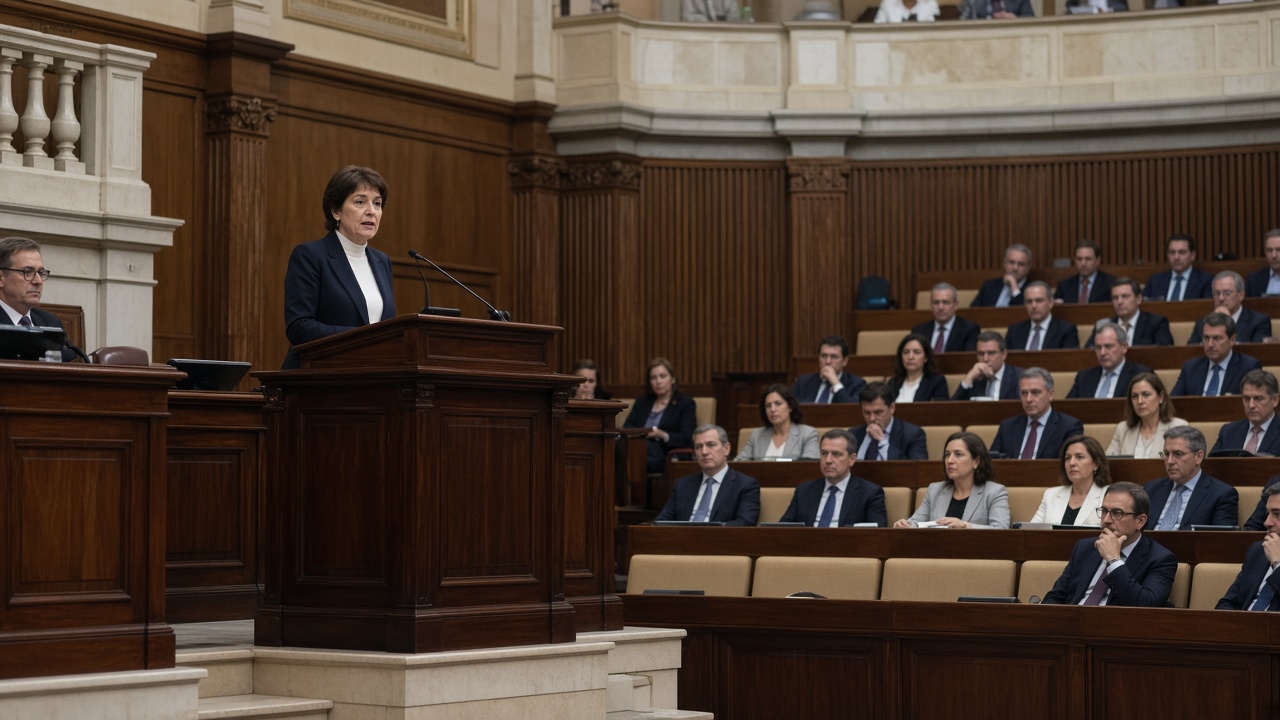
Spain’s transport minister, Óscar Puente, resigned on Tuesday and said he would not run in the next election, hours after telling lawmakers that a high-speed train was allowed to keep moving at more than 160 kilometres per hour even though its automatic safety equipment had failed before the collision near Urda that killed 69 people.
Puente, a Socialist appointee of Prime Minister Pedro Sánchez, announced the decision before the Permanent Deputation of the Congress of Deputies, the lower house’s standing committee when the full chamber is not sitting. He framed the exit as an act of political responsibility, saying stepping down was “good for the country and for democracy” and that “it is not true that all politicians are the same.”
What Puente disclosed about the crash
The Urda disaster on the Madrid–Seville AVE line came nine months after a separate derailment near Adamuz killed 46 people on the same corridor, intensifying scrutiny of Spain’s high-speed network. Puente told deputies that Adif, the state rail infrastructure manager, had permitted the AVE to continue after its LZB cab-signalling system failed while a privately operated Iryo train had already stopped farther down the track.
According to Puente’s account, the AVE then travelled about 25 kilometres at speeds above 160 km/h before the fatal impact. Roughly 200 people were injured in addition to the 69 deaths. Puente defended the underlying reliability of the LZB system while promising new technology to strengthen safety, and he pointed to a €780 million renewal programme for the line.
Political fallout and labour pressure
Conservative People’s Party spokesperson Ester Muñoz said a transport minister’s role “is not to explain fatal accidents, it is to prevent them.” Far-right Vox spokesperson Pepa Millán said Puente was “shirking his responsibilities,” language Puente’s allies rejected as performative once he had already quit.
The PP and Vox had demanded Puente’s removal, as had two parties whose votes Sánchez has relied on: the Basque Nationalist Party and the Catalan Junts. With Puente gone, attention shifts to whether Adif’s control procedures and the government’s €780 million upgrade timeline can restore public confidence before voters next choose a parliament.
At Adif itself, the works council has agreed to push for a strike on 17 November to demand stronger safety measures, though the walkout is not yet formally called. Puente closed his appearance with a brief farewell: “I trust my country will live up to the occasion. I have tried to live up to it.”
What happens next
Sánchez must name a successor who can answer investigators and grieving families without repeating Puente’s political bind. Parallel probes into Adif dispatch decisions and the sequence of LZB failures are likely to dominate Madrid’s agenda even as Puente exits elected politics. For passengers, the immediate question is whether operators will impose stricter stop rules when safety kits fail, regardless of which minister signs the orders.