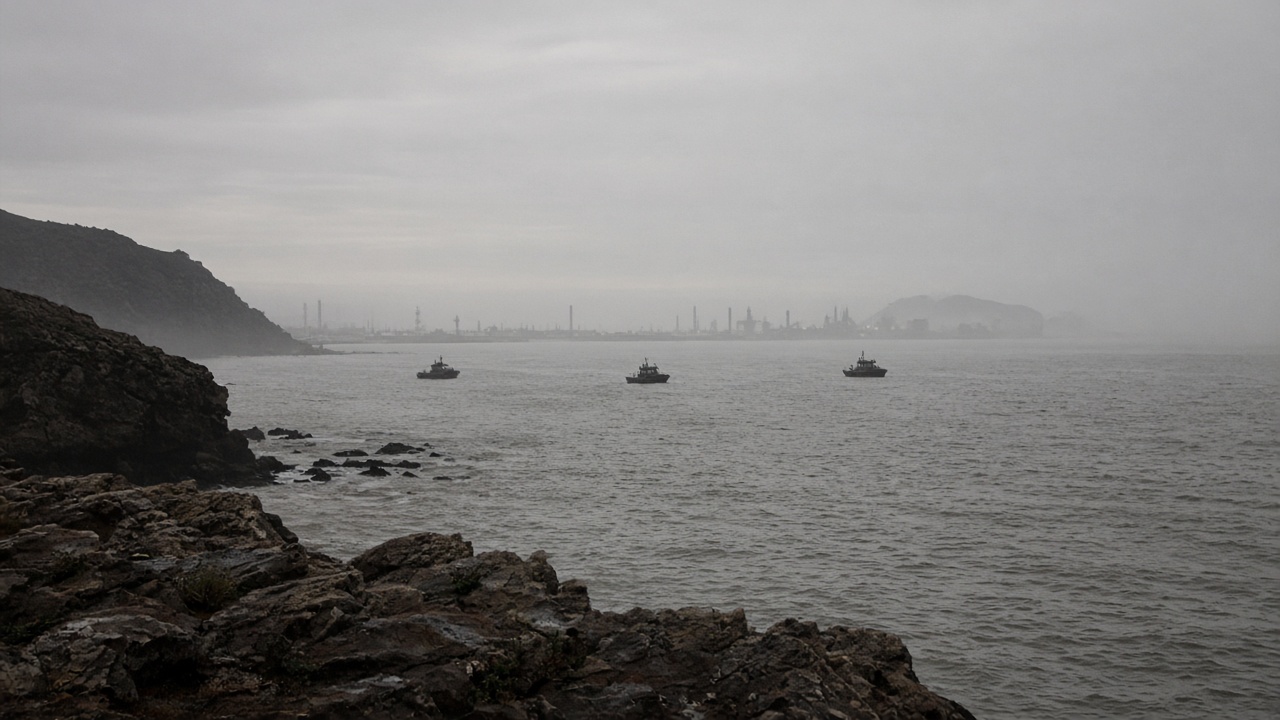
United States forces carried out airstrikes on Iran's Qeshm Island in the Strait of Hormuz on Monday after the Islamic Revolutionary Guard Corps fired on an American aircraft, two U.S. officials told ABC News. The operation targeted radar and surface-to-air missile sites that Washington said were threatening U.S. assets and commercial shipping lanes, not a return to the large-scale campaign that began in February.
What U.S. officials say happened
One official told The Jerusalem Post that IRGC personnel launched a missile from Qeshm toward a U.S. aircraft over the strait, prompting a defensive response. Another described the strikes as measures against Iranian use of air-defense systems that could endanger American crews patrolling one of the world's busiest energy corridors.
The Wall Street Journal first reported the attack, which U.S. Central Command has not publicly confirmed. Unlike earlier retaliatory strikes tied to harassment of tankers, officials said recent operations were deliberately kept quiet to avoid signaling a broader restart of major combat.
Explosions on the island
Iranian state media outlet IRNA reported several explosions on Qeshm on Monday. The island sits at the mouth of Hormuz and hosts a naval base, underground missile facilities, and critical desalination infrastructure, making it a recurring target in the current conflict.
Earlier in the day Tehran claimed it had shot down two RQ-170 reconnaissance drones, a statement a U.S. official dismissed as false. The competing narratives underscored how little either side has disclosed about day-to-day exchanges since the U.S. and Israel opened the war against Iran.
Diplomacy and election timing
The strikes landed hours before Americans began voting in midterm elections that will shape the second half of President Donald Trump's term. Trump told Axios he was in "no rush" to escalate further, saying Iran was "crippled financially," while Iranian Foreign Minister Abbas Araghchi told IRNA that indirect talks with Washington through mediators remained "very intensive."
BBC News, citing U.S. officials, said the limited nature of the operation was meant to protect forces without reopening the full-scale air war that analysts had speculated might resume after the vote. Trump nonetheless told Fox News that the U.S. "might need to go after Pickaxe," a site linked to Iran's nuclear program, though he described such a step as quick and small.
Shipping and restraint
Analysts said the pattern of undisclosed strikes fits a strategy of degrading Iran's ability to threaten Hormuz transit without forcing Tehran into a dramatic retaliation. Brett Erickson of Obsidian Risk Advisors told RFE/RL that Iran has shown restraint after similar incidents, though Gregory Brew of Eurasia Group noted Washington appears to be contesting coastal control rather than only intercepting missiles at sea.
International Maritime Organization Secretary-General Arsenio Dominguez reiterated Monday that passage through Hormuz remains unsafe amid conflicting accounts about mines, keeping war-risk premiums on tanker routes. Any sustained flare-up around Qeshm would feed directly into those assessments.
What comes next
Without a CENTCOM statement or Iranian casualty figures, the immediate military balance is opaque. U.S. officials emphasized defensive intent; Iranian leaders said they were prepared for both negotiation and further aggression. Markets and diplomats will watch whether Monday's blasts stay a contained exchange or become the prelude Trump had once hinted could follow the midterms.
For now the episode reads as another calibrated hit on a familiar island—significant for crews in the strait, but framed in Washington as protection rather than a new war chapter.