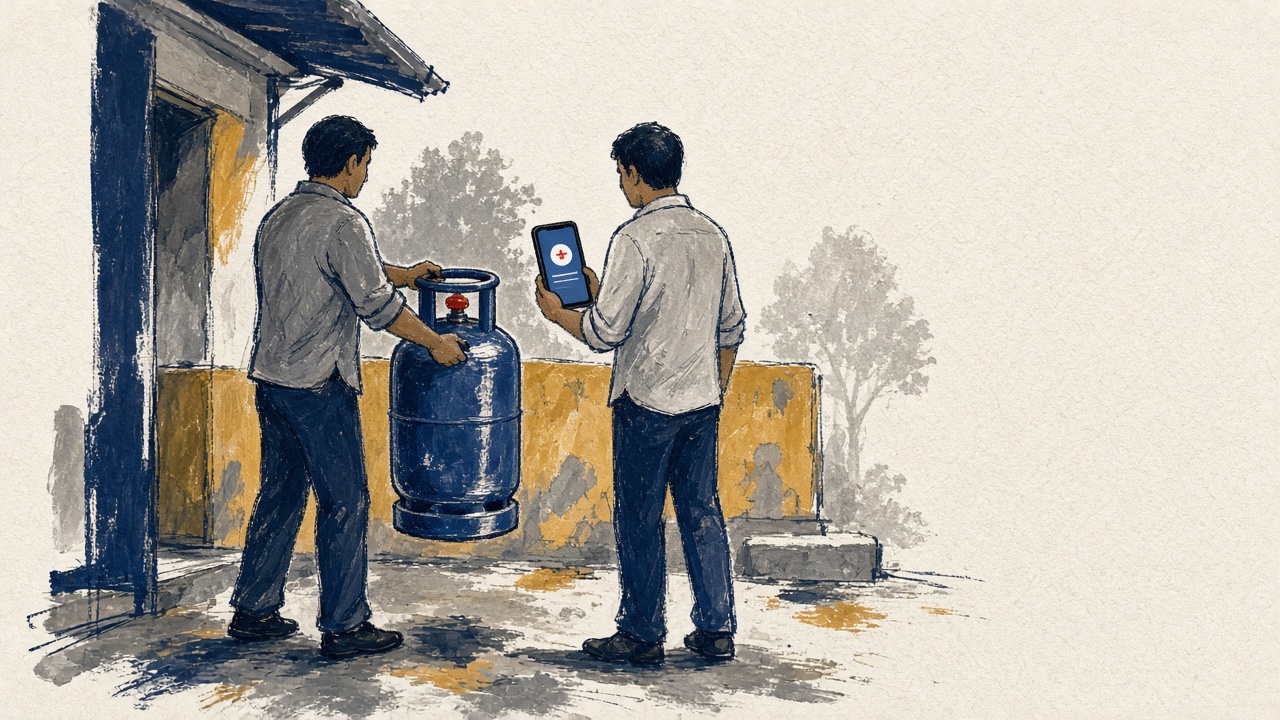
On 1 December 2023, Parliament recorded that a Pradhan Mantri Ujjwala Yojana household in Delhi still faced an effective price of Rs 603 for a standard 14.2 kg domestic cylinder. That figure is not a misprint on the distributor’s cash memo. It is what the government said a poor household would pay at the door after targeted top-ups were layered on top of a nationwide pricing rule that treats every kitchen cylinder as a full-price sale first and a subsidy second.
By then, 9.59 crore Ujjwala connections had been issued since the scheme began in May 2016, and each of those households was automatically enrolled in the same direct-benefit machinery that governs older subsidized connections. The question most families ask when the delivery arrives is simpler than the policy stack behind it: if I am subsidized, why did I just pay like I am not?
The Rs 603 knock on the door
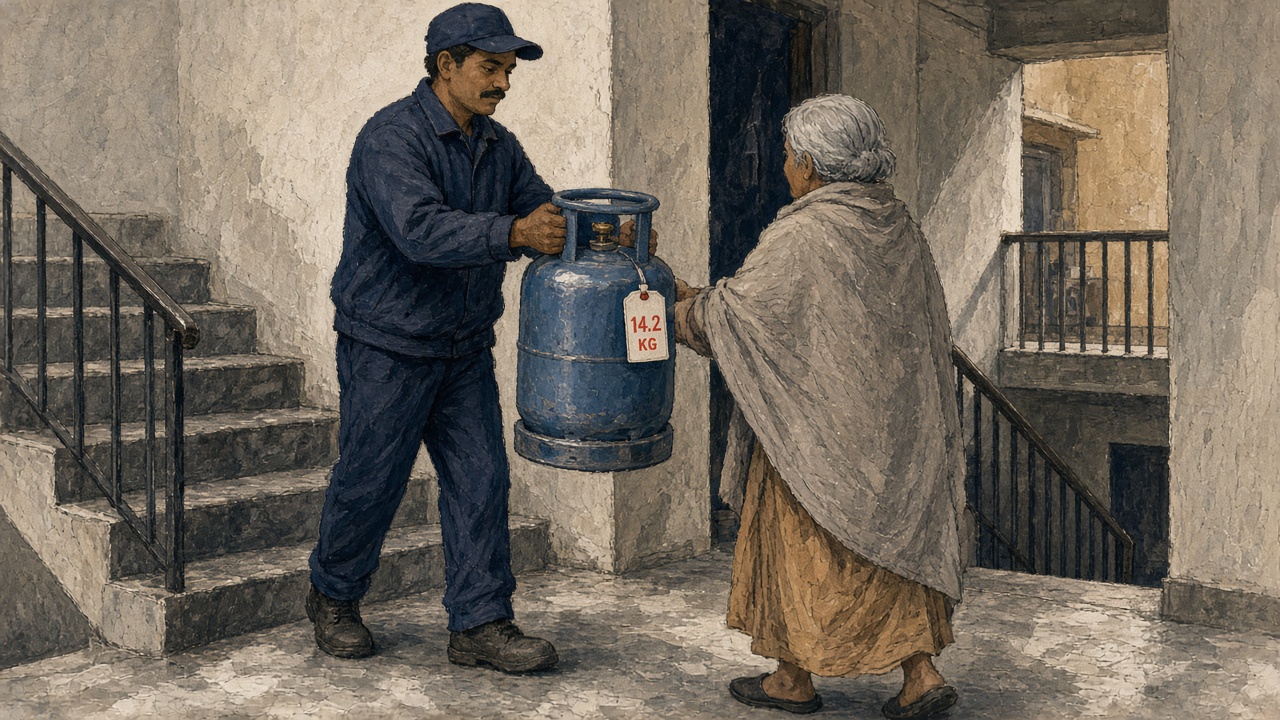
The short answer is that the subsidy left the distributor’s till a decade ago. The long answer starts with that blue cylinder on the landing.
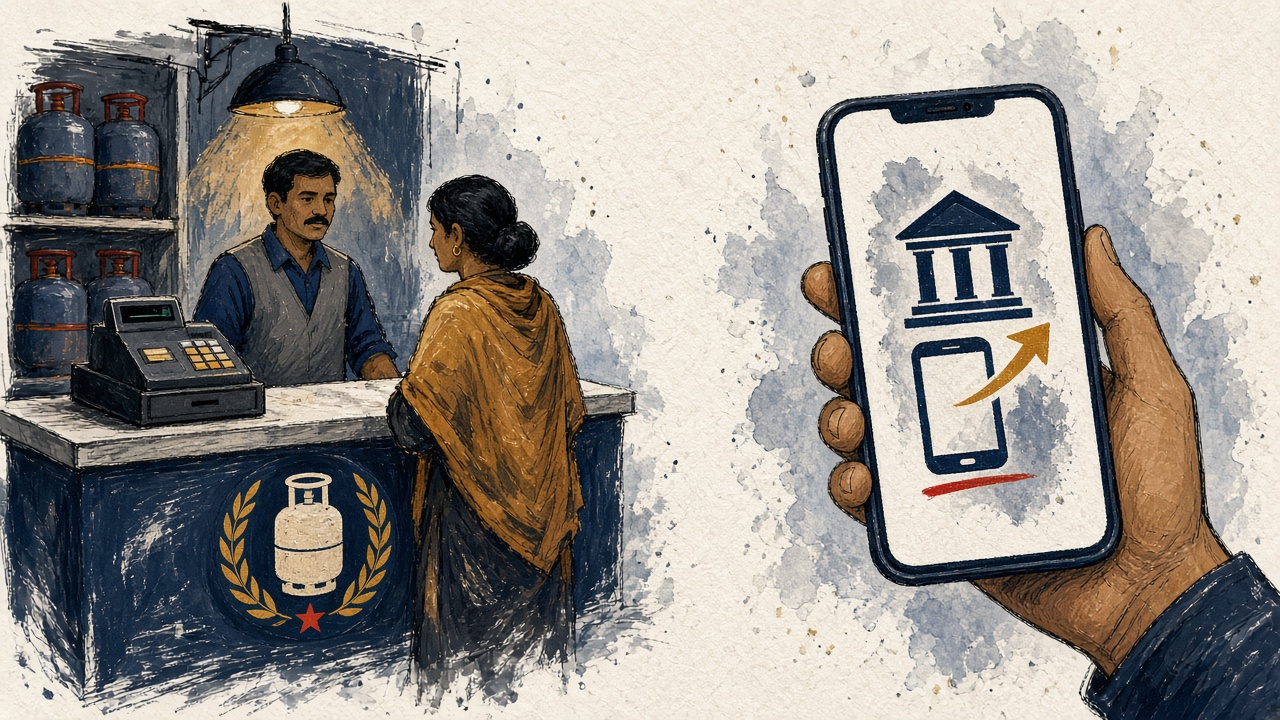
Public-sector oil marketing companies sell domestic LPG for household kitchens at a retail selling price set for the whole country. When the cylinder shows up, the invoice reflects that uniform price. Any government share arrives later as a transfer into a bank account that has been verified against the consumer’s connection, not as a discount scribbled on the receipt.
For Ujjwala beneficiaries, Parliament listed an additional targeted transfer of Rs 300 per 14.2 kg cylinder from 5 October 2023 onward, on top of the general subsidy architecture. Even with that top-up, the effective Delhi price Parliament published for 1 December 2023 remained Rs 603. The household still had to find the cash at delivery; the ledger caught up afterward.
When the subsidy left the cash memo
Until January 2015, many consumers experienced subsidy as a cheaper cylinder at the point of sale. The nationwide PAHAL rollout, formally the Direct Benefit Transfer for LPG scheme, reversed the sequence. The petroleum ministry told Parliament that DBTL (PAHAL) was launched across the country with effect from 1 January 2015. From that date, ministry press summaries describe a single rule: all domestic cylinders sell at a uniform retail selling price, and the applicable subsidy moves directly into bank accounts.
Indian Oil’s public charter still describes subsidized entitlements in cylinder counts, but the price printed on the voucher is the same whether it is your first subsidized refill of the year or your thirteenth domestic refill billed at non-subsidized rates. The difference is only whether a backend transfer fires once the sale posts.
A Rajya Sabha answer put the same point in operational language. Under DBTL (PAHAL), it said, all domestic LPG cylinders are sold at non-subsidised price and the applicable subsidy is transferred directly into the bank account of the consumers. The distributor became a collector of the full price, not a calculator of the government’s share.
Under PAHAL Scheme, all domestic LPG cylinders are sold at a uniform Retail Selling Price (RSP) and applicable subsidy to LPG consumers is transferred directly into their bank accounts.
The design goal, repeated in 2025 ministry briefings, was to stop subsidized cylinders from leaking into restaurants, small factories, and other commercial users that could previously tap household connections. When the till always rings at the market price, diversion becomes easier to see, and duplicate connections become easier to kill.
The pilot phase that preceded nationwide rollout already moved money through banks rather than discounts. Arthapedia records that about Rs 5,400 crore had been credited into Aadhaar-linked bank accounts of 2.8 crore LPG consumers by 8 March 2014 while the DBT pilot expanded. That rehearsal mattered because it trained consumers to treat the cylinder price and the subsidy credit as two events, a habit PAHAL would later make universal.
Twelve cylinders on a ledger
Paying retail at delivery is only half the machine. The other half is the annual counter that decides whether a given refill still qualifies for subsidy at all.
Indian Oil’s citizen charter, citing a 7 March 2014 government notification effective 1 April 2014, states the entitlement plainly: each domestic consumer may receive 12 subsidized cylinders of 14.2 kg in a financial year. Ordinarily only one cylinder is supplied per beneficiary per month. Beyond that entitlement, the charter says, consumers may buy cylinders at domestic non-subsidized rates, still below commercial LPG because of tax treatment but without the cash transfer.
The twelve-cylinder cap was not always twelve. Petroleum ministry training material on the Arthapedia portal records a tightening path: six cylinders per household per financial year from September 2012 reforms, nine from 17 January 2013, eleven from 1 February 2014 for financial year 2013-14, and twelve for financial year 2014-15 onward. The cap is fiscal, not monthly, but the one-cylinder-per-month pacing rule keeps the ledger from emptying in a single festival season.
When non-subsidized pricing beyond the cap was revised in 2014, the ministry emphasized how few households ever touch the limit. More than 99% of customers use fewer than 12 cylinders per year, a July 2014 press note said, and fewer than 1% consume more than 12 cylinders per annum. The cap binds almost nobody, but it gives the database a finite subsidy budget per connection and a clear switch point where the bank transfer stops even though deliveries can continue at a higher domestic rate.
That switch shows up as a different price tier, not a denied delivery. The same 2014 release noted a Rs 16.50 increase for non-subsidized domestic cylinders beyond the annual cap of 12 cylinders, effective 1 July 2014, tied to international product prices. The household still gets a cylinder; the subsidy transfer simply does not fire for that refill.
Cash-transfer compliance as the gate
Full price at the door plus a twelve-cylinder counter still does not explain missing subsidies. The gate is cash-transfer compliance.
Parliament’s 2023 answer on LPG subsidy stated that to receive subsidy under DBTL, the consumer has to be Cash Transfer Compliant. Compliance can run through Aadhaar Transfer Compliant mode or Bank Transfer Compliant mode. Until the linkage clears, the consumer is just another retail buyer at the uniform selling price.
Behind that gate sits deduplication. A 2025 ministry brief described a Common LPG Database Platform that matches Aadhaar numbers, bank accounts, ration details, names, and addresses to strip ghost connections and multiples. Indian Oil’s charter reinforces the household rule: one household is entitled to only one subsidized domestic connection. When a duplicate survives, two bank transfers can fire for one kitchen; when deduplication works, 8.63 lakh Pradhan Mantri Ujjwala connections had been terminated after audits as of the 2025 reply. The same brief said an January 2025 standard operating procedure began terminating Ujjwala connections that never took a refill after installation, removing about 20,000 inactive connections by 1 November 2025 under that procedure alone.
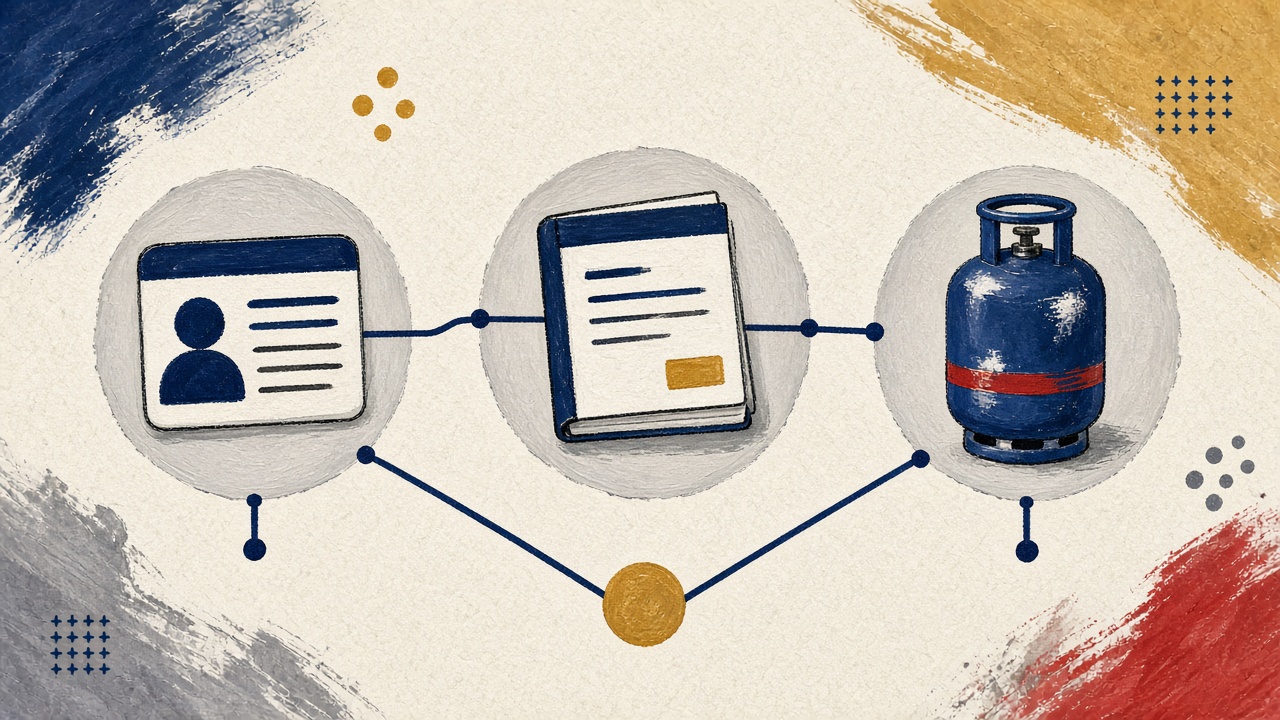
Biometric Aadhaar authentication for Ujjwala beneficiaries was still climbing in 2025, with ministry figures showing 69% of existing beneficiaries completed as of 1 November 2025, while all new Ujjwala consumers undergo biometric authentication before a connection is released. PAHAL, the same brief argued, had already blocked ghost accounts and helped curb diversion of subsidized LPG for commercial use. The answer lands here: your subsidy is not at the dealer because the dealer is no longer trusted to carry it.
Where the money went after it left the till
Separating subsidy from the invoice also separated the fiscal story from the kitchen story. Rajya Sabha tables tracing Direct Benefit Transfer for LPG show how volatile that fiscal line became once the retail price and the transfer decoupled.
Central DBTL LPG subsidy spending rose from Rs 12,905 crore in 2016-17 to a peak of Rs 31,539 crore in 2018-19, then fell to Rs 22,726 crore in 2019-20, Rs 3,658 crore in 2020-21, and just Rs 242 crore in 2021-22 before a partial rebound to Rs 855 crore in 2022-23. That is a 99.2% collapse from the 2018-19 peak to the 2021-22 trough in nominal rupees, computed from the same table rows. Domestic LPG had carried a subsidy burden of about Rs 40,000 crore in 2012-13 before the direct-transfer architecture scaled up, according to Arthapedia’s summary of the pre-PAHAL era.
When global prices spiked and transfers throttled, the government still needed cylinders on doorsteps. Parliament recorded a one-time compensation of Rs 22,000 crore paid to oil marketing companies for under-recoveries on domestic LPG sales between 2020 and 2022. The household kept paying retail at delivery even when the treasury’s DBTL line nearly flatlined.
Total LPG subsidy including Ujjwala and pandemic packages had reached Rs 37,209 crore in 2018-19 in the same Rajya Sabha table, a reminder that the fiscal line and the kitchen line do not move in lockstep. A family counts rupees on the invoice; the controller counts crores in DBTL row A.
The Aadhaar objection and the opt-in fix
None of this machinery escaped political pushback. Arthapedia’s chronology of the DBT pilot notes that privacy litigation led the Supreme Court to order that Aadhaar should not be made mandatory for availing government schemes and benefits, a ruling the portal links to the launch of the PaHaL scheme that could enroll consumers without forcing a single compliance path.
A third-party evaluation cited in a 2025 ministry reply reported that more than 90% of respondents were satisfied with the subsidy reimbursement mechanism, while still recommending stronger payment infrastructure and grievance systems. When transfers lag or fail, consumers can reach a dedicated toll-free helpline at 1800 2333 555, listed among the channels the ministry publicized in 2025 alongside web portals and the centralized public grievance system.
Which brings the cylinder back to the landing in Delhi. The cash memo still shows the uniform retail selling price. The subsidy lives in a bank SMS that may arrive days later, tied to a twelve-cylinder counter, a deduplicated connection, and a compliance flag you never see at the stove. The blue 14.2 kg cylinder is subsidized, but only on a ledger that starts at full price.