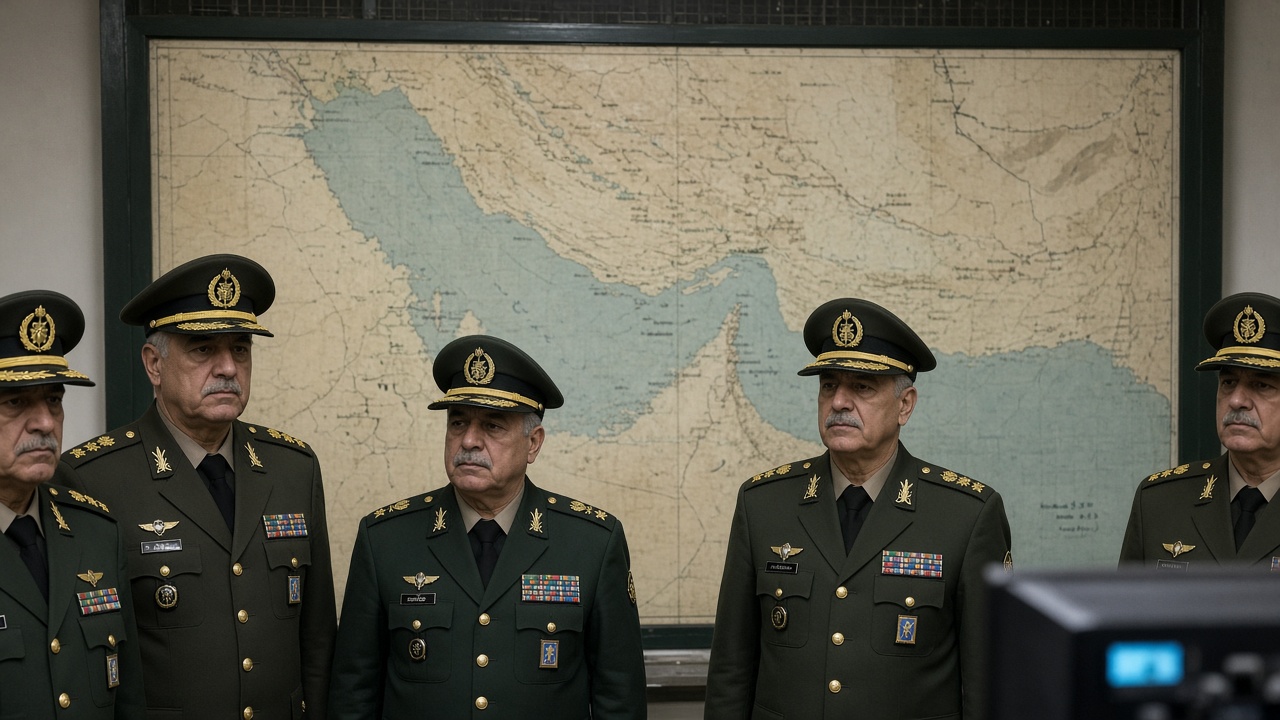
Chief of Staff of the Iranian Armed Forces Maj. Gen. Ali Abdollahi said Tuesday that any U.S. or Israeli threat would draw an immediate military response unconstrained by geography, as Tehran framed control of the Strait of Hormuz as the anchor of a new regional security order.
In a message marking Iran’s National Day of Fighting Global Arrogance, Abdollahi said the country’s forces were refreshing a target database that includes both tangible and intangible assets belonging to Washington and Tel Aviv. He said Iran did not seek war but had moved from a defensive posture to what he called an “offensive initiative,” adding that regional powers no longer needed an American security umbrella.
What changed in the messaging
The remarks landed as U.S. voters finished casting midterm ballots and as Gulf governments reported renewed contingency planning for possible strikes on Iran. Abdollahi’s language echoed warnings from Parliament Speaker Mohammad Bagher Qalibaf, who leads Tehran’s negotiating team and told reporters Tuesday that any renewed U.S. military action would produce an “unpredictable” Iranian answer.
State media carried Abdollahi’s five-point list for what he described as lasting security: ending wars in Lebanon and Gaza without negotiations under military pressure; lifting sanctions and releasing frozen Iranian assets; compensation for war damage; recognition of Iranian sovereignty over Hormuz transit rules; and regional security arrangements without foreign bases. Those conditions are not new, but bundling them with an explicit geographic-limits threat raises the stakes for diplomats trying to keep channels open after the February war.
Why Hormuz sits at the center
Abdollahi cast the strait — through which a large share of global oil exports pass — as proof that Iran had become a “fourth center of global power.” That claim is political as much as military, yet it signals how Tehran wants to price any U.S. escalation: not only inside Iran’s borders but anywhere Tehran judges U.S. or Israeli interests vulnerable.
Western officials have not publicly confirmed every detail of Iranian targeting plans, and independent verification of specific sites on Abdollahi’s list is impossible from open sources. What is knowable is the pattern: Iranian commanders have repeatedly promised to expand the battlefield if Washington or Israel strike again, and U.S. reporting has described briefings to Gulf capitals about post-election military options.
What allies are watching
Energy markets treated the speech as another layer of risk premium rather than an immediate operational shift. Shipping insurers and tanker operators already price Hormuz disruption into November contracts after months of blockade talk and sporadic seizures.
For U.S. force protection, the practical question is whether Abdollahi’s doctrine shift changes warning times or target selection rules. U.S. Central Command has not issued a new public alert tied to the speech, but bases across the Gulf routinely adjust posture when Iranian leadership publishes coordinated messages across the armed forces and the Revolutionary Guard.
What happens next
Tehran’s negotiators say they have delivered a formal response to Washington and are waiting for a U.S. decision on whether to pursue diplomacy or risk another round of strikes. Abdollahi’s statement makes clear that Iran intends any future exchange to be framed on its terms — Hormuz access, sanctions relief, and a regional security mechanism — while keeping the option of strikes anywhere its commanders define as within reach.
Until those tracks converge, the immediate task for U.S. and allied planners is attribution discipline: separating routine Iranian rhetoric from indicators that target lists or force movements have actually changed. Late is better than wrong, but Abdollahi’s message leaves little room to treat the warning as background noise.