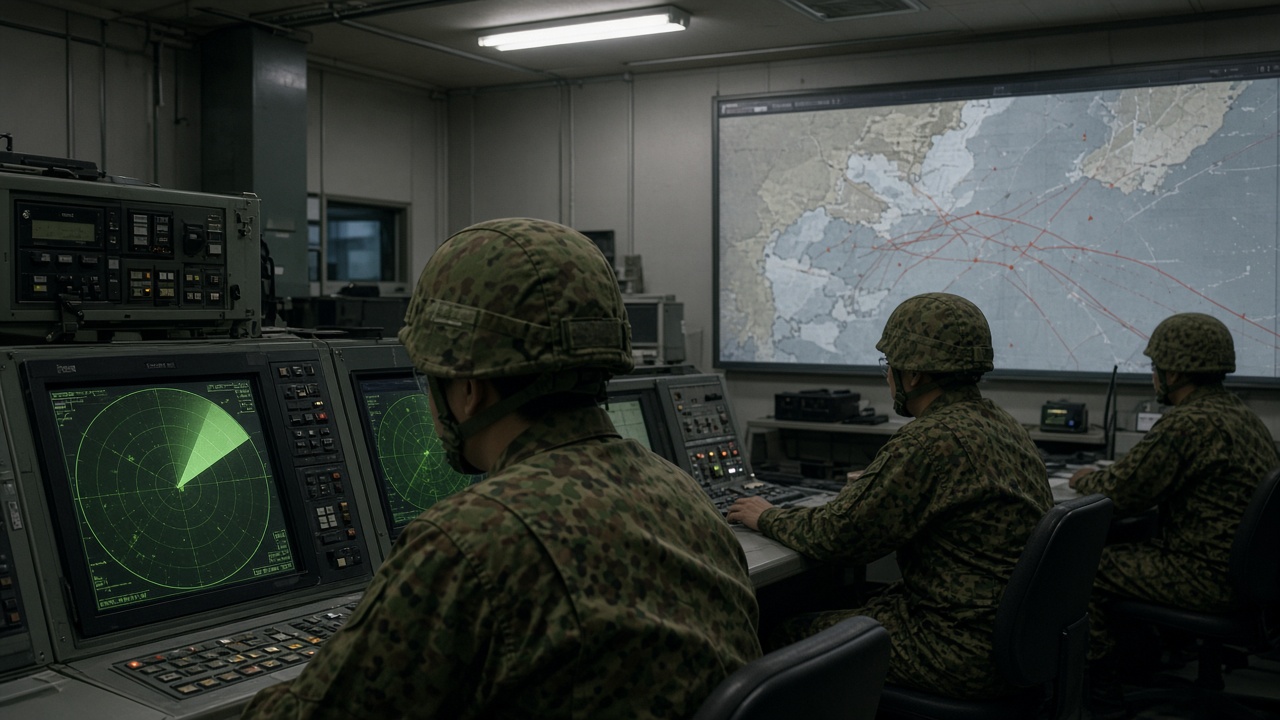
Japan’s government tracked multiple North Korean projectiles fired from the Sondok area early Wednesday after South Korea’s Joint Chiefs of Staff reported a fresh salvo toward the Sea of Japan, the latest in a week of launches that Pyongyang paired with a public dismissal of diplomacy with Washington.
What Tokyo confirmed
Chief Cabinet Secretary Yoshimasa Hayashi told reporters that Japan detected the launches in coordination with the United States and South Korea and that no missiles landed inside Japanese territory or its exclusive economic zone. Jiji Press quoted defense officials saying the ministry was still determining whether the weapons were ballistic or cruise missiles, a distinction that affects how quickly Tokyo can lodge protests under United Nations resolutions.
The Self-Defense Force activated standard tracking assets, including Aegis destroyers in the Sea of Japan and ground-based radar on Honshu, according to ministry briefings described by Kyodo News. No public shelter orders were issued for coastal prefectures, and civilian aviation continued with minor rerouting around the launch window.
Seoul’s readout
South Korea’s JCS said the missiles lifted off from South Hamgyong Province and that allied analysts were studying trajectories and debris signatures. Yonhap News Agency cited defense experts who said at least one round appeared to be a Hwasong-11Ra tactical ballistic missile with a range below 300 kilometers, which would mark the third ballistic test in seven days after a dozen short-range launches from Wonsan last Thursday.
The JCS statement repeated that South Korean and U.S. forces maintain readiness to respond to provocations. U.S. Indo-Pacific Command said the event did not pose an immediate threat to American personnel or territory, language it has used after prior tests this month.
Pyongyang’s messaging
Hours before the launches, Kim Yo Jong, the influential sister of leader Kim Jong Un, rejected resuming talks with the United States unless Washington abandoned what she called hostile policy, UPI reported from Seoul. Her statement followed public U.S. claims about North Korean involvement in the recent Binance cryptocurrency theft, which Pyongyang denies.
North Korean state media had already publicized a cluster warhead test for tactical missiles on Saturday and a dispersal warhead trial for strategic cruise missiles on Monday, tests the South Korean military did not always announce in real time. Tokyo treats any unannounced launch as a violation of Security Council prohibitions regardless of range.
Regional response
Prime Minister Sanae Takaichi’s office said Japan would work through the United Nations and with partners to press North Korea to halt weapons development. Foreign Minister Takeshi Iwaya is scheduled to speak with South Korean counterpart Cho Hyun later Wednesday about tightening trilateral missile-defense drills, according to officials cited by Kyodo.
Japanese fishing cooperatives operating near the Yamato Bank reported no disruptions, but the coast guard warned small vessels to monitor navigation bulletins through the evening. Airlines serving routes between Tokyo and Seoul reported on-time operations after brief holding patterns offshore.