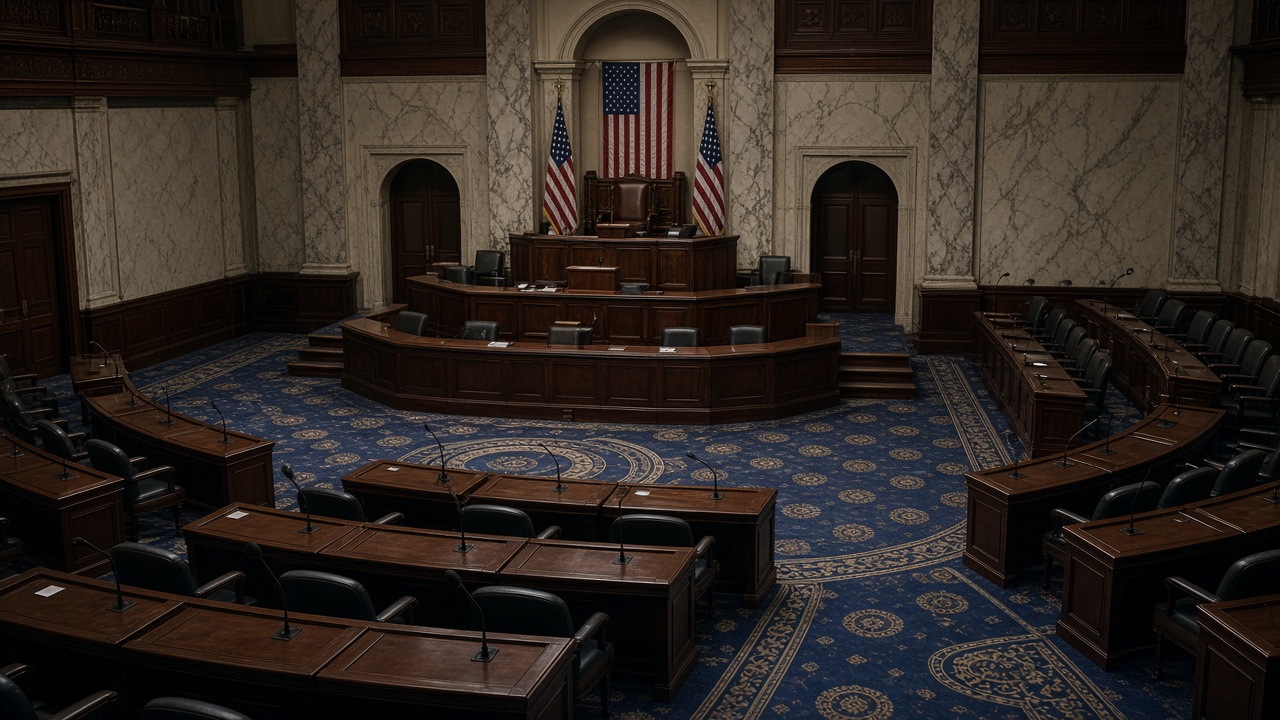
House Speaker Mike Johnson told colleagues Wednesday that he will not run for Republican leader in the next Congress, a day after projected Democratic gains handed the GOP a minority it had not planned for and cleared the way for a bruising internal fight over who speaks for the party against an emboldened opposition.
Johnson, who won re-election in Louisiana on Tuesday, is expected to remain a rank-and-file member when the new House convenes in January. His decision ends speculation that he would try to hold the top post as minority leader after two turbulent years as speaker marked by razor-thin margins, repeated funding cliffs, and friction over the Iran war and other Trump administration priorities.
Who is running
Judiciary Committee Chairman Jim Jordan of Ohio told members in a letter Wednesday that he will seek the minority leader post. Jordan argued he is “battle-tested on the oversight front” and said Republicans need a leadership team prepared for Democratic investigations of President Donald Trump’s administration.
House Majority Leader Steve Scalise, another Louisianan and a close Johnson ally, is also expected to run. Scalise’s office said he would announce his bid Wednesday. The two men represent different factions: Jordan as a conservative firebrand who defended Trump through two impeachments and the Jan. 6 aftermath, Scalise as a longtime operator who has climbed the leadership ladder through fundraising and coalition building.
Rep. August Pfluger of Texas, chairman of the Republican Study Committee, said he would challenge Majority Whip Tom Emmer for the minority whip job, adding another layer of competition as the conference absorbs losses that cut deep into suburban districts.
What Johnson said
In a dear-colleague letter, Johnson cited family sacrifices and did not dwell on election night. He wrote that after three years in leadership he wanted to give his family “more of the attention and presence they so richly deserve,” while listing legislative accomplishments with Trump. He made no mention of whether he will serve his full two-year term or leave early, a path other former speakers have taken.
Johnson had told CBS News in October that he intended to stay on as party leader if Republicans lost the House, but he had also joked about returning to Louisiana to start a lawn business if the majority vanished — a remark that resurfaced as networks projected a wide Democratic margin.
What the calendar says
House Republicans scheduled leadership elections for Nov. 10, with candidates required to declare by Nov. 6 at noon. Democrats, meanwhile, will choose their speaker candidate once all races are called; their oversight plans — spanning the Iran conflict, immigration enforcement, and executive branch spending — will shape whatever message the GOP minority tries to carry.
The whip count will not be public, but Jordan’s pitch centers on unity against investigative “playbooks” he says he already knows. Scalise’s allies counter that the conference needs a leader who can rebuild in districts where Republicans lost ground on cost-of-living and health care messaging, not only on cable combat.
What it means for one district
For voters in competitive seats, the leadership fight is proxy for how Republicans will talk about Trump’s agenda without the gavel. A Jordan-led minority would likely emphasize aggressive responses to subpoenas and hearings; a Scalise-led team would stress fundraising and candidate recruitment for 2028. Neither path restores committee chairmanships Democrats will hold in January.
Johnson’s exit closes a chapter that began in October 2023, when Republicans exhausted three other nominees before elevating a little-known constitutional lawyer to the speakership. His departure now leaves the conference where it often was under his tenure: choosing between confrontation and consolidation while Democrats set the floor agenda.