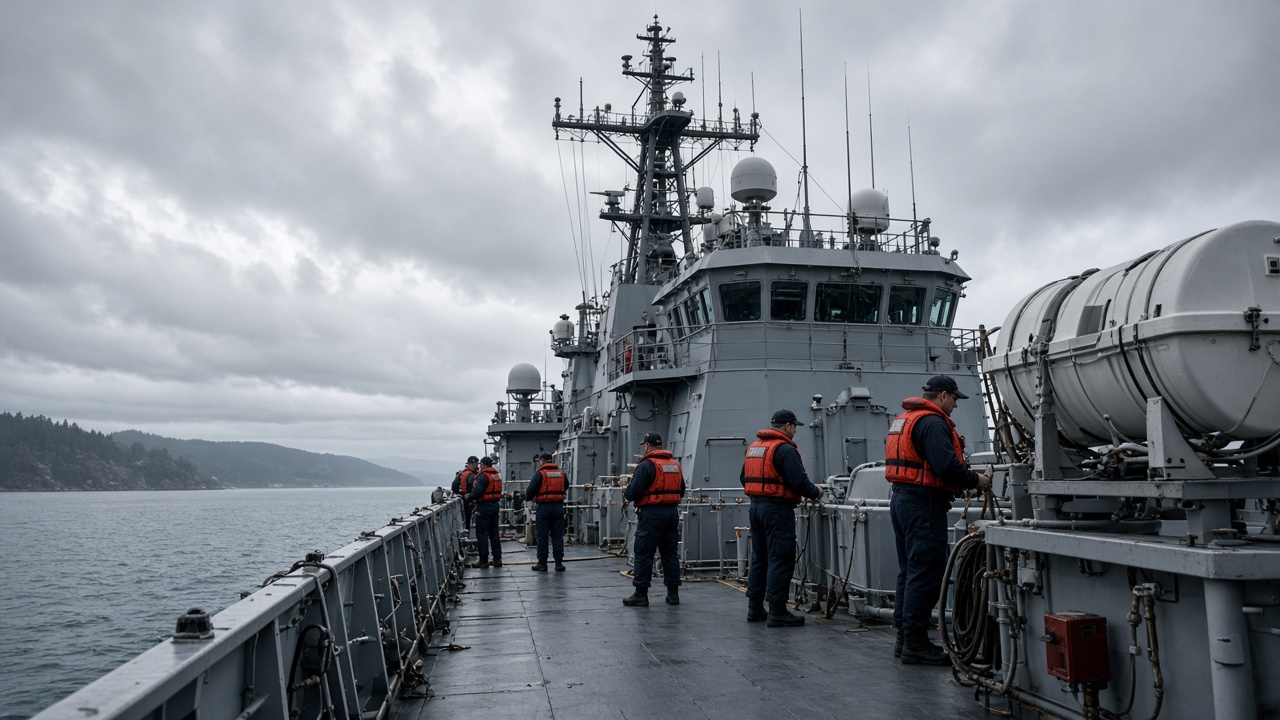
NEC Corp validated a low-Earth orbit messaging chipset aboard a Maritime Self-Defense Force training sortie off Kagoshima, passing handheld satellite links through simulated rescue drills that ministry briefings cast as dual-use readiness when terrestrial networks fail. Haruto Suzuki’s technology desk treats the trial as procurement signaling—not a deployed fleet upgrade—ahead of disaster-agency coordination talks following this week’s national readiness messaging.
Field trial design
Crew used prototype handsets to exchange short data bursts while helicopters staged medevac patterns. NEC logged latency, packet loss, and handoff behavior as vessels moved beyond coastal cell coverage.
The chipset targets narrowband safety messages rather than consumer broadband; bandwidth caps keep terminals small enough for rigid-hull inflatables.
LEO versus geostationary backup
Japan’s disaster planners learned from earthquakes and typhoons that fiber and microwave backhaul fail together in mountainous coasts. LEO constellations promise faster revisit times than traditional satellite phones, but require new ground segments and interference coordination.
NEC’s trial paired ship-mounted gateways with handheld units, mimicking scenarios where prefectural command posts lose fiber links.
Defense and civilian overlap
MSDF training sorties often host equipment evaluations under research budgets separate from major platform purchases. Dual-use framing helps NEC pitch similar kits to fire agencies and coast guard auxiliaries without triggering export-control reviews tied to pure military radios.
Privacy advocates will ask who stores message metadata; NEC said trial logs remain in classified exercise servers pending civilian policy templates.
Vendor competition
Domestic rivals including Fujitsu Ltd and foreign LEO operators court the same ministry channels. NEC leans on integration with existing government LTE cores and municipal disaster portals tested after prior quakes.
Chipset cost and terminal price still gate mass issuance to volunteer fire units in rural prefectures.
What would change procurement
Positive falsifiers include budget lines in supplementary appropriations debates, interoperability certificates with the Digital Agency’s emergency platforms, and successful parallel trials with prefectural disaster networks in Hokkaido.
Negative falsifiers include spectrum interference findings, handset battery failures in cold seas, or delays in MSDF doctrine updates that leave gear in storage.
Standards and export controls
Chipsets touching MSDF exercises face export-control classifications even when marketed for civilian disaster use. NEC legal teams map ECCN categories before pitching ASEAN disaster ministries similar kits.
Interoperability tests with Fire and Disaster Management Agency consoles remain on the roadmap; without them, prefectural buyers hesitate to fund parallel maintenance contracts.
Bottom line
NEC’s Kagoshima sortie validated LEO messaging hardware under rescue stress, not consumer satellite hype. Deployment timelines still ride on ministry budgets and civilian agency acceptance tests.