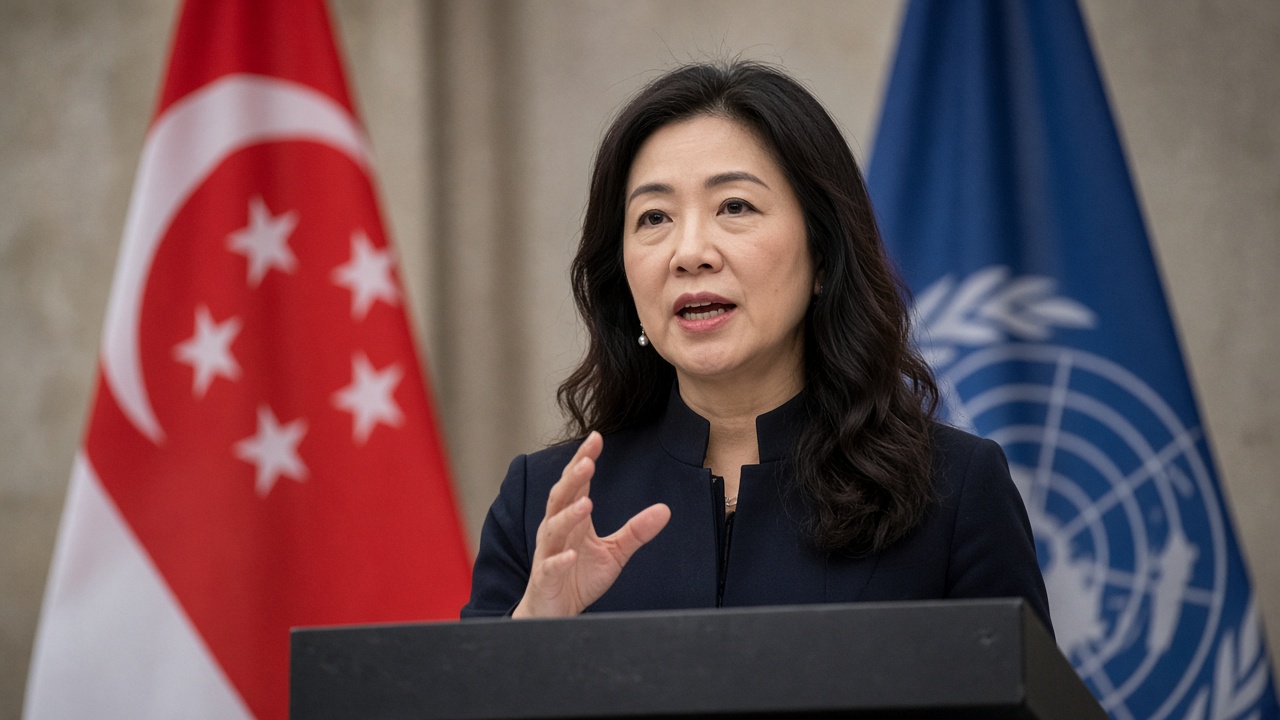
SINGAPORE — Ambassador for International Law Rena Lee has become the first Singaporean elected to the International Court of Justice and the first woman from Southeast Asia to join the 15-judge bench, after securing majorities in both the United Nations General Assembly and Security Council on 3 November in New York.
Lee, 57, won one of five seats on the court for the term that runs from February 2027 through 2036. Singapore’s Ministry of Foreign Affairs said she received 151 votes out of 191 cast in the General Assembly and 13 of 15 in the Security Council, clearing the absolute majorities required in each body on the first round of balloting.
What the court does — and why the vote mattered here
The ICJ is the UN’s principal judicial organ. It hears disputes between states that accept its jurisdiction and issues advisory opinions when authorised UN bodies ask legal questions. Fifteen judges serve nine-year terms; five seats were open in this cycle alongside incumbents seeking re-election.
For Singapore, the result is both diplomatic and institutional. Lee has spent more than three decades in public international law, including leading negotiations on the high seas treaty and serving in senior legal roles in Singapore and before international tribunals. Prime Minister Lawrence Wong said Lee took the highest vote tally in the General Assembly and tied for the top count in the Security Council.
The New York ballot and the rest of the bench
The UN elected four judges in an earlier round on the same day: Dapo Akande of the United Kingdom, François Alabrune of France, Mahmoud Daifallah Hmoud of Jordan and Lee. A fifth vacancy remained when the Assembly and Council initially split on different candidates; the bodies later elected Phoebe Okowa of Kenya to fill the remaining seat, completing the five-member class.
Lee’s campaign drew support across regions Singapore has cultivated through small-state diplomacy and technical legal work. Foreign Minister Vivian Balakrishnan said the margins reflected trust in Lee’s abilities and standing, while Law Minister Edwin Tong noted the “hard-fought campaign” and described the ICJ as an anchor for a rules-based order at a time of global uncertainty.
What Lee said — and what happens next
In a statement released through MFA, Lee said she was “deeply honoured by the trust and confidence that the international community has placed in me” and thanked countries that backed her candidacy. She pointed to the court’s role in peaceful dispute settlement when “global uncertainty” is rising, and pledged to serve with independence and impartiality.
She will remain Singapore’s ambassador until she takes the bench in February 2027. Until then, Singapore’s legal team will hand over ongoing treaty and advisory work while Lee prepares for The Hague. The government has not announced who will succeed her in the ambassador role.
At home, the election lands on a week when Singapore’s leaders have emphasised multilateral institutions rather than bilateral shortcuts — a message Lee’s ICJ term will now personify on the world stage rather than only in ministry talking points.