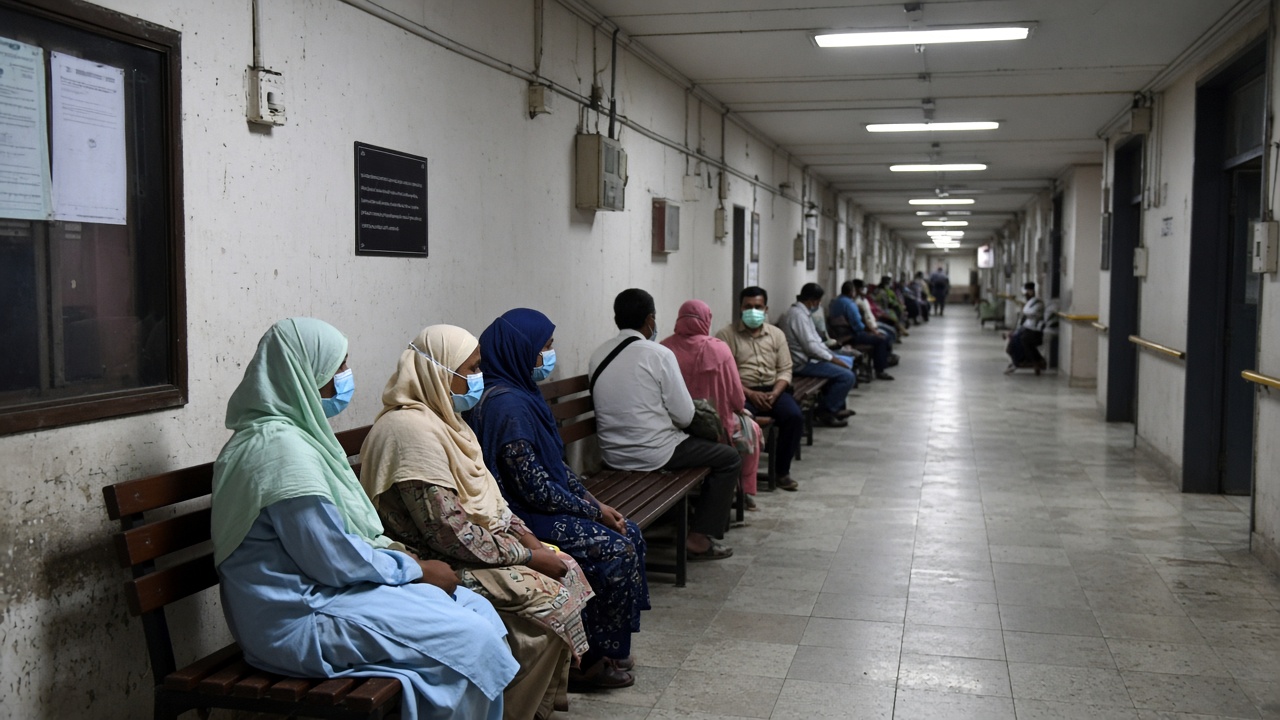
Safdarjung Hospital’s pulmonology outpatient clinic registered a marked rise in respiratory visits Tuesday as Delhi’s air quality remained in the very poor range, with doctors telling InfoHandle that dry cough, throat irritation and shortness of breath on minimal exertion dominated triage even before the Commission for Air Quality Management escalated to GRAP Stage III curbs later in November.
What clinicians see
Staff in the central government hospital’s chest unit said walk-ins included longtime asthma patients needing steroid step-ups and first-time adults presenting with burning eyes after morning commutes. CNBC-TV18 and Indian Express reporting from major Delhi hospitals described similar 15–20 percent outpatient bumps when PM2.5 readings climbed in late October and early November—a pattern Safdarjung pulmonologists said arrived earlier this season than the post-Diwali peak they usually brace for.
Emergency physicians noted fewer catastrophic admissions so far but more repeat OPD visits within the same week when patients skipped mask use outdoors. Pulse oximetry checks stayed largely stable, suggesting exacerbation more than acute hypoxia for many, yet nurses still stocked additional nebuliser slots during afternoon pollution spikes.
Hospital response
Safdarjung has tracked pollution-correlated load before, appointing nodal officers to correlate AQI data with emergency and chest clinic registers. The health desk’s November caseload aligns with that monitoring push: when CPCB averages sit above 300, appointment books fill with medication tweaks rather than new diagnoses alone.
The Union health ministry’s November chest-clinic guidance under the National Programme on Climate Change and Human Health directs medical colleges and district hospitals to run daily screening windows during peak pollution months. Safdarjung, as a major teaching hospital, already hosts specialised pulmonology capacity; the surge tests how quickly counselling on indoor mopping, mask use and inhaler technique scales when GRAP stages dominate headlines.
Who is most affected
Doctors flagged elderly COPD patients, children with allergic rhinitis, and outdoor workers who cannot stagger shifts when employers ignore staggered office advisories. Pregnant women and cardiac patients with co-morbid lung disease received explicit warnings to limit outdoor exertion on days AQI colour codes turned red-orange on municipal apps.
Private labs nearby reported parallel spikes in spirometry referrals, but Safdarjung’s OPD numbers matter for low-income patients relying on subsidised consults when air turns hostile.
Links to wider policy
Hospital load is a lagging indicator of GRAP enforcement—road sweeping and construction dust checks aim to keep PM2.5 from reaching the levels that flood chest clinics. When Stage III later halted broad construction categories, Safdarjung staff hoped admissions would plateau; early November very poor air already stretched outpatient capacity without that heavier trigger.
What patients can expect
Physicians advised carrying rescue inhalers, avoiding outdoor exercise before noon, and returning for review if symptoms persist after AQI improves—because particulate inflammation can outlast a single clean-air day. Safdarjung did not open a separate pollution-only clinic in this window, but nurses triaged high-risk cases toward faster consult slots when SpO2 dipped or wheeze audibly increased.
Smog season is not new; the timing of this OPD surge is. Safdarjung’s caseload is an early warning that very poor air in the first week of November loads public hospitals before the harshest GRAP stages and farm-fire peaks arrive.