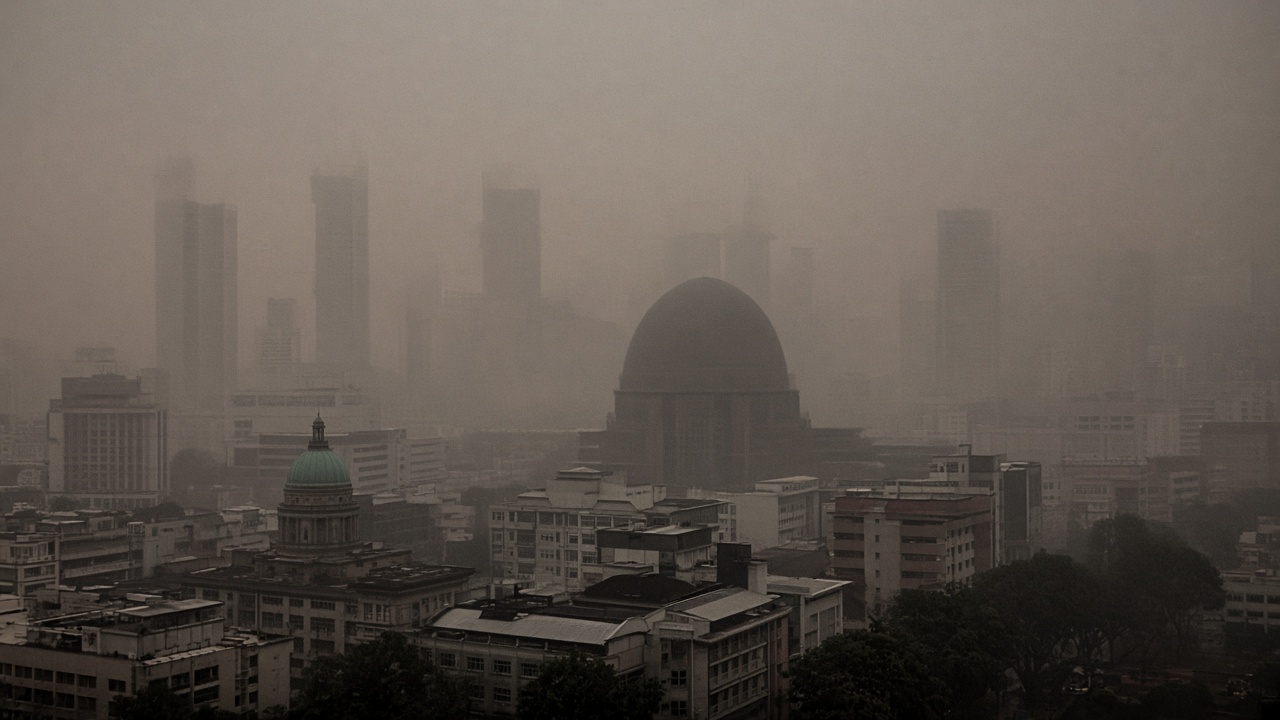
Singapore’s Parliament passed amendments to the Transboundary Haze Pollution Act on Wednesday, giving regulators arrest powers, fines that can reach hundreds of thousands of Singapore dollars per day, and new levers over companies whose land or supply chains are tied to smoke drifting across the Malacca Strait.
The bill cleared the chamber without dissent after weeks of elevated particulate readings that residents blamed on fires in Indonesia. Minister for Sustainability and the Environment Grace Fu told lawmakers the city-state could no longer rely on polite notices while households kept windows shut and clinics reported higher respiratory visits.
What the new powers do
Under the revised law, serious offences become arrestable and courts may try corporate defendants in absentia when executives stay overseas. Daily fines for non-compliant firms rise roughly tenfold to about S$1 million per day, with an overall ceiling above S$20 million for sustained violations.
Authorities may now order designated companies to hire independent assessors, paid by the firms, to trace fire links across plantations and subsidiaries. Appointment does not imply guilt, officials stressed, but findings feed enforcement decisions. Singapore can also restrict financial services for designated entities, a significant threat in a hub where treasury, insurance and trade finance operations cluster.
Enforcement already underway
Even before the vote, the National Environment Agency issued warnings to 10 foreign-based companies demanding firefighting teams, burn bans and written action plans. Another 10 Singapore-registered firms were told to appoint government-approved assessors immediately.
Officials said companies blaming third-party contractors for fires must show they took reasonable prevention and suppression steps on the ground. Satellite monitors including Nusantara Atlas recorded more than 1.9 million hectares burned in Indonesia between January and September, much of it in recent months, intensifying pressure on downstream palm and pulp groups with Singapore listings or banking relationships.
Limits and next steps
Singapore enacted the original haze statute in 2014, yet only six cases were filed in 2015 and four investigations remain open years later because evidence sat outside Singapore’s jurisdiction. The amendments do not remove the need for Indonesian cooperation, but they expand the toolkit for punishing firms that operate or raise capital in the city while smoke affects its residents.
NEA said it would publish guidance on assessor standards within weeks and coordinate with the Monetary Authority of Singapore on how financial restrictions would be imposed. Households were advised to continue monitoring the hourly Pollutant Standards Index and to follow health advisories if readings climb into unhealthy bands again.
Employer groups asked for clearer timelines on appeals, while environmental NGOs said the true test would be whether any parent company faces prosecution before next year’s dry season.
Schools and elder-care facilities said they would keep indoor activity plans ready if the PSI crosses the unhealthy threshold again.