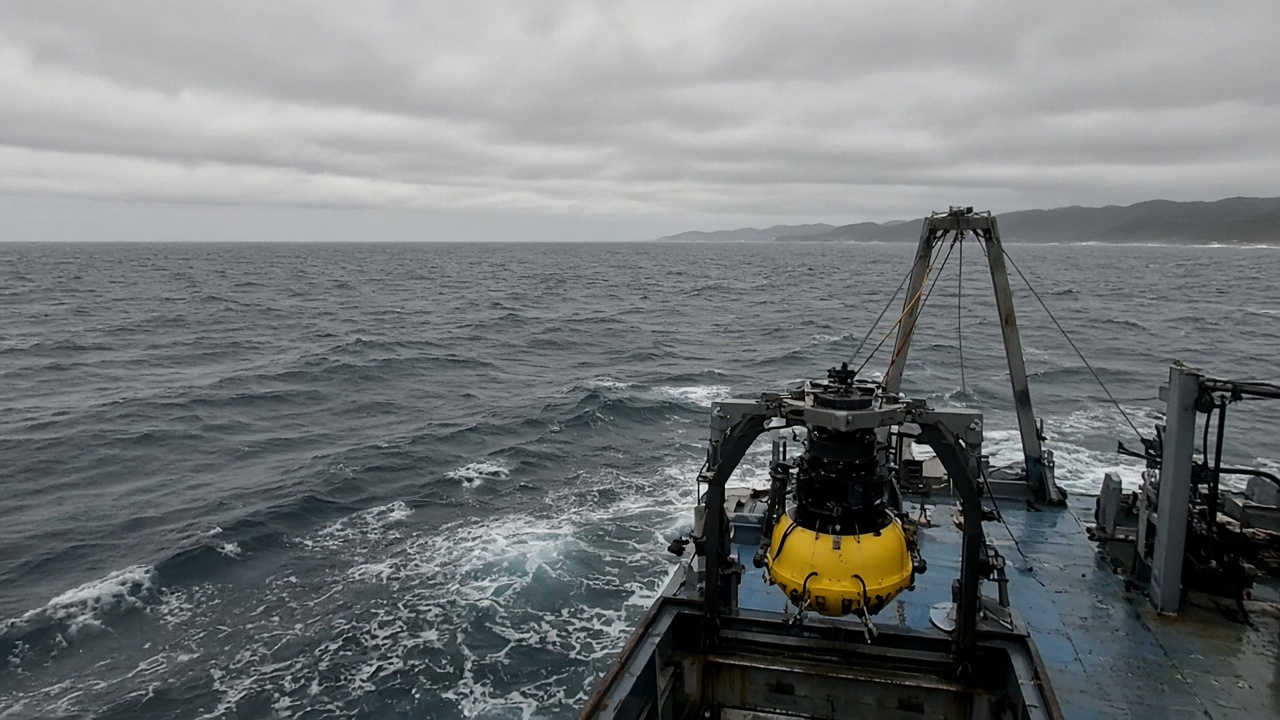
Academia Sinica researchers cataloged methane seeps along the Yilan continental slope after a sonar cruise aboard the research vessel Legend, adding high-resolution maps to Taiwan’s offshore carbon monitoring as climate negotiators press for better leak data.
Cruise findings
The team identified 37 vent clusters between Su’ao and Turtle Island, releasing plumes detected by multibeam sonar and water-column sensors. Most seeps sit between 180 and 420 meters depth, outside active fishing trawls but near submarine cable corridors operators monitor for sediment shifts.
Lead oceanographer Dr. Lin Pei-ching said flux measurements are preliminary; lab analysis of core samples will quantify whether vents are thermogenic or biogenic. Either type matters for greenhouse ledgers Taiwan submits under UN climate reporting.
Why the shelf matters
Submarine canyons off northeastern Taiwan mix cold currents with organic-rich sediments, creating conditions for methane hydrate instability. Past surveys mapped broad zones; this cruise narrowed vent coordinates to within tens of meters, aiding future repeat surveys.
Energy developers eye the region for offshore wind; methane data could inform environmental impact statements required before turbine foundations are approved.
Instruments and partners
The Legend deployed a Kongsberg EM712 multibeam echo sounder and a CTD rosette sampling dissolved methane concentrations. Sinica collaborated with the Ocean Affairs Council on permitting, keeping transects clear of naval exercise windows announced last month.
Data will enter an open repository after peer review, a shift from earlier policies that restricted offshore geophysical sets over security concerns.
Policy implications
The Environmental Protection Administration said seep maps will feed Taiwan’s next national inventory update, though offshore methane remains a smaller slice than coal plant emissions. Scientists argue that underestimating leaks skews blue carbon projects tied to coastal wetlands restoration.
Follow-up cruises in spring will deploy autonomous underwater vehicles for time-series monitoring. For now, the Yilan slope joins a short list of western Pacific margins with publicly tagged vent catalogs—useful science in a week dominated by market volatility onshore.
Climate accounting detail
Methane’s warming potency makes even small offshore leaks material in national inventories. Sinica scientists said vent flux estimates could shift Taiwan’s reported non-CO2 emissions by low single-digit percentages if hydrate seeps intensify with ocean warming.
Offshore wind developers requested the data to model safety buffers around turbine foundations; methane plumes are not explosive at depth but indicate geologic activity that affects sediment stability.
Open data push
Graduate programs at National Taiwan Ocean University will receive processed sonar tiles for thesis work, part of a ministry push to keep marine geophysical sets from disappearing into classified silos.