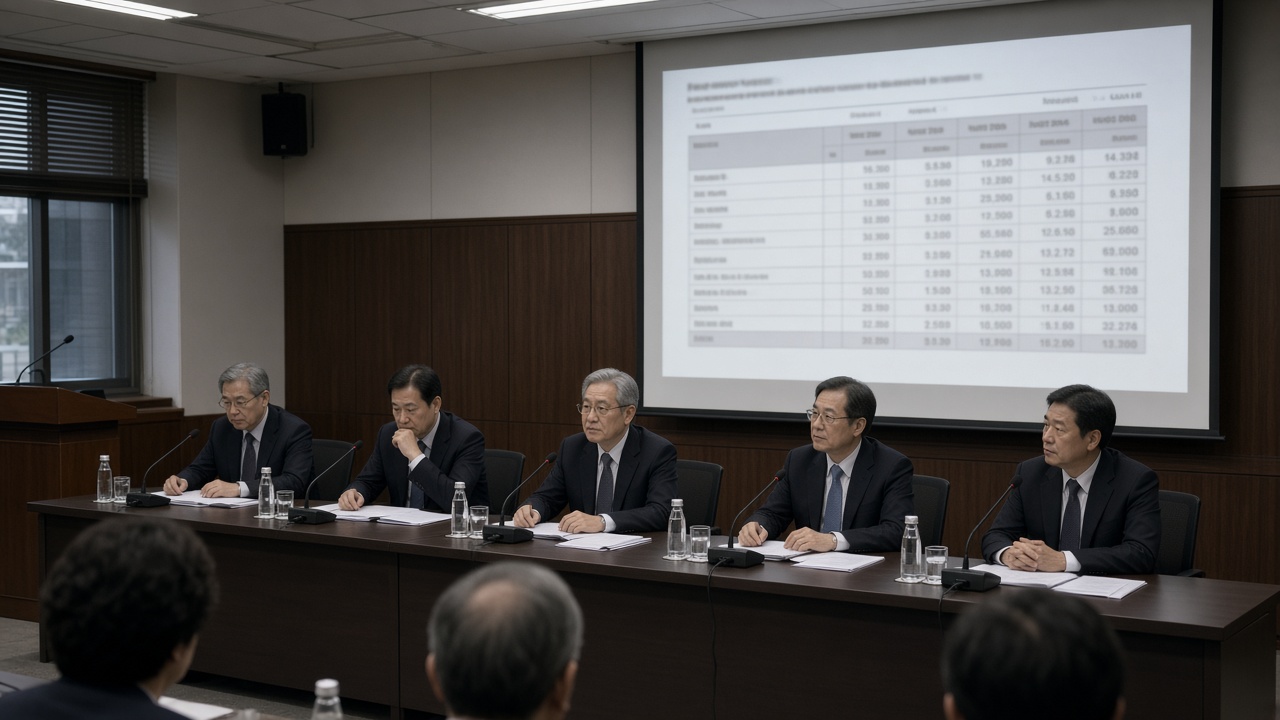
The National Stabilization Fund desk resumed purchases of Taiwan 50 exchange-traded fund units on Wednesday after Monday’s cap-weighted slide drained an estimated NT$480 billion from local equities, according to a Finance Ministry briefing that landed before the cash session opened.
What the desk actually bought
Fund managers said the intervention focused on the TW50 ETF, a liquid basket tied to the largest TWSE listings, rather than single-name support that can distort disclosure. The ministry did not publish a unit count, but traders on the institutional chat boards pegged the first tranche at roughly NT$12 billion, executed through multiple brokers to avoid signaling a single entry price.
That figure combines foreign sales, margin liquidations, and ETF arbitrage flows compiled by the Taiwan Stock Exchange from settlement data. It is not a measure of fund spending; it explains why policymakers moved after two volatile sessions that followed U.S. midterm positioning and a weaker NT dollar.
How brokers read the signal
Yuanta Securities chief strategist Lin Mei-hua told clients the TW50 route preserves the fund’s longstanding preference for broad liquidity support. “Single-stock bids invite guessing games about which board is under pressure,” she wrote in a morning note. “ETF lines keep the message: stabilize the tape, not pick winners.”
Foreign desks still sold into the opening hour, but the ETF bid helped the cap-weighted gauge hold above 43,400 before a late push toward 43,499.22. Dealers said short covers accelerated once stabilization brokers appeared on the TWSE time-and-sales feed, a pattern that repeated during prior AI-sector corrections in August.
Limits the ministry acknowledged
Finance officials stressed the fund cannot reverse global risk appetite. Central bank Governor Yang Chin-long, speaking at a legislative hearing Tuesday, said FX smoothing and equity support operate on different clocks. The stabilization desk answers to the Executive Yuan; the central bank intervenes in currency markets under separate statutes.
Opposition lawmakers asked whether repeated ETF purchases mask structural margin debt in retail accounts. The ministry response, circulated to reporters overnight, said the desk will publish a post-intervention summary within ten business days, a timeline used after the August tech selloff.
What holders should watch next
Contract chipmakers and AI server assemblers still dominate index weight, so fund activity cannot decouple Taiwan’s benchmark from U.S. hyperscaler capex headlines. Investors will watch Thursday’s foreign settlement report and whether the NT dollar stabilizes below 32.80 after Tuesday’s 32.76 print.
For now, the message from Taipei is narrow: liquidity first, transparency later. Whether that rebuilds trust after Monday’s 1,612-point drop depends on follow-through in disclosure, not the size of the first TW50 ticket.
Historical context investors cite
Stabilization fund entries in 2020 and 2024 also leaned on ETFs before publishing detailed ledgers. Fund administrators argued then, as now, that immediate liquidity trumped minute-by-minute reporting. Subsequent audits showed purchases concentrated in morning windows, a pattern desk economists expect to repeat this week.
Life insurers with large Taiwan equity sleeves said they paused proprietary selling when fund brokers appeared, preventing a feedback loop that could have pushed the cap-weighted gauge below 43,000. Reinsurance units nonetheless trimmed FX hedges, a reminder that equity support does not cap currency volatility.
Retail holders on margin should still watch maintenance notices: the fund does not backstop individual accounts, and brokers may raise collateral requirements if implied volatility stays elevated through November options expiry.
Exchange-traded fund market makers said TW50 bid-ask spreads narrowed after the fund appeared, a mechanical liquidity gain even if direction remains uncertain. That narrowing helps passive funds rebalance without paying excessive slippage, a secondary benefit policymakers rarely advertise.