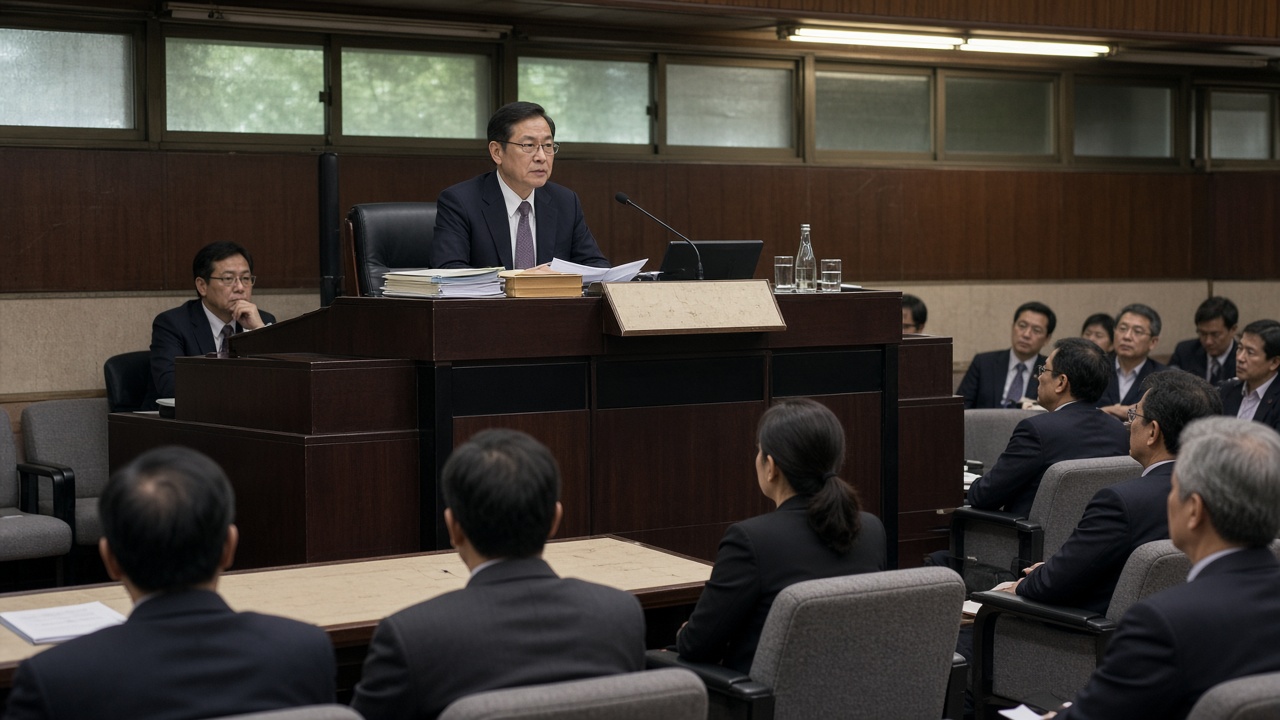
Taiwan’s Cabinet won a procedural advance on Tuesday for a NT$607.6 billion (US$18.51 billion) supplementary budget, sending the package to Legislative Yuan committees after Premier Cho Jung-tai briefed lawmakers on unmanned weapons and missile lines that had stalled in earlier rounds.
The plan, first proposed in September as part of fiscal 2026 spending, would push central-government expenditure NT$47.55 billion above revenue and require NT$208.5 billion in new debt once NT$161 billion in debt repayments are included, according to the Executive Yuan report lawmakers received last month.
Defense lines that returned to the agenda
About NT$145.7 billion in defense spending that opposition legislators previously rejected is embedded in the supplementary request. That block includes NT$55.9 billion for three unmanned categories the Ministry of National Defense has highlighted: coastal attack drones, coastal reconnaissance drones and small one-way unmanned surface vessels.
Another NT$13 billion would fund a package of seven items centred on a midcourse anti-ballistic missile system—the Chiang-Kong missile developed by the National Chung-Shan Institute of Science and Technology. The budget also carries NT$64.5 billion in classified allocations tied to Taiwan–United States co-development programmes whose open funding was trimmed earlier in the year.
Non-defence spending and fiscal politics
State-run oil supplier CPC Corp., Taiwan would receive NT$233.8 billion—the largest single line—to stabilise operations after years of deficits linked to government price controls on fuel and natural gas. An additional NT$11.1 billion would cover planned allowance increases for military personnel, civil servants in managerial posts, coast guard members on hazardous duty, and local elected aides.
Committee review does not guarantee passage. Opposition parties have used supplementary budgets to challenge Cho’s fiscal math before, and each drone or missile line will face separate questioning on delivery timelines and domestic production content. Cho’s appearance was timed as markets remain volatile after a multi-day slide in the TAIEX, adding pressure on the Cabinet to show it can fund both social stabilisers and deterrence hardware in one envelope.
What committees will probe next
Lawmakers are expected to demand teardown inspection rules for unmanned procurements after recent prosecutions over mainland-origin components in military drones. They will also ask how much of the Chiang-Kong package can be manufactured in Taiwan if supply chains tighten. For Cho, the immediate task is keeping the extraordinary accounts bill moving while separate hearings continue on export-control legislation triggered by the Keelung diversion case.
If committees report favourably, floor votes could still slip toward year-end as party caucuses trade concessions on CPC subsidies and pay raises. A failure would leave the drone and missile tranche unfunded for another quarter—precisely the outcome Cho told the Yuan he wants to avoid.