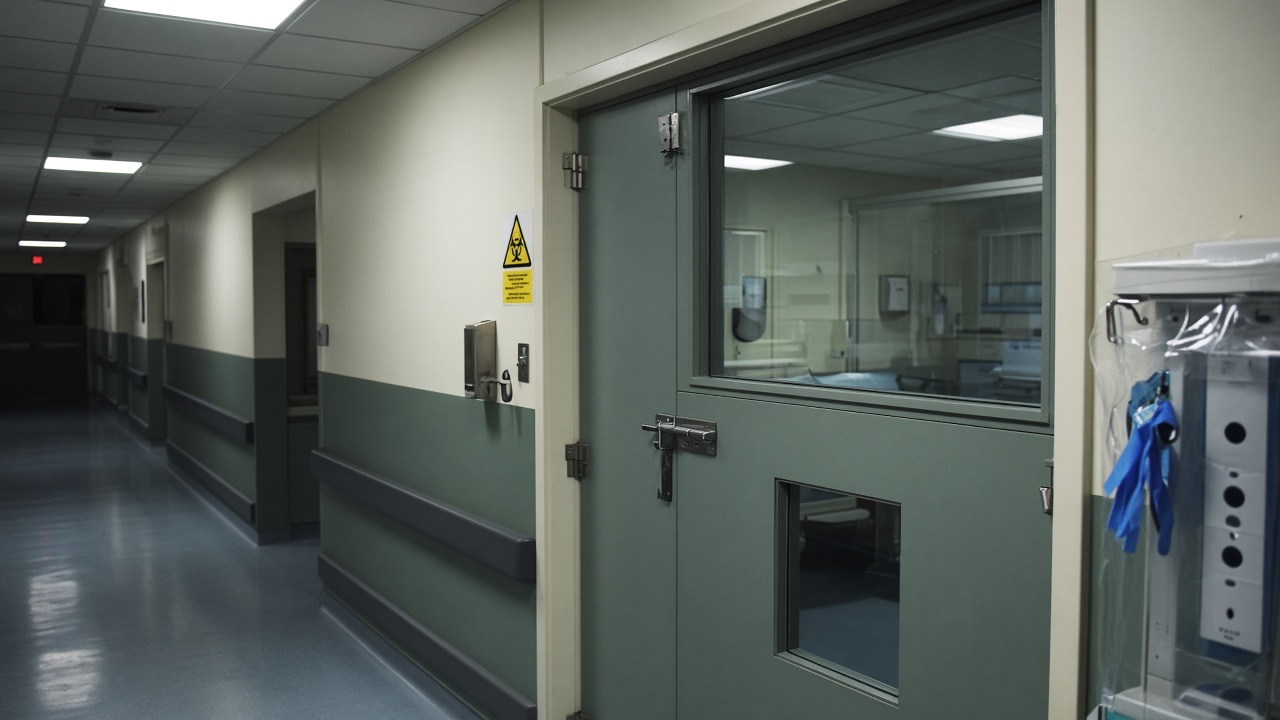
The UK government confirmed Wednesday that a British healthcare worker in the Democratic Republic of Congo has tested positive for Ebola, activating long-standing protocols for isolating imported viral hemorrhagic fevers even as officials stressed that the threat to the wider public remains low.
A spokesperson said “well-established procedures” were in motion and that further information would follow when appropriate. The case is the first confirmed infection of a UK national during the current Congo outbreak, which has killed more than 5,000 people and ranks as the deadliest Ebola epidemic in the country’s history.
What is known about the patient
Officials did not release the worker’s name, employer, or exact location within Congo. Reuters reported, citing an internal document it had not independently verified, that the patient is a clinician who would be flown to Britain for treatment. BBC News said it had not seen that document but noted that a UK resident exposed in July was previously airlifted home under the same specialist pathway.
Congo’s health ministry has recorded more than 10,000 confirmed cases since the outbreak began in May, with a reported case fatality rate near 49 percent at the end of October. Ebola spreads through contact with infected bodily fluids; it is not airborne in the way respiratory viruses are, which is why public-health agencies can contain importations when isolation and contact tracing work.
How the UK responds
Britain has handled four confirmed Ebola cases historically: one laboratory incident in 1976 and three health workers infected while fighting the West Africa outbreak between 2014 and 2015. None of those importations led to secondary deaths in the UK. The NHS maintains dedicated high-level isolation units — including the Royal Free Hospital’s specialist facilities in London — that train staff for exactly this scenario.
Public Health England successor agencies coordinate with the Foreign Office on aeromedical evacuation, often using military transport configured for biocontainment. The process is slow by design: confirming diagnostics, stabilizing the patient, and mapping contacts in Congo must precede any flight.
What NICE and NHS planners weigh
Clinicians will focus on supportive care and, where indicated, approved antiviral or monoclonal therapies stocked for VHF emergencies. The absolute risk to London commuters or hospital visitors outside the isolation unit is negligible if protocols hold; the operational risk sits with the small teams managing fluids, waste, and laboratory samples.
Hospital trusts have rehearsed Ebola pathways since the West Africa crisis, yet any live case still tests bed capacity and staffing rotas already strained by winter pressures. Trust leaders will watch whether the evacuation diverts critical-care nurses from routine emergency demand.
What happens next
Downing Street is expected to confirm arrival timing only once the aircraft is en route, both to protect patient privacy and to avoid premature contact-tracing alerts. Congolese authorities will continue ring vaccination around the worker’s last known duty station while UK officials trace anyone who shared transport or housing during the incubation window.
For the British public, the actionable guidance has not changed: there is no community exposure signal in the UK today. The bulletin matters because it tests a pipeline built for rare events — and because Congo’s outbreak scale means more international responders remain in high-incidence areas where another importation cannot be ruled out this winter.