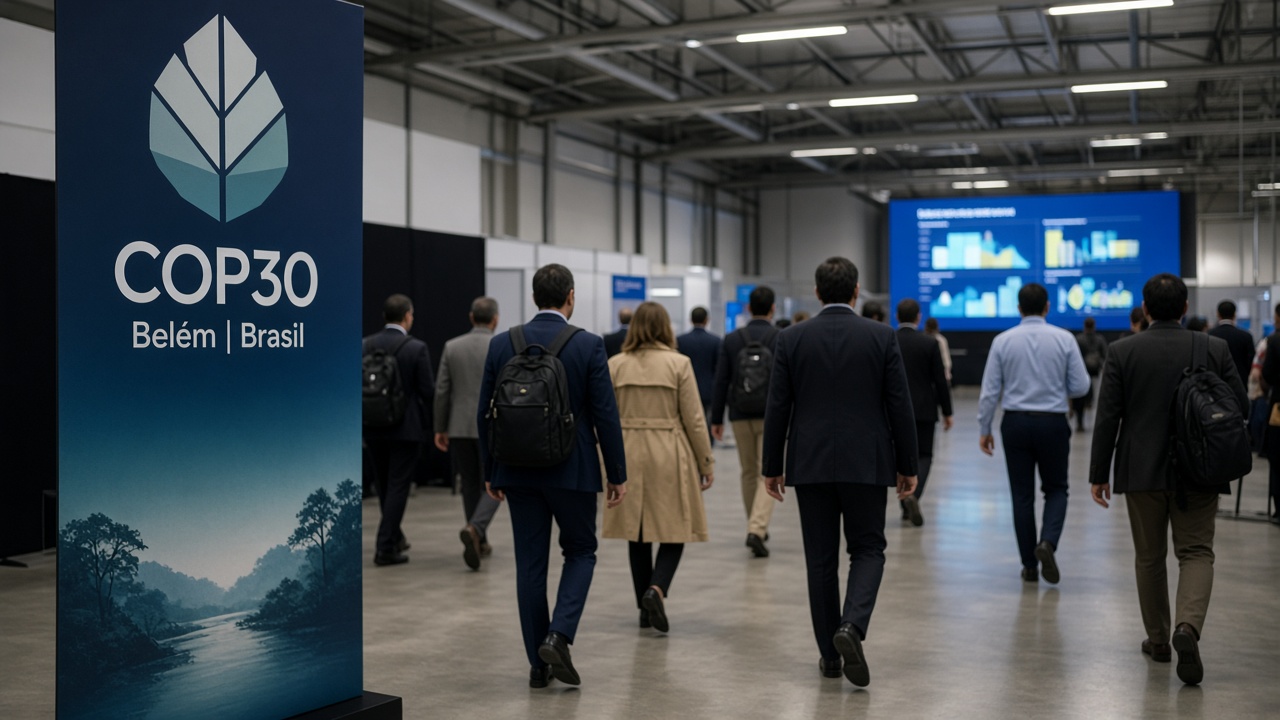
The United Nations Environment Programme said Tuesday that if governments merely enforce laws already on the books, the planet is on course for about 2.8 degrees Celsius of warming this century—a half-degree improvement from last year’s 3.1-degree projection but still far above the Paris Agreement’s core targets. The sixteenth Emissions Gap Report, released ahead of COP30 in Belém, Brazil, finds that even full delivery of the latest round of national climate pledges would leave warming between 2.3 and 2.5 degrees, and that the world will very likely blow past 1.5 degrees temporarily within the next ten years.
Methodology versus momentum
Lead author Anne Olhoff told reporters the headline numbers look slightly better partly because UNEP refined its models, accounting for roughly 0.1 degree of the drop. Another 0.1 degree of apparent progress will evaporate once Washington completes its withdrawal from the Paris Agreement, the agency said, meaning the newest nationally determined contributions themselves “have barely moved the needle.”
Only about 60 parties—fewer than a third of signatories—submitted updated NDCs covering the period through 2035 by the end of September. Global greenhouse-gas output still climbed in 2024, reaching a record 57.7 gigatonnes of carbon-dioxide equivalent, UNEP said, a 2.3 percent increase from 2023.
What 2035 would require
To hold the multi-decadal average near 2 degrees, annual emissions in 2035 would need to fall 35 percent below 2019 levels; for 1.5 degrees the cut is 55 percent. Under the pledges on the table, expected 2035 emissions would drop only about 15 percent from 2019, leaving a gap UNEP described as “nowhere near fast enough” given the political headwinds facing major emitters.
Secretary-General António Guterres, in a foreword circulated with the report, urged negotiators heading to the Amazon host city to treat the overshoot as a reason to accelerate cuts now rather than rely on unproven carbon removal later. “Every fraction of a degree avoided reduces an escalation of the damages, losses and health impacts that are harming all nations,” UNEP executive director Inger Andersen said in a statement accompanying the release.
Markets and ministries react
European carbon prices and clean-energy equities moved little in immediate trading, but diplomats from vulnerable island states said the report gives them ammunition to demand stronger finance and adaptation packages at COP30. U.S. climate envoy staff declined comment Tuesday pending a formal response to the withdrawal timeline, while Brazil’s presidency said the Belém agenda will focus on translating any new pledges into verifiable forest and energy-sector cuts.
Scientists stressed that temporary exceedance of 1.5 degrees does not erase the target—it raises the cost of returning to it by 2100. Olhoff said deeper cuts this decade remain the least risky path, even if political leaders continue to treat mid-century net-zero promises as substitutes for near-term action.