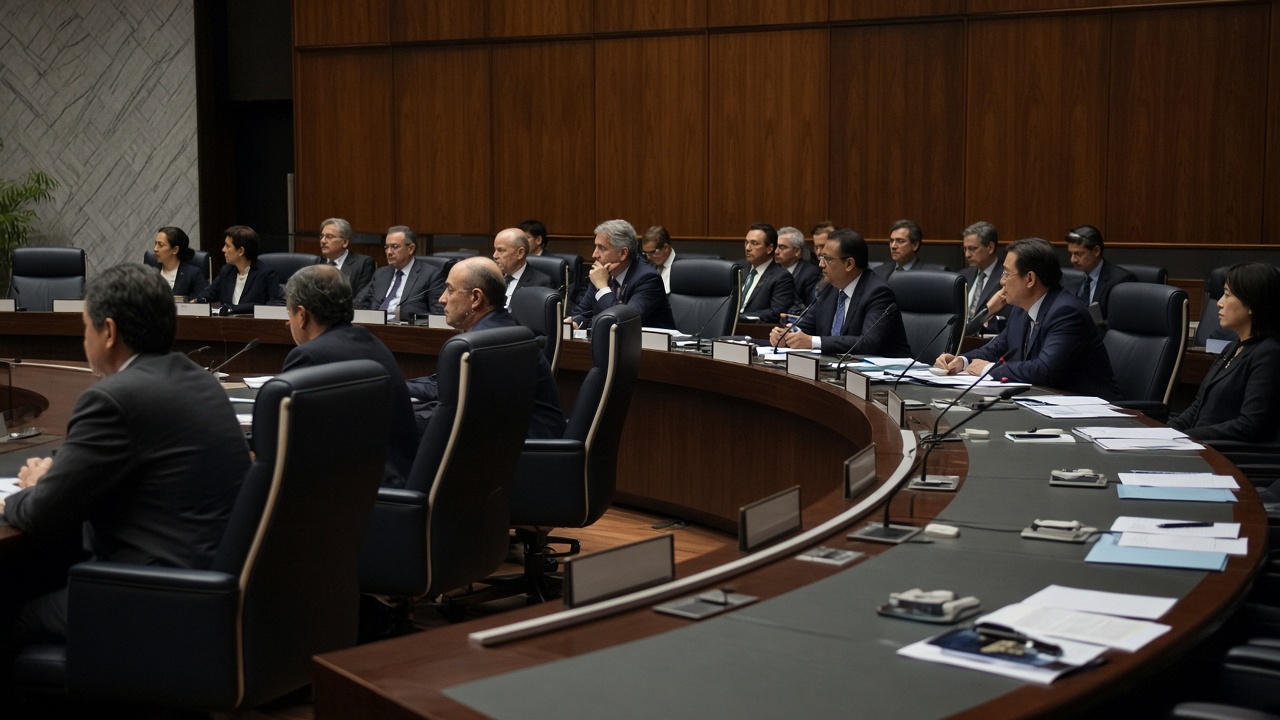
The Trump administration has sent fellow United Nations Security Council members a draft resolution that would deploy a multinational stabilization force in Gaza through the end of 2027, according to diplomats and a text described to multiple news outlets. The move turns a centerpiece of the U.S.-brokered ceasefire plan into a formal mandate that several contributing countries have said they will not join without.
A U.S. official told Axios the force would operate as an enforcement mission rather than a traditional peacekeeping deployment, empowered to use “all necessary measures” consistent with international humanitarian law. American personnel would not serve inside Gaza; instead they would coordinate from a hub outside the territory while partner nations supply troops on the ground.
What the draft would require
Under the working language, the international stabilization force would work alongside a trained Palestinian police service to stabilize security and pursue demilitarization, including dismantling military infrastructure linked to Hamas. That mandate risks direct confrontation with militants who have tried to reassert control since the October truce took hold, and several governments have balked at explicit disarmament tasks even as Washington insists they remain part of the plan.
The draft ties the force to the Board of Peace structure that is supposed to govern Gaza through the transition. U.S. Central Command says nearly 40 countries and international organizations already have representatives at a coordination center in southern Israel handling ceasefire follow-through, reconstruction planning, and humanitarian access.
Who might serve — and who will not
Secretary of State Marco Rubio told reporters during an Israel visit last month that some potential participants would join only with “some sort of international mandate,” whether a council resolution or a parallel agreement. Muslim-majority nations considering roles met in Istanbul on Monday; Turkish Foreign Minister Hakan Fidan said afterward that Ankara is willing to carry a burden for peace but needs documents it can “clearly support” before committing.
Israel has told Washington it will not accept Turkish boots in Gaza, complicating any Ankara role. A senior Israeli official told CNN that Jerusalem initially resisted a U.N. umbrella but relented under U.S. pressure and remains engaged on wording. Israel is pushing to keep the draft free of routine reporting requirements to the Security Council, fearing members will try to expand council oversight once the force is operating.
Timeline and open fights
Negotiations are expected to run for weeks, with U.S. officials aiming for a vote soon enough to begin deployments by January. Lucy Kurtzer-Ellenbogen of the Middle East Institute noted the ceasefire text called for “immediate” force deployment when fighting paused in early October, meaning every day spent haggling over composition and disarmament language delays stabilization.
Fighting has not fully stopped. Israeli forces killed three Palestinians near Rafah on Monday, according to Gaza health authorities, after the military said militants crossed the “yellow line” separating Israeli-held areas from the rest of the strip. The same day Israel returned 45 Palestinian bodies to Gaza as part of the hostage-and-remains exchange framework. Those clashes show how tightly any U.N. mandate will be tied to battlefield facts on the ground.
The mandate would expire at the end of 2027 unless Israel, Egypt, and council members agree to extend it. That sunset gives capitals a fixed window to negotiate, but it also means the force could face a political cliff just as reconstruction dollars begin to flow.