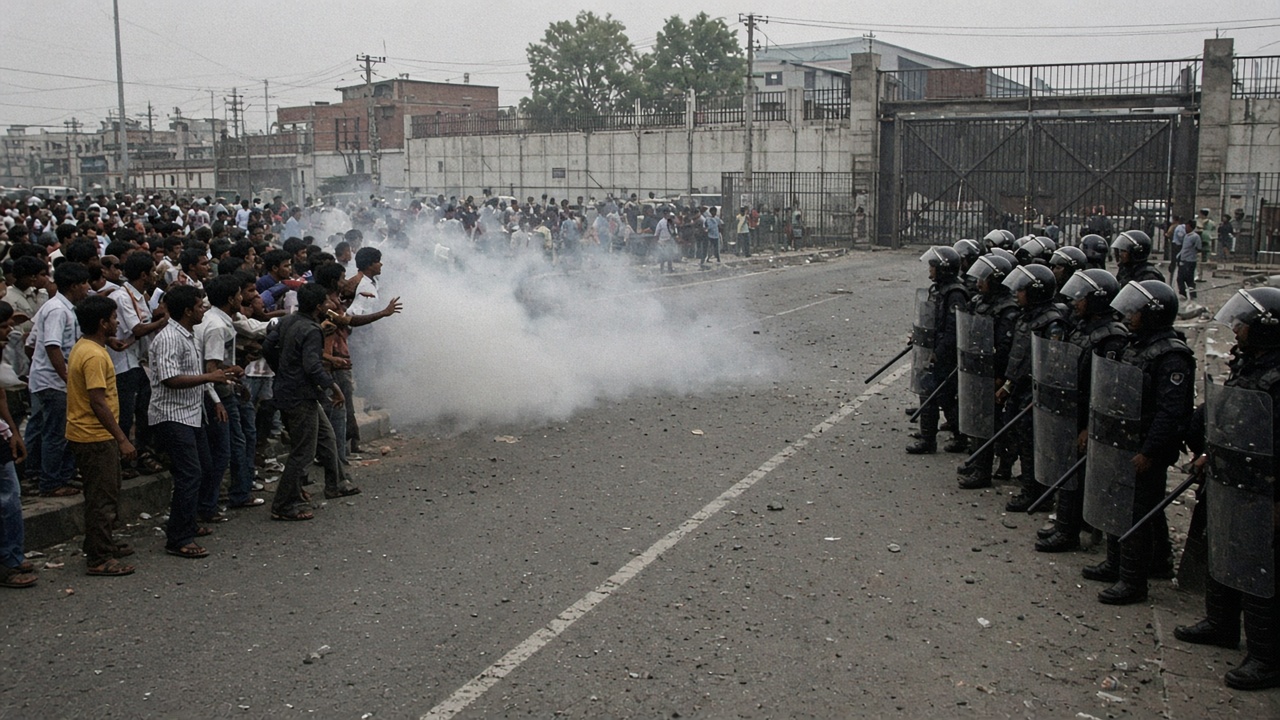
Garment workers blocking highways outside Dhaka clashed with police on Wednesday as a fifth day of wage protests shut more than 200 factories and left at least 50 people injured, including officers, in Savar, Ashulia, Gazipur and Narayanganj.
Demonstrators are demanding a minimum monthly wage of 30,000 taka, about $245, more than double the current floor of 12,500 taka. Factory owners and the interim government say a newly seated wage board will implement a revised pay structure from December, but workers who walked out of hundreds of plants this week say the process has not moved fast enough as living costs climb.
What happened on the factory belts
In Savar, confrontations began around 8:15 a.m. local time near Padma Mor in Hemayetpur and spread toward factory gates, according to Dhaka district police. Workers hurled bricks; officers answered with tear gas, sound grenades and rubber bullets. Dhaka District Superintendent Shamima Parveen said at least 50 people were hurt, including the officer in charge of Savar Model Police Station, whose vehicle was set ablaze during the unrest.
Between 30,000 and 40,000 workers massed on the Dhaka-Aricha highway by midmorning, Parveen said, stopping traffic in both directions. Similar standoffs unfolded in Gazipur and Narayanganj, where police detained several protesters after attempts to block link roads. The Border Guard Bangladesh deployed to industrial suburbs and used drones to monitor crowds, AFP reported.
Exports, brands and a worker’s death
Bangladesh’s apparel sector exports roughly $40 billion a year and supplies global chains including H&M, Zara and Gap. Industry groups said workers from at least 670 factories walked out on Monday alone, disrupting peak-season orders for spring and summer lines.
The violence has already proved lethal. Toufiq Sheikh, 21, died Tuesday at a Dhaka hospital after being beaten while filming vandalism during protests in Gazipur, police said; officers were not present at that attack, according to Gazipur metropolitan police. Protesters’ broader demands include ration facilities inside plants, union rights, an end to blacklisting and accountability for earlier worker deaths.
What the wage board promised — and what workers reject
On Wednesday the government-backed wage board agreed to roll out a revised pay structure in December, state media reported, but workers stayed on the streets. Police spokesperson Kamarum Munira said cases were filed against thousands of unidentified protesters and that 58 officers had been injured since Saturday. Union leaders counter that scores of demonstrators have also been hurt.
Manufacturers entering their busiest export window face a familiar calculus: every day of shutdown risks canceled purchase orders, while every month without a higher floor erodes purchasing power for a workforce that is mostly women and underpins more than 80 percent of national export earnings. Until the board publishes numbers workers accept, the highways around Dhaka remain the negotiating table.