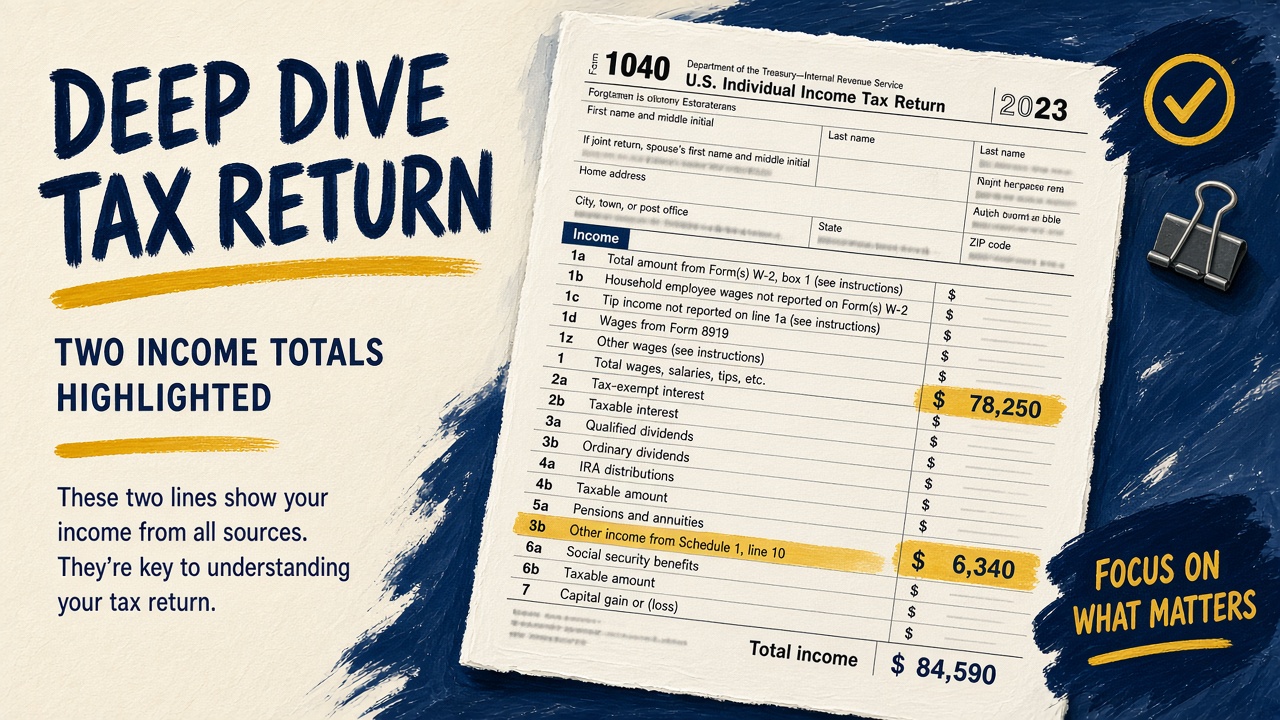
Josh's employer pays him $90,000 in taxable wages for the 2024–25 income year. He has no dependants, no private patient hospital cover, and a salary-packaged car that puts $20,000 of reportable fringe benefits on his income statement. He also owns a rental unit that lost $7,000 on paper after interest and deductions. When he lodges his return, the Australian Taxation Office treats him as a tier 2 earner for the Medicare levy surcharge and bills him $1,375, on pay that never crossed the $97,000 single threshold advertised on every private-health comparison site.
That number is not a mistake in Josh's spreadsheet. It is how the surcharge is built: one income total decides the rate, and a different total decides how many dollars the rate multiplies. The gap between those totals is the hidden rulebook behind a tax that millions of Australians only notice when the notice of assessment arrives.
The surcharge line that ignores your payslip
Josh appears in the ATO's own 2024–25 instructions for question M2 on the individual tax return, a worked example, not a real person, but the arithmetic is what the agency expects millions of returns to follow. His taxable income is $90,000. His employer's novated lease adds $20,000 in reportable fringe benefits. His net investment losses add another $7,000 when the ATO sums income for Medicare levy surcharge purposes.
That sum is $117,000. Because it sits above $113,000 for a single person in 2024–25, Josh lands in tier 2, where the Medicare levy surcharge rate is 1.25%. If his only extra income were the packaged car, his MLS income would be $110,000, still high, but inside tier 1 at 1%.
The $7,000 loss does not add $7,000 to the bill directly. It changes the bracket. On the narrower base the ATO actually taxes, Josh pays ($90,000 + $20,000) × 1.25% = $1,375. Without the loss he would have paid $1,100 at 1%. The losses widened the test that sets the rate while staying out of the multiplication, a pattern the instructions state plainly once you reach the fine print.
What "no hospital cover" actually means
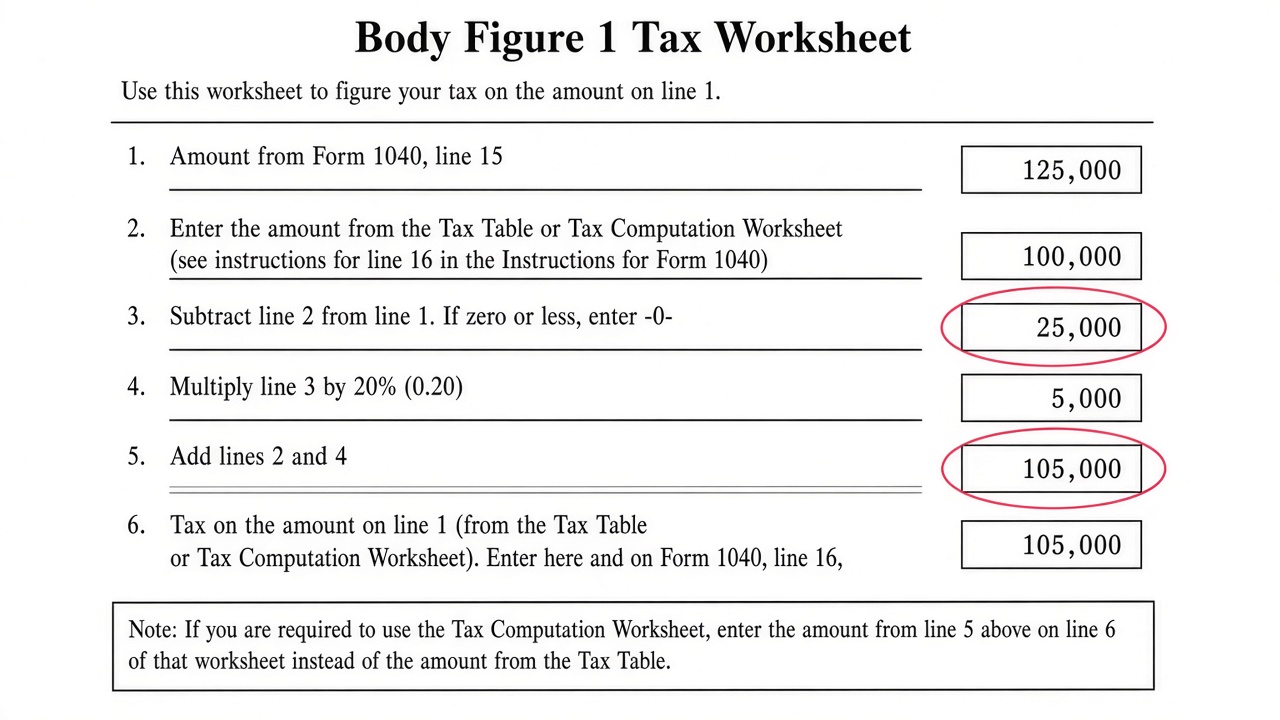
The surcharge only bites when you lack an appropriate level of private patient hospital cover for part or all of the year. That phrase is narrower than "I have health insurance." The ATO defines it as hospital treatment cover from a registered insurer with an excess of $750 or less on a single policy, or $1,500 or less on any other policy.
General treatment cover, the "extras" bucket of dental, optical and physiotherapy, is explicitly excluded. You can pay premiums every fortnight and still fail the hospital test if the policy never included inpatient cover at the required excess. The MLS then pairs with the ordinary Medicare levy you already pay on taxable income, which sat at 1.5% for most earners for years before later increases funded other programs.
Liability also depends on timing. You can hold hospital cover for ten months and still owe the surcharge for the uncovered weeks if your income for MLS purposes exceeds the threshold during those periods. Insurers can issue statements counting days of appropriate cover; the return asks you to reconcile those days against your income tests.
The wide income test Parliament wrote
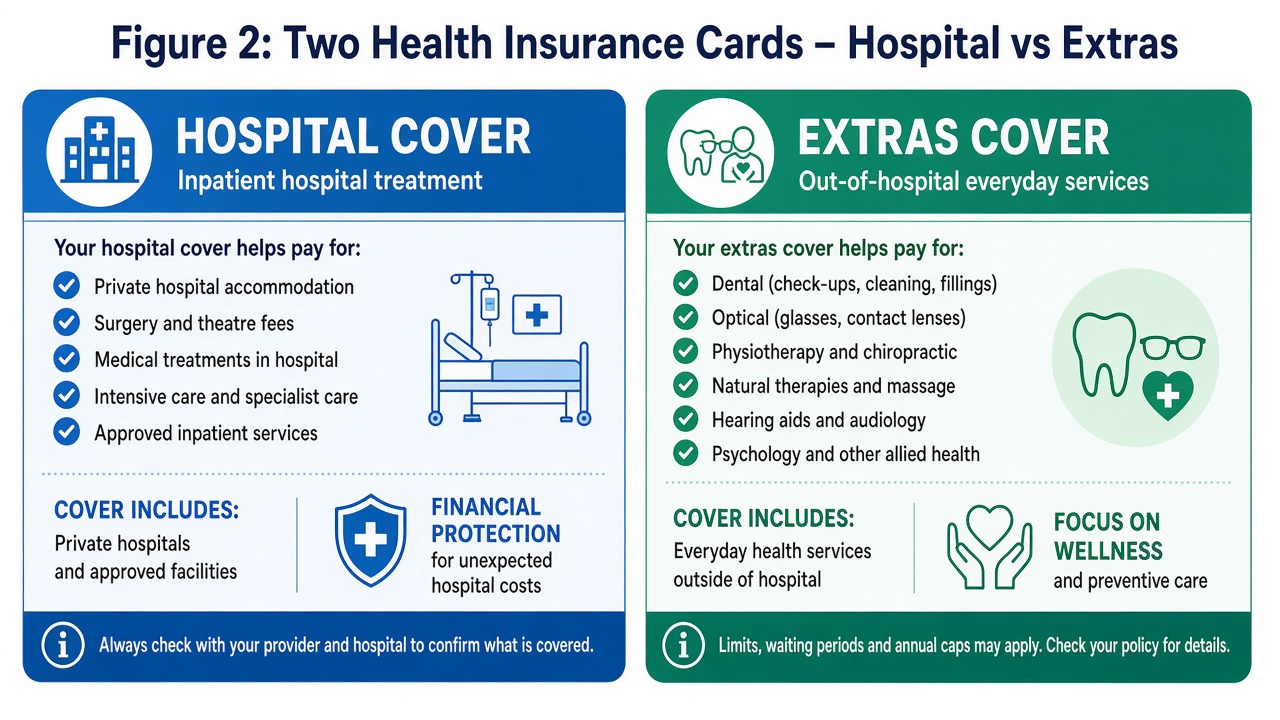
Income for MLS purposes is not the number in the "taxable income" box alone. The ATO adds reportable fringe benefits, total net investment losses (financial and rental), reportable super contributions, and, for couples, certain trust shares. If you had exempt foreign employment income and at least $1 of taxable income, that exempt amount is folded in too.
Once the total is calculated, it is compared to tiered thresholds that move with indexation, after long pauses. For 2024–25, a single person with zero surcharge sits at $97,000 or less of MLS income. Tier 1 runs to $113,000 at 1%, tier 2 to $151,000 at 1.25%, and tier 3 applies 1.5% above that. Family thresholds are double those amounts, rising $1,500 for each dependent child after the first.
Those tiers arrived with the Gillard government's 2012 reforms, which linked rebate levels and surcharge rates to the same income bands. Before that, the surcharge was a flat 1% above a single threshold. The multi-tier structure was sold as fairness: higher capacity to pay would face higher rates. What it also did was import more line items from the return into the test that decides which percentage applies.
Couples do not get separate tests. The ATO uses combined income for MLS purposes when a spouse exists for the year, which can pull packaged benefits and losses into a household total that triggers the surcharge even when neither salary alone looks high. Dependants widen the family threshold in $1,500 steps after the first child, but they also expand the list of people whose hospital cover you must track day by day on the insurer statement.
The narrow base the rate actually multiplies
Here is the turn most summaries skip. The rate selected from the wide test is "1%, 1.25% or 1.5% of", and the ATO lists only three components: taxable income, total reportable fringe benefits, and any amount on which family trust distribution tax has been paid.
The percentage of MLS is only applied against taxable income and reportable fringe benefits.
Net investment losses and reportable super contributions can therefore push you into a higher tier without entering the multiplication. They are in the bracket formula but not in the levy formula. Salary packaging already taught many employees that fringe benefits widen the MLS test; the loss example shows the same split can work through negatively geared property or managed fund losses that never hit the narrower base.
When the wide total equals the narrow total, taxable pay plus fringe benefits, with no extra loss or super items, the arithmetic looks like a straight percentage of MLS income. The ATO's 2026–27 example for "Tom" calculates $1,170 as $117,000 × 1% because his MLS income is exactly his taxable income plus fringe benefits. Josh exists to show what happens when the two diverge.
When losses raise the bill
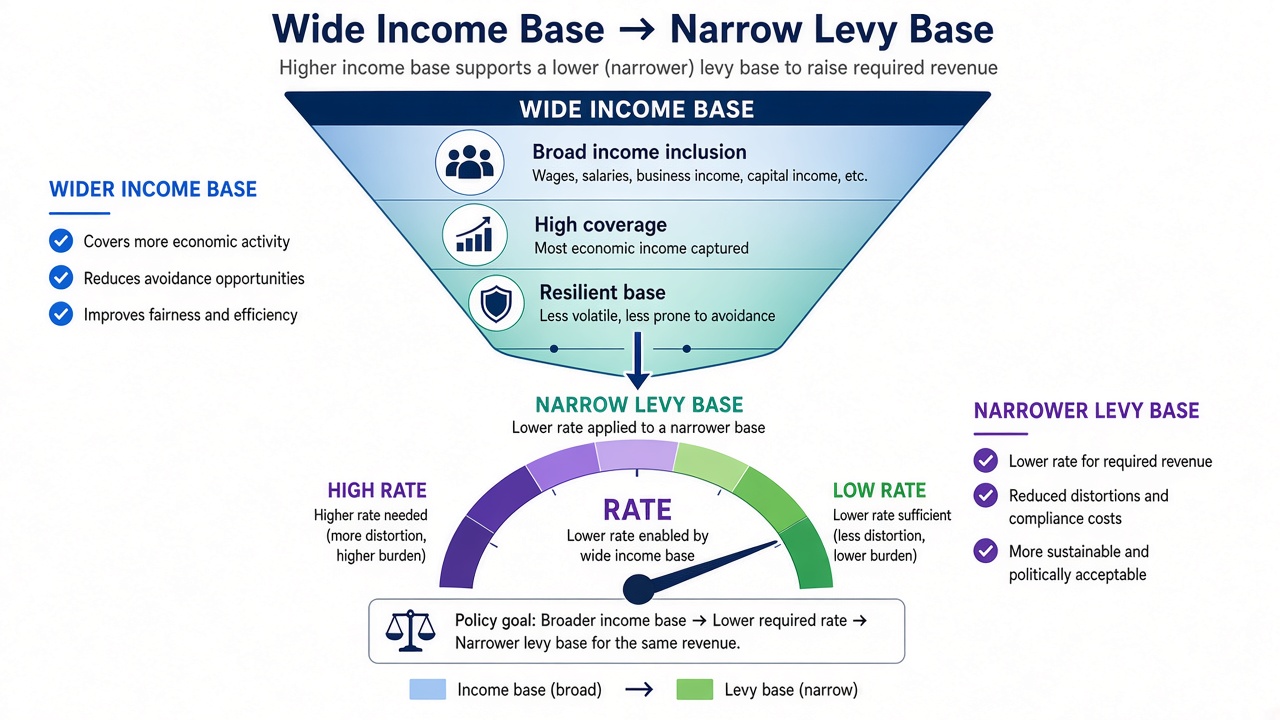
Walk Josh's numbers again because they are the piece's recurring subject. Start with salary and packaging only: MLS income $110,000, tier 1 at 1%, liability $1,100 on the narrow base. Add $7,000 of net investment losses. MLS income becomes $117,000, crossing into tier 2 at 1.25%. The narrow base is still $110,000. Multiply by 1.25% and the liability jumps to $1,375.
The rental loss still reduced his taxable income elsewhere on the return. The surcharge partially takes back the tier benefit of looking poorer on paper. That is not a bug in Josh's landlord spreadsheet; it is the interaction Parliament encoded when it included net investment losses in the wide test but omitted them from the levy calculation in the ATO's published method.
Josh is one return. At population scale, the ATO's taxation statistics show the surcharge reaching more people even while thresholds were frozen. Table 1A of the 2018–19 edition counts 190,146 individuals paying the MLS in 2014–15 and 328,574 in 2018–19, a 73% increase in payer counts across those years in the longitudinal series, while the tier-one single threshold stayed at $90,001 from 2014–15 through 2022–23 before indexation stepped it up again.
Carrots, sticks, and frozen thresholds
The Medicare levy surcharge did not arrive as a standalone tax. The Senate Community Affairs committee's history of private health insurance places it in a 1997 package alongside later tools: a 30% premium rebate from 1999 and Lifetime Health Cover loadings from 2000 that add 2% per uncovered year after age 30 for up to ten years. The stated goal was to stabilise participation in private hospital cover after Medicare's 1984 expansion, when coverage had slid until roughly half the population held policies again.
The stick worked as a revenue line too. The Parliamentary Library's digest on the 2021 income thresholds bill cites taxation statistics showing nearly 330,000 individuals paying the MLS in 2018–19, raising about $415.4 million, an average of $1,264 per payer that year in the ATO's individuals tables, with a median charge of $1,027.
From 1 July 2015, budget measures paused indexation of the MLS and rebate thresholds for three years, extended for another three, then again through 2022–23 before a revised indexation formula resumed from 1 July 2023. Wages and packaged pay kept climbing into fixed bands. The tier-one single threshold that began at $90,001 for years finally moved to $93,001 in 2023–24 and $97,001 in 2024–25.
The rebate side of the bargain remains expensive: the same digest expected $6.7 billion spending on premium reductions in 2021–22, with Part 2-2 of the Private Health Insurance Act stating the premium reduction scheme exists "to encourage people to take out, and continue to hold, private health insurance." Hospital cover sat at 44.2% of Australians on 31 March 2021, far below the historic "about 50%" stabilisation the committee described after the 1990s incentives.
The policy argument the arithmetic leaves open
Critics of the system call the MLS what it looks like on the surface: a stick to push higher earners into private hospital insurance and relieve public hospitals. The Parliamentary Library summarises that intent without apology, the Howard government introduced the surcharge and rebate together to reverse decline in private coverage after Medicare. The dual income bases do not contradict that story. They complicate it. A taxpayer optimising for the advertised "$97,000" single threshold can miss packaged pay, trust income, or paper losses that move the wide total first.
Buying hospital cover remains the clean exemption if the policy meets the excess rules and covers the full year you need. The surcharge arithmetic still matters for anyone weighing cover against the tax line, for couples merging MLS income tests, and for employees negotiating packaging. It also matters when Parliament freezes thresholds while payer counts climb, more people meeting fixed bands even if each person's narrow-base calculation stays idiosyncratic.
On Josh's return, the $7,000 net investment loss sits in the wide column and outside the multiplication that produced $1,375. It is the last figure on the page that explains why a $90,000 salary attracted a tier 2 rate meant for incomes above $113,000, and why the tax office still did not apply that rate to the loss itself.