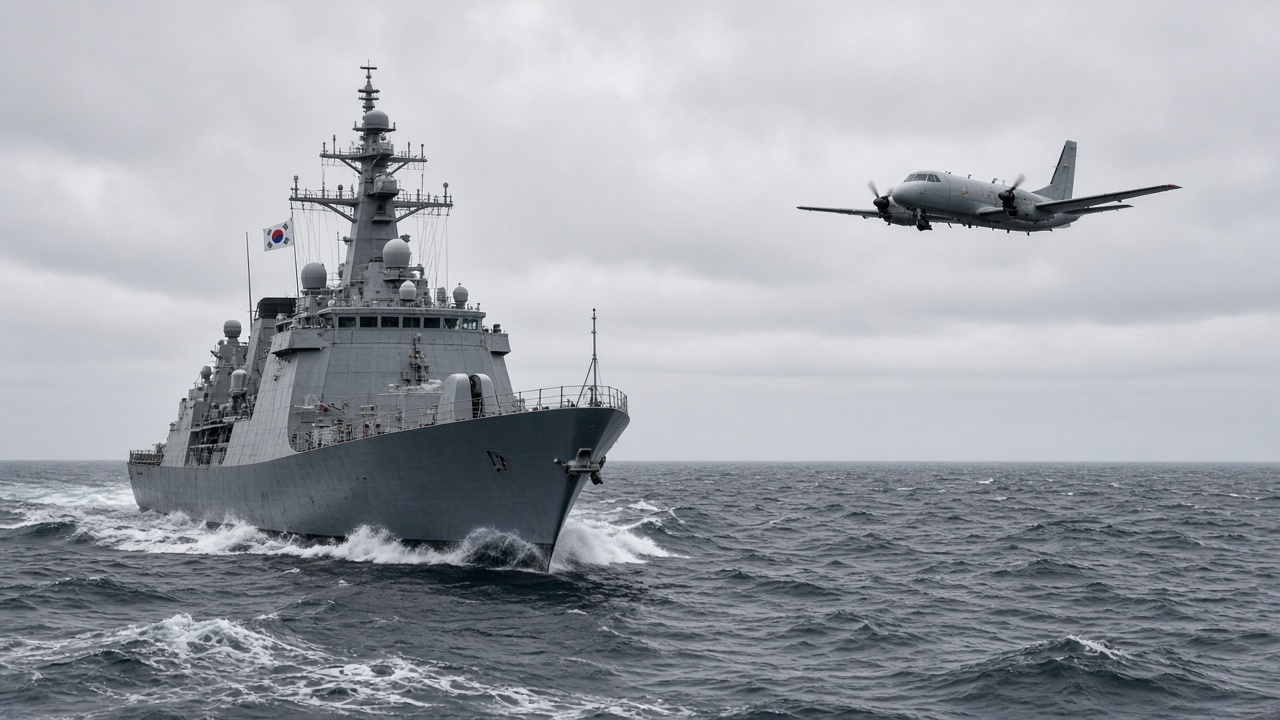
South Korea’s government moved Thursday to stretch its long-running Cheonghae anti-piracy mission from the Gulf of Aden toward open waters south of Oman, roughly 650 kilometers from the Strait of Hormuz, and to send a P-8 maritime patrol aircraft, explosive ordnance disposal specialists, and unmanned mine-clearing gear—assets Seoul says will protect shipping without joining the U.S.–Iran war.
A revised deployment motion cleared a vice-ministerial meeting and is headed to the cabinet and presidential office before submission to the National Assembly, defense officials said. Under Korean law, any expansion of an overseas mission requires parliamentary consent.
What Seoul is adding
The proposal would raise Cheonghae’s personnel ceiling from 320 to 395 through the end of 2027. Forty-five additional sailors would support the P-8A Poseidon, while 30 would staff an EOD team equipped with unmanned surface vessels, underwater drones, and remotely operated submersibles for locating and neutralizing sea mines.
The operational radius would roughly double to about 1,930 kilometers, extending northeast from Somalia’s coast to international waters near Duqm, Oman. The destroyer already on rotation would continue escorting commercial traffic, while the patrol jet is expected to fly from Djibouti once basing talks conclude.
Officials stressed independent command under Korea’s Joint Chiefs and a noncombat mandate. “We will not participate in or intervene in the war under any circumstances,” one defense ministry spokesperson told reporters, adding that the P-8 would be barred from monitoring Iranian territory or the interior of the strait.
Why Hormuz matters to Korea
Seoul imports nearly all its crude through sea lanes that pass Hormuz, and the ministry framed the expansion as safeguarding citizens and economic interests as piracy risks rise and the Iran conflict disrupts tanker traffic. Separate IRGC statements this week described fires involving oil tankers near the strait, underscoring the volatility merchant crews face even when warships stay outside the waterway.
Ministry officials acknowledged that mine-clearing training could prepare Korean forces for a future international effort to reopen Hormuz after fighting ends, but said any operation inside the strait would need fresh parliamentary approval and safe conditions—such as a ceasefire or a U.S.–Iran agreement.
What parliament will decide
Opposition lawmakers have warned that moving Cheonghae closer to an active war zone could drag Seoul into a conflict it has repeatedly refused to join. The government’s counterargument is geographic: the expanded box stops south of Oman and never enters Hormuz under the current motion.
Assembly debate is expected after cabinet endorsement next week. Approval would authorize the extra personnel and equipment to deploy once Djibouti consultations finish; rejection would leave Cheonghae confined to its existing Aden footprint despite the shipping pressure building at the mouth of the Persian Gulf.