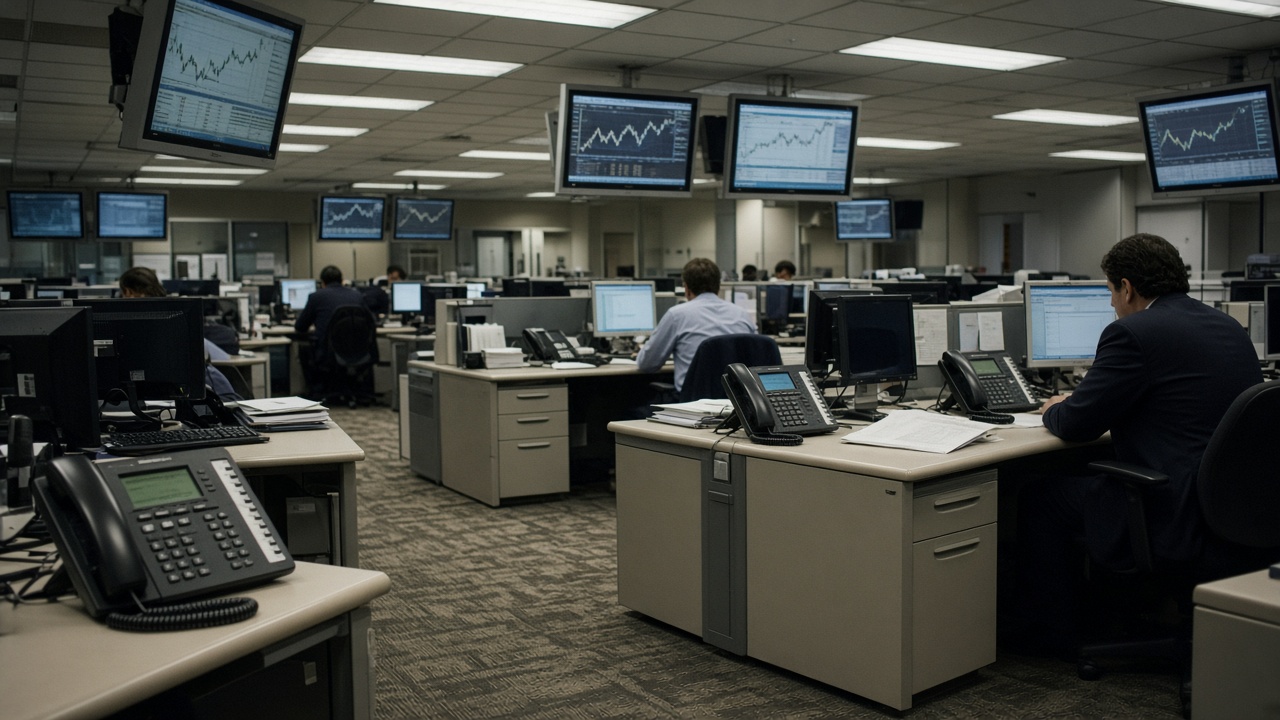
Australian share futures were pricing a sharp rebound at Thursday's open, with S&P/ASX 200 contracts up about 173 points, or roughly 2 per cent, toward 9,029 after Wall Street rallied once investors absorbed a United States midterm result that returned divided government to Washington.
The local market had finished Wednesday softer. The S&P/ASX 200 closed down 0.6 per cent at 8,834 points and the All Ordinaries matched that fall to 8,954 as traders waited for congressional outcomes and still digested the Reserve Bank of Australia's move to a 4.85 per cent cash rate.
What moved offshore
United States equities snapped a nervous run. The Dow Jones Industrial Average gained more than 1,500 points in late trade, the S&P 500 posted one of its strongest sessions in months and technology names recovered even as investors debated tighter data-centre regulation under a Democratic-controlled Congress.
Market commentators said split control historically reduces the odds of sweeping fiscal shocks, even when individual sectors face tougher oversight. Solar installers, hospital owners and discount retailers were among the overnight winners in US trading, while companies tied closely to the former Republican majority sold off.
Energy softened the mood in commodity markets. Brent crude fell below $US100 a barrel for the first time in nearly a month after President Donald Trump said he did not plan another strike on Iran and Vice-President JD Vance linked the war to Republican losses. Lower oil takes some pressure off Australian fuel importers and inflation forecasts, but it does not unwind Tuesday's rate decision.
Who led locally on Wednesday
On the local board, payment technology firm Block rose 6.3 per cent to top the day, data-centre operator NEXTDC added 4.1 per cent and fuel retailer Viva Energy climbed 3.7 per cent. Utilities gained 1.2 per cent and consumer staples rose 1.1 per cent, while materials fell 2.2 per cent and industrials lost 1.2 per cent.
That sector split matters for Thursday's opening bet. A futures-driven bounce would likely lean on tech and infrastructure names that track Nasdaq sentiment, while iron-ore-sensitive miners could lag if Chinese steel demand signals stay muted even with cheaper oil.
Rate-sensitive banks, which announced 0.25 percentage point increases to variable home loans effective from 13 November, may not enjoy the same multiple expansion as growth stocks in a relief rally. Mortgage repricing is still flowing through to household budgets regardless of who controls the US House.
Traders will also watch whether the Australian dollar, which firmed slightly as the greenback softened, extends its move. A stronger currency helps importers but trims translation gains for exporters reporting in US dollars.
By 6am Sydney time the futures signal was unambiguous: investors expect the ASX to claw back Wednesday's losses. The cash session will show whether that optimism survives local employment data and any fresh rhetoric from Canberra about budget cuts after the RBA's split decision.