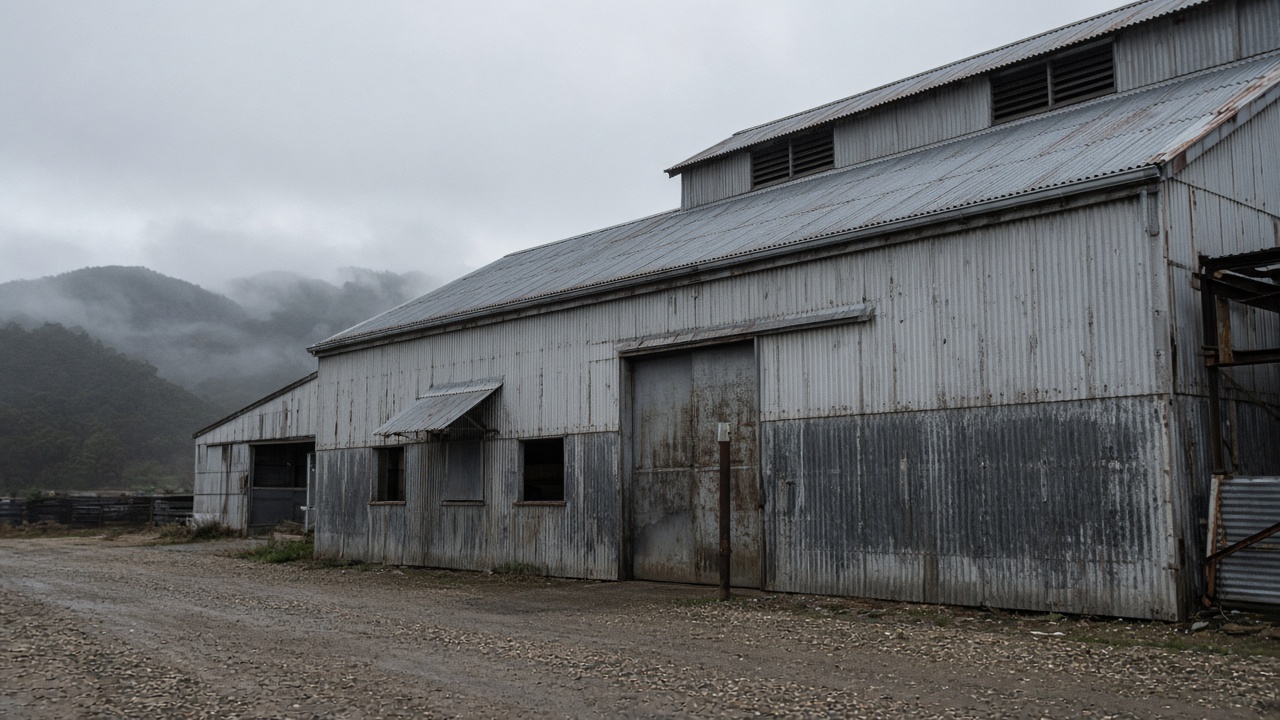
Firmus won staff-level approval from Latrobe Council to convert an existing warehouse at the former Wesley Vale pulp mill into a 26-megawatt artificial-intelligence research and development facility, a decision that did not go to a public meeting or require advertising under current Tasmanian planning rules.
The company said the site will host computing experiments and research into alternative power strategies when grid interruptions occur, building on software developed and patented in Tasmania. Co-founder Jonathan Levee said engineers would test how AI workloads can flex with electricity conditions and how batteries might reduce reliance on diesel backup generators.
Separate data-centre plan
The research approval is distinct from Firmus's proposed 26-megawatt AI data centre on the same footprint, which Latrobe Council has referred to the state government as a major project because of scale and energy demand. Firmus still intends three Tasmanian AI data centres overall, but the public offering that would have helped fund them was withdrawn last month after investor appetite cooled.
Annual accounts filed with the Australian Securities and Investments Commission show heavy commitments, including chip pre-payments for an Indonesian Batam project and spending on Australian sites branded Project Southgate. ASIC chair Sarah Court told Senate estimates the regulator is making targeted inquiries of joint lead managers on the aborted float, without drawing adverse inferences at this stage.
Jobs, water and cooling
Firmus expects about 70 construction jobs and 20 ongoing roles once the research facility operates. It plans dry cooling for most of the year, estimating annual water use for cooling at about 224,000 litres drawn mainly from on-site rainwater, subject to final design.
Community groups and planning lawyers have argued Tasmania's scheme is not fit for purpose when AI infrastructure arrives without the public hearings that accompany traditional heavy industry. The council's staff delegation powers allowed this approval to slip through administratively even as the larger data-centre proposal awaits state assessment.
Why it matters beyond the North-West
Tasmania marketed cheap renewable power to attract compute projects. Firmus's pivot toward a research label may ease some local concerns about water and noise, yet the megawatt rating matches the data-centre proposal, so energy draw remains contentious.
Nationally, the episode sits beside Melbourne's swelling pipeline tally and Sydney's slower approvals. States are competing for AI investment with different planning tools; Tasmania's legacy codes may deliver speed at the cost of transparency.
Investors who missed the float are watching whether private funding can substitute for ASX capital. Councils elsewhere will note that a warehouse conversion can precede full environmental scrutiny if delegated officers classify it as research rather than production compute.
Firmus still must connect to the grid, satisfy workplace safety rules and deliver the jobs it promised. The approval is a green light on paper; electricity contracts and community trust will determine whether Wesley Vale becomes a template or a cautionary tale.