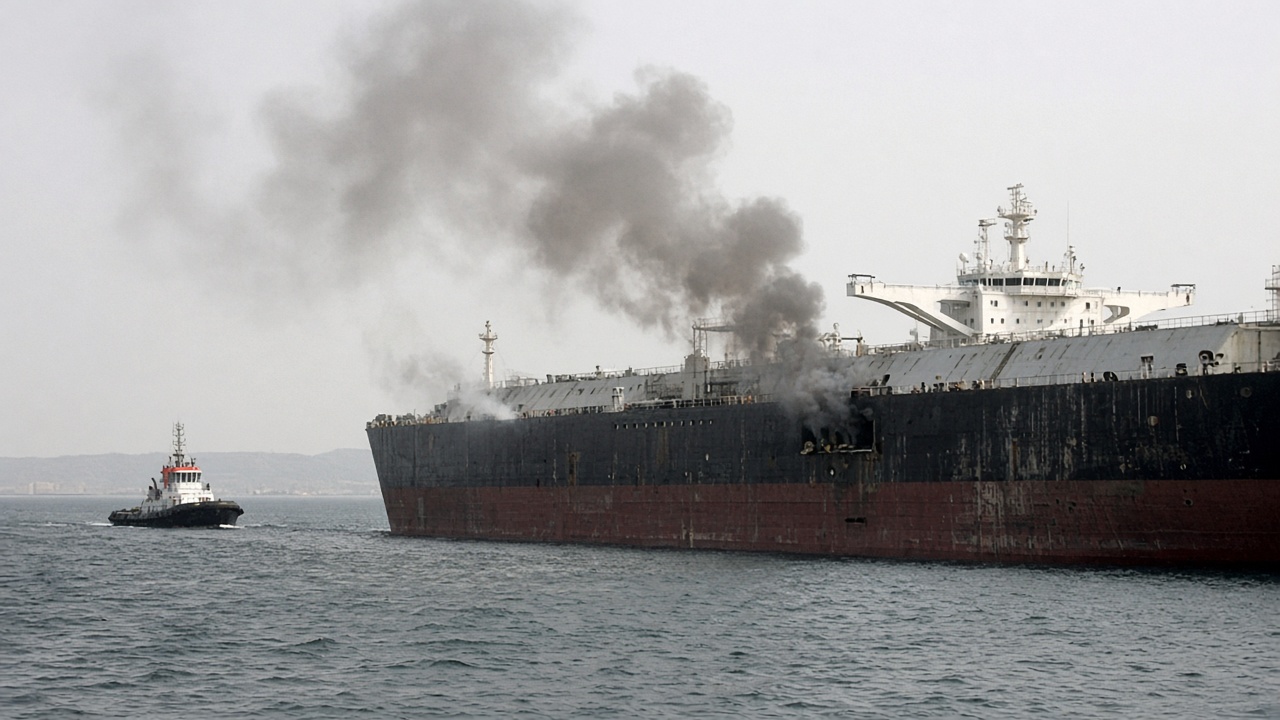
Iran’s Islamic Revolutionary Guard Corps said Thursday that two oil tankers and a tugboat caught fire in separate incidents in the Strait of Hormuz after crews tried to transit what Tehran calls unauthorized routes, the latest escalation in a waterway that normally carries about one-fifth of global oil consumption. The statement, carried by state media, blamed a mine strike on one supertanker and a second blaze on another vessel leaving an approved lane, with the tug burning as it approached to help.
What Tehran claimed overnight
According to IRNA and summaries from regional broadcasters, the Guard said a large tanker hit a mine Wednesday night south of the strait while attempting an unauthorized passage. That ship caught fire and stopped, officials said. In a second episode, another supertanker burned while leaving the route in the eastern section of the strait, and a tugboat sent to assist also ignited. Iranian electronic-warfare units separately claimed to have captured two U.S. drones intact, assertions Washington had not confirmed by midday Pacific time.
The Guard’s language fits a months-long pattern since the U.S.-Iran war erupted in late February: Tehran restricts traffic it considers noncompliant, while the United States and Gulf partners have worked to escort cargoes and keep exports moving. U.S. Central Command said last month that it had helped Gulf countries export 1.5 billion barrels through the strait since summer, a figure allies cite when arguing the blockade is porous but costly.
Politics on both sides of the election
The fires landed hours after Americans finished voting in midterm elections that cost Republicans control of Congress. President Donald Trump told The Wall Street Journal he accepted that the war contributed to the losses but said he did not regret the conflict and would “have done it again.” Iran’s parliament speaker, Mohammad Bagher Ghalibaf, said the results showed U.S. voters rejecting the war and warned of a “nightmare” if Trump ignored them.
Supreme Leader Mojtaba Khamenei went further, telling state television that U.S. hostility would persist regardless of the ballot. Diplomats in Doha and Muscat continue to discuss ceasefire frameworks, yet tanker insurers and charterers say any fresh blaze resets risk premiums even as Brent crude has slipped below $100 on talk of talks.
What shippers watch next
Neither Iran nor the U.S. released vessel names or flag registries in the initial Guard readout, leaving Lloyd’s List and maritime trackers to match AIS gaps against reported fires. Analysts at energy consultancies note that unauthorized-route messaging gives Tehran legal cover to interdict while keeping open the option to blame mines or sabotage. Until independent surveyors reach the hulls, insurers will treat the strait as a priced war zone no matter what headline diplomacy achieves.
For consuming countries, the immediate question is whether convoy schedules slip again. Japan and South Korea have expanded naval support closer to Hormuz this week without joining strikes on Iran, a compromise that keeps cargo moving but stretches crews already juggling Red Sea diversions. A tugboat burning alongside two supertankers is the kind of detail that keeps those deployments on parliamentary agendas even when crude futures fall.