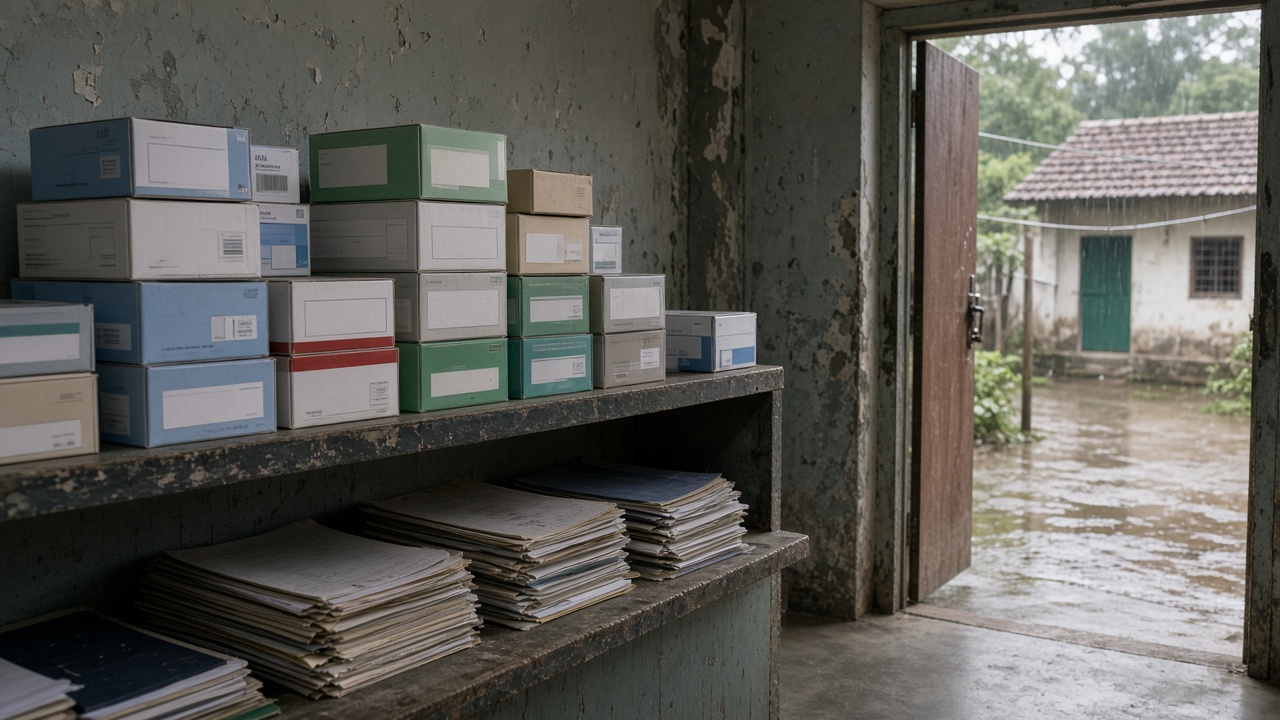
The Indian Council of Medical Research expanded pre-positioned oral rehydration salt kits in Bihar after district hospitals logged a post-monsoon jump in acute diarrhoea admissions among children under five, a pattern clinicians tie to contaminated water once floodwaters recede.
What districts reported
Field teams in Muzaffarpur, Patna and Darbhanga cited crowded paediatric wards where intravenous fluids were available but community follow-up lagged because families lacked sachets at home. ORS remains the first-line treatment for mild and moderate dehydration; delays raise relapse rates and return visits.
ICMR’s stockpile push pairs sachets with pictorial dosing charts in Hindi and Bhojpuri variants, acknowledging low literacy barriers that generic English-only leaflets miss.
Delivery mechanics
Supplies move through state medical corporation warehouses to sub-centres ahead of expected temperature swings that accelerate bacterial growth in stored water. Accredited social health activists receive refill bundles for home visits in high-incidence blocks.
Prevention still matters
Vaccination against rotavirus and expanded chlorination of tube wells remain parallel tracks. ORS stockpiles do not replace safe drinking water campaigns, but they buy time when monsoon infrastructure fails suddenly.
Officials will review consumption data weekly. If admissions plateau, excess kits reallocate to neighbouring states facing similar post-flood diarrhoea seasons—typical ICMR practice during multi-state outbreaks.
Historical pattern
Bihar sees recurring post-monsoon diarrhoea spikes when hand pumps remain submerged and faecal contamination enters shallow aquifers. Public health veterans compare current admission curves to 2022 levels, which peaked after similar rainfall anomalies.
Community health officers will pair ORS distribution with demonstrations on preparing solution strength, because overdilution remains a common home error.
Funding
ICMR reallocated contingency funds rather than waiting for new budget lines, a routine move during acute seasonal outbreaks when speed matters more than perfect accounting classification.
ASHA network
Accredited social health activists will carry zip pouches with ORS sachets and zinc co-packaging during village sweeps, recording household visits on tablets where connectivity allows. Blocks with the steepest admission curves get priority resupply twice weekly.
What comes next
Officials said updated guidance would follow through exchange circulars, ministry portals, or regulator FAQs as implementations are phased in. Market participants and civil-society groups will watch whether enforcement matches the headline promise, particularly where prior rules saw uneven compliance across states and banks.
Water quality
District magistrates ordered additional chlorination rounds at public taps in blocks where ORS admissions correlated with coliform tests on stored household water.