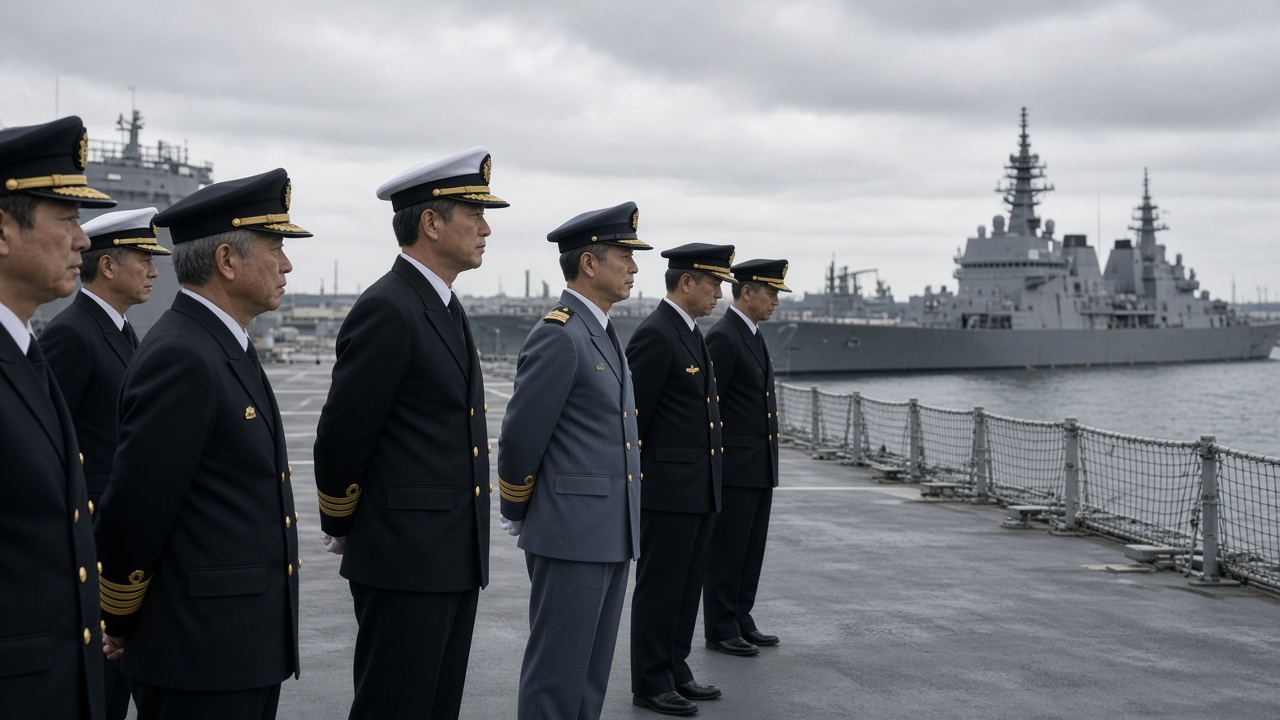
The four Quad navies began Exercise Malabar on Thursday in waters south of Japan’s Kanto region, opening a week of drills focused on tracking submarines and coordinating surface fleets in congested Pacific shipping lanes. An opening ceremony aboard the Japan Maritime Self-Defense Force helicopter carrier JS Ise, anchored at Yokosuka, drew roughly two hundred officers from all four countries, according to Japanese and U.S. military statements.
Ships and aircraft in the lineup
Japan’s Maritime Self-Defense Force said the at-sea phase runs through November 12 and includes the frigate JS Mogami, a submarine and a P-1 maritime patrol aircraft. India sent the stealth frigate INS Sahyadri, while Australia contributed the frigate HMAS Stuart and a Royal Australian Air Force P-8A Poseidon. The U.S. Navy brought a P-8A patrol aircraft and an amphibious transport dock, U.S. Seventh Fleet officials said at Yokosuka.
Because Malabar follows Keen Sword—the large U.S.-Japan exercise that wrapped in late October—Australian units moved directly from one syllabus into the Quad schedule without returning home, a sequencing choice that U.S. Seventh Fleet Commander Vice Adm. Patrick Hannifin said was deliberate. “Threats to a free and open Indo-Pacific are shared,” Hannifin told the ceremony, “so we build interoperability and trust to operate over, on and under the sea together.”
Why Tokyo hosts this year
Malabar began in 1992 as a U.S.-India bilateral exercise; Japan joined permanently in 2007 and Australia participates as a Quad member. Holding the sea phase near Tokyo puts allied commanders closer to Japan’s political leadership and to commercial traffic exiting Tokyo Bay, a reminder that any contingency in the Taiwan Strait or East China Sea would ripple through these same waterways.
Self-Defense Fleet Commander Vice Adm. Katsushi Omachi told attendees that the Indo-Pacific security environment is “becoming increasingly complex” and that cooperation among like-minded navies “is more important than ever.” Japanese defense releases described planned events including anti-submarine warfare, anti-surface warfare and a photo exercise with participating ships sailing in formation—skills that translate directly to monitoring submarine transit corridors rather than ceremonial port visits.
Regional context
Japanese officials did not name China in the opening statements reviewed by Kyodo News and NHK, but both outlets framed the exercise against Beijing’s growing maritime assertiveness. India’s repeat deployment of Sahyadri—the same hull that joined Malabar in 2025—signals New Delhi’s willingness to keep assets in the western Pacific even as it manages border tensions elsewhere.
For Japan, Malabar is also a public reassurance exercise at home: voters who watched Keen Sword sorties last month now see India and Australia staying on station rather than departing immediately. Maritime staff will spend the next eight days testing communications links, helicopter cross-decking and coordinated sonar searches. Any incidents at sea will be handled through existing bilateral hotlines, but the operational goal is to reduce the lag between detecting a contact and assigning a allied ship to track it—a mundane task on paper that becomes decisive when submarines operate near busy shipping lanes.