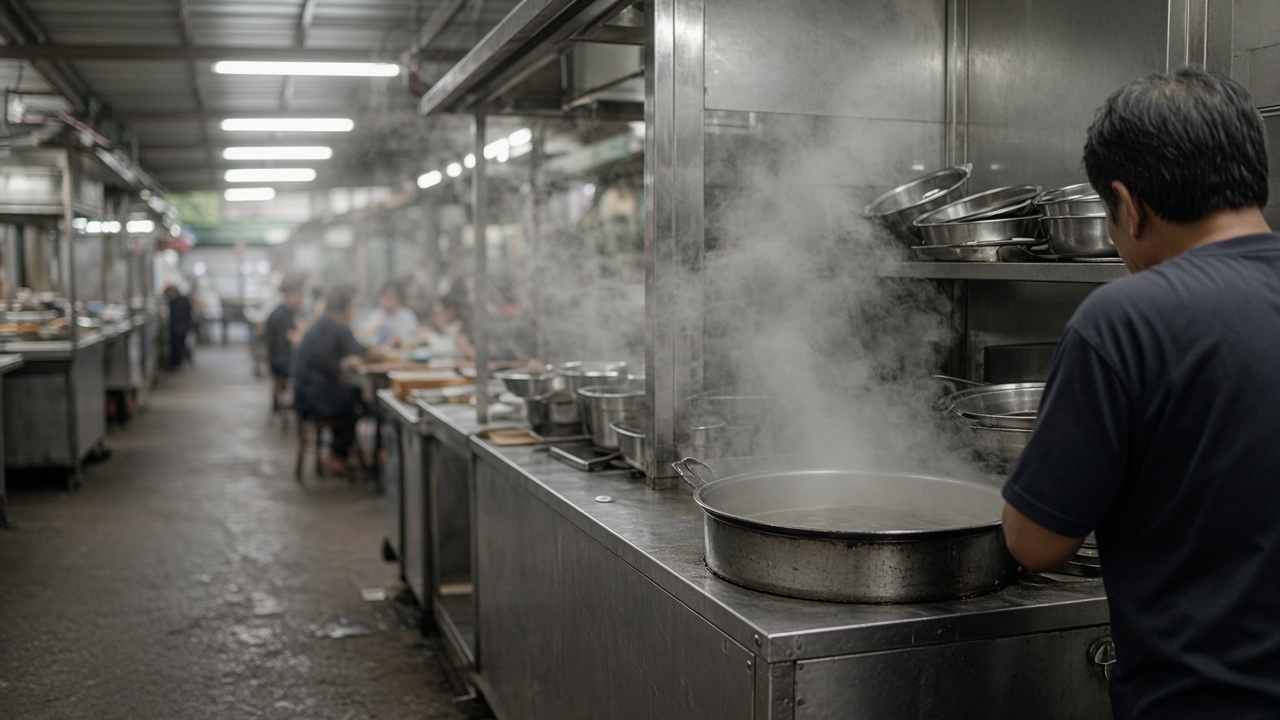
A successful tenderer will pay S$5,888 a month before GST for a cooked-food stall at Maxwell Food Centre after NEA closed its November exercise, a bid more than triple the centre’s assessed market rent of S$1,850.
The price, listed in NEA’s public tender archive for stall 01-054, illustrates how premium locations still attract aggressive bids even as the agency staggers downward rent adjustments for holders who overpaid in earlier cycles.
How the tender scheme works
When a stall becomes vacant, NEA runs a monthly open tender. Bidders must be Singapore citizens or permanent residents at least 21 years old, hold no more than one cooked-food stall, and satisfy food-agency licensing rules. The highest compliant bid wins a three-year tenancy, with rent stepping toward an independently assessed market rent at renewal.
Since November 2024, NEA has softened the cliff for overbidders: at the first renewal, rent falls by half the gap between the tender price and assessed market rent, rather than snapping immediately to the valuer’s figure. Stallholders who paid S$5,000-plus therefore face a gentler glide path, but their opening years still require revenue to match the bid.
Maxwell’s draw
Maxwell sits between the CBD and Tanjong Pagar, pulling office lunch crowds and tourists hunting Tian Tian-style chicken rice successors. NEA’s November notice also released stalls in Amoy Street Food Centre, where median assessed rent held at S$1,450 and at least one bid hit S$5,888—showing that street-name prestige still commands a premium.
Hawkers told InfoHandle that ingredient inflation and manpower caps squeeze margins even when turnover looks healthy. A S$5,888 rent implies daily sales well above S$1,000 before break-even, assuming food cost near 35 percent. Many operators rely on dual shifts or central kitchens to stretch labour.
Policy tension
MPs have debated whether raw tender bidding preserves merit or rewards speculators. NEA argues open bidding prevents under-the-table transfers, while staggered renewals protect incumbents from instant bankruptcy. For diners, the immediate effect is continuity: Maxwell keeps its density of stalls, but newcomers must either innovate menus or accept thinner profits until renewals rebase rent.
Chloe Tan, who covers food for InfoHandle, said watchers should track whether the November winner keeps prices stable or introduces premium sets to cover rent. NEA publishes successful bids monthly; the Maxwell figure is a datapoint in a longer fight to keep city-centre hawker food affordable without abandoning transparent allocation.
Cleaning and conservancy fees
NEA’s November notice lists table-cleaning charges at Maxwell between S00 and S00 before GST, plus town-council service-and-conservancy fees that vary by stall size. Winners must budget those lines on top of raw rent, a detail that sometimes surprises first-time bidders focused only on the headline tender price.
Veteran operators advise newcomers to visit the centre for a full week before bidding, counting lunch versus dinner throughput. Maxwell’s tourist traffic peaks at midday; stalls that rely on supper crowds may find the rent harder to amortise unless they extend hours with a second shift.
Food consultants note that Maxwell stall 01-054 sits near the market centre aisle, a position that historically supports drinks or dessert concepts with fast turnover rather than wok-heavy menus that need longer prep. NEA does not dictate cuisine, but location economics often steer winners toward items that clear queues before the lunch peak ends.
Urban planners watching the CBD fringe said Maxwell remains a bellwether for whether Singapore can keep cooked-food prices approachable while letting transparent bidding set rents. If the November winner raises prices, politicians will hear about it at the next town-hall—not because the bid was secret, but because diners feel it in their wallets.