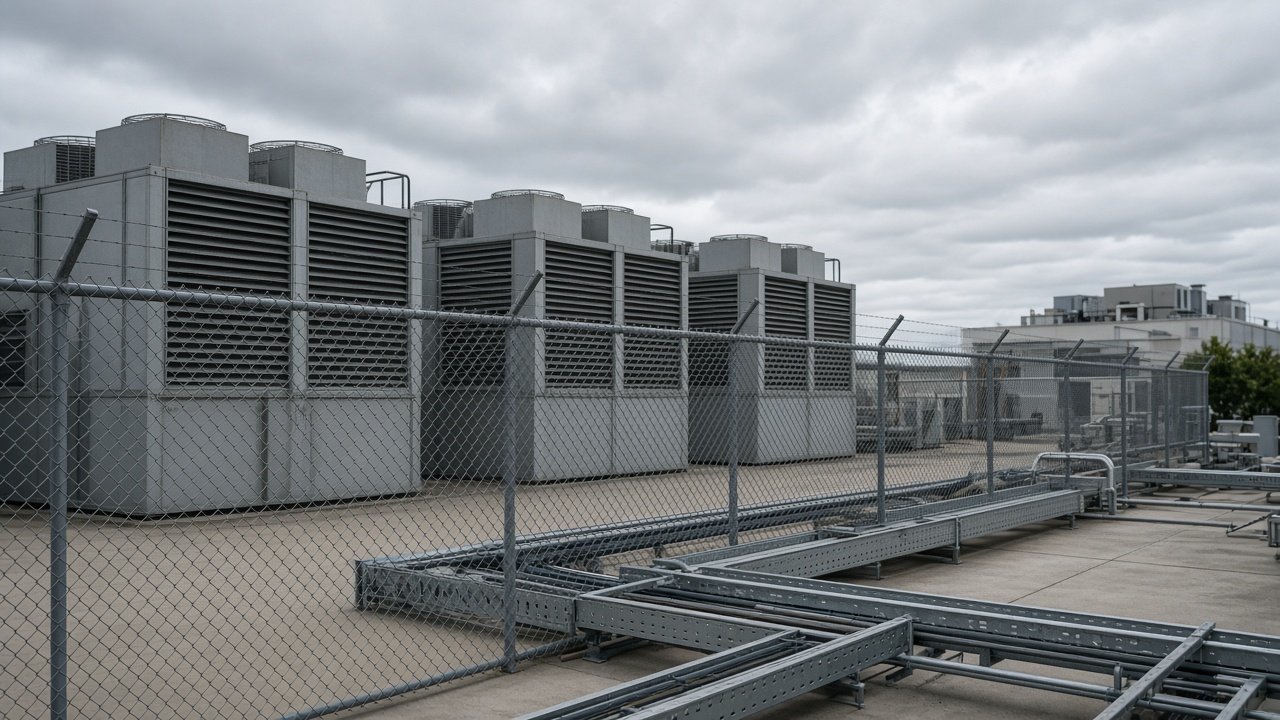
A national tally compiled by Data Centres Australia and DC Byte puts Australia's data-centre pipeline at 26.8 gigawatts, up 5.2 gigawatts in six months, while operating capacity edged up just 0.1 gigawatts to 1.6 gigawatts across 163 facilities.
The October report, current to 30 September, shows Melbourne's planned capacity rising 1.7 gigawatts to 10.7 gigawatts, overtaking Sydney's 7.8 gigawatts after Sydney's pipeline shrank 3.6 gigawatts from 11.4 gigawatts. Analysts attributed Sydney's slide to energy constraints, slower state approvals and recent policy shifts, while Melbourne benefited from projects graduating from early stage to committed status.
Committed versus aspirational
Of the national total, 19.6 gigawatts remains early stage, up from 16.8 gigawatts in April, while committed capacity increased to 5.2 gigawatts from 3.1 gigawatts. Capacity under construction doubled from 200 megawatts to 400 megawatts, split evenly between Sydney and Melbourne.
DC Byte defines committed projects as those with high confidence of delivery, typically where land, power and permits are secured or a credible operator is building. Early-stage numbers capture announcements that may never reach financial close.
Policy and power
Victoria's Development Facilitation Program is one reason Melbourne converted 1.2 gigawatts from early stage to committed while Sydney managed 0.7 gigawatts, according to industry commentary bundled with the release. New South Wales projects often face the State Significant Development pathway, which investors said adds time even when community support exists.
Electricity networks remain the binding constraint. Reserve Bank governor Michele Bullock cited the AI-driven data-centre build-out, alongside renewables and transport, as competing for the same skilled labour and grid connections that are keeping inflation sticky. Deloitte Access Economics separately estimated about $1.4 trillion of concurrent infrastructure spending in those sectors.
What investors watch next
Operating capacity of 1.6 gigawatts against a 26.8 gigawatt pipeline highlights the gap between Australian AI ambition and energized floor space. Hyperscale tenants continue to sign letters of intent, but connection agreements with Ausgrid, AusNet and other distributors determine which projects leave the spreadsheet.
Failed or delayed floats, including the withdrawn Firmus listing, show equity markets are no longer funding every blueprint. Private capital and vendor financing are filling some holes, yet the DC Byte numbers suggest the bottleneck is execution, not announcement volume.
For Sydney landlords the shrinkage in planned gigawatts is a warning: policy uncertainty and power rationing can unwind months of marketing. For Melbourne councils and the Allan government, the lead is fragile unless transmission upgrades keep pace with committed load.
The report does not pick winners among operators. It does quantify how quickly Australia's geography of compute is shifting south, and how slowly electrons are catching up.