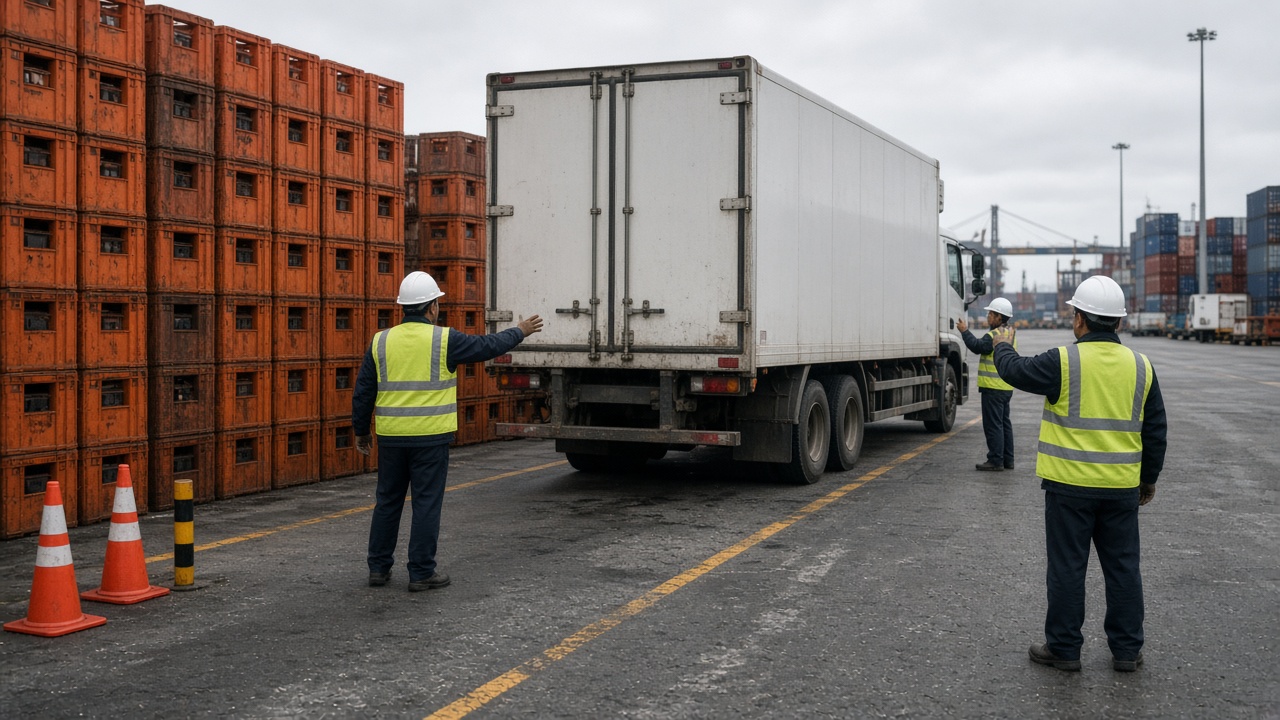
The Miaoli County Farmers' Association sent its first direct refrigerated container to Yokohama on Tuesday after securing Taichung port cold-chain berths, ending a season in which Kinmen ferry cargo holds had forced Japanese buyers to defer gift-box orders for late-harvest ponkan and murcott varieties.
What changed on the route
Association logistics staff said the 40-foot reefer left Taichung's export yard at 4:30 a.m. with pulp temperature loggers set to 4 degrees Celsius, matching Japan's phytosanitary inspection windows without an overnight stop at Kinmen. Last winter, repeated ferry cancellations tied to cross-strait cargo screening left pallets sitting on quays for up to 36 hours, bruising peel quality buyers in Tokyo and Osaka reject at auction.
Japanese trading house Marubeni confirmed receipt scheduling for Friday morning at Yokohama's fruit terminal, a slot the cooperative could not book when transshipment added a full day to transit. Miaoli growers pooled 18 tonnes from Tongluo and Dahu townships; the association charges a handling fee that covers pre-cooling at its Sanyi packing house rather than passing demurrage risk to individual farmers.
Volume and pricing
Direct sailings trim freight quotes by roughly NT$1.2 per kilogram compared with the Kinmen relay the association used in 2025, according to internal worksheets shared with county economic officials. That margin matters because Japan's retail chains tightened size grading after a warm autumn shortened murcott diameter; exporters who miss the Obon-adjacent promotion window often sell surplus into domestic hypermarkets at half the export price.
County agriculture bureau staff said they will track whether two additional reefers can depart before Lunar New Year pre-orders close. Cold storage at Taichung remains tight when banana and pineapple exporters peak in December, so the cooperative reserved priority slots with a forwarder's annual contract rather than spot booking.
Quality controls
Packers run hydrocooling lines upgraded with county subsidies after typhoon damage dented 2024 yields. Each carton carries QR trace codes linking to orchard block IDs—a requirement Marubeni inserted after food-safety audits. Inspectors from the Agriculture and Food Agency sampled three pallets before seal; no pesticide residue flags appeared in Tuesday's rapid tests.
Smaller growers who cannot fill half-container minimums still sell through the association's groupage program, but Tuesday's shipment was the first time groupage skipped Kinmen entirely. Distributors in Hokkaido and Sendai watching the trial said they will expand orders only if arrival Brix readings match samples shipped by air last month.
Cross-strait logistics backdrop
Taipei officials told lawmakers in October that Kinmen ferry cancellations rose when cargo holds intensified, a separate politics story that nonetheless hit citrus exporters relying on cheap feeder legs. Miaoli magistrate Lin's office framed Tuesday's sailing as a trade workaround, not a diplomatic statement, but county press releases noted that direct Taichung sailings reduce exposure to strait weather closures.
Mainland competitors shipping via Shanghai cold chain still undercut Taiwan on freight when yuan rates swing; Miaoli's pitch is consistent sugar-acid profile and shorter sailing time to Japan's east coast. If Taichung berths stay available, the association plans a second cultivar mix—late ponkan and early tangerine—in mid-December.
What growers watch next
Rain in the next two weeks could delay picking; association field staff already shortened stem clips to reduce puncture scarring. For investors, the listed cold-chain logistics names benefit only indirectly through forwarder volumes, but the cooperative's shift signals how peripheral counties adapt when ferry links wobble. Success will be measured in auction prices at Yokohama, not press releases at Taichung port.