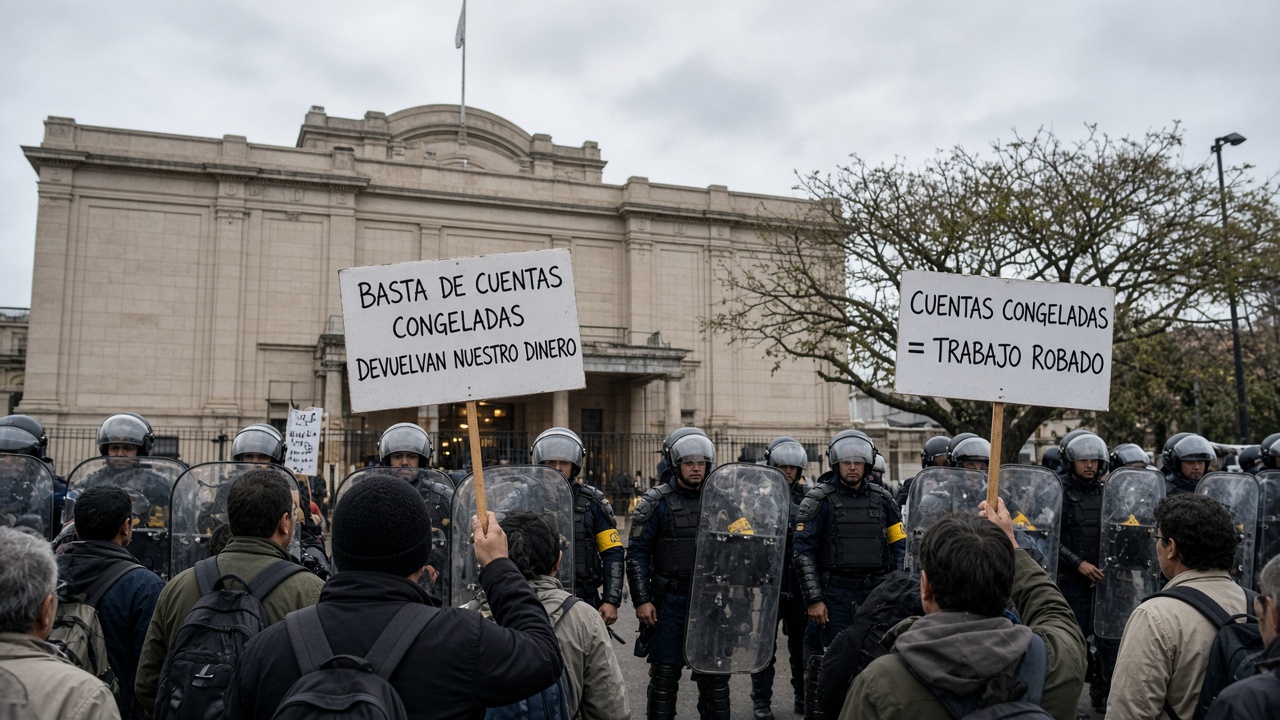
Paraguay’s Congress convened an extraordinary session on Thursday to debate impeaching President Santiago Peña, two days after regulators seized digital lender Ueno Bank and left millions of depositors unable to reach their savings. The political shock has moved faster than the banking cleanup: by midmorning in Asunción, party bosses who had backed Peña were signaling they would join opposition lawmakers in opening a removal process tied to the lender’s collapse.
What triggered the session
The Central Bank took control of Ueno on Monday, citing a capital shortfall severe enough to threaten depositor payouts and broader financial stability. Services at the bank—which reported more than three million customers, a figure close to half the country’s population—were suspended while authorities work out how to return funds. Pensioners, public contractors and ordinary savers formed long lines outside branches on Tuesday and Wednesday, and evening protests in the capital brought clashes with riot police.
Thirty-five members of the 80-seat Chamber of Deputies filed impeachment articles on Wednesday, accusing Peña of conflicts of interest, misuse of pension resources and institutional cover-ups connected to Ueno’s failure. Peña held shares in the corporate group that controlled the bank until he sold them last year; critics argue his government still steered regulatory and public-money decisions that benefited the lender before its solvency unraveled. The presidency had not issued a detailed public response to the impeachment push as the session began, according to wire reports.
Vote math and party fracture
Removing a president requires a supermajority in the lower house before the case moves to the Senate, where a separate two-thirds vote would be needed to convict. Opposition lawmakers said Thursday’s session would determine whether the chamber formally advances the charges. Chamber President Raúl Latorre scheduled back-to-back extraordinary meetings to consider Peña and, separately, Vice President Pedro Alliana, though ruling-party leaders indicated they would support impeachment proceedings against the president but not against Alliana.
The decisive shift came from within Peña’s Colorado Party. Reuters reported that Congress President Basilio Núñez and party leader Horacio Cartes withdrew support for the president early Thursday, leaving him isolated ahead of the roll call. A rebellion that began with a handful of dissident Colorado deputies widened into a broader party revolt after executives were detained and the central bank chief who had chaired Ueno resigned at Peña’s request.
What depositors face next
Authorities have issued arrest warrants for eight senior Ueno executives, including President Miguel Vázquez, who surrendered to police. Peña signed legislation meant to accelerate partial payouts from guarantee funds, with officials publicly promising that eligible savers could recover a portion of protected balances within days, though the timetable depends on how quickly liquidators verify claims. Until those transfers begin, the economic pain remains immediate: businesses that routed payroll through Ueno cannot pay workers, and households cannot access cash for daily expenses.
International lenders and Paraguay’s neighbors are watching whether Congress removes Peña or whether he survives a vote and tries to stabilize both politics and the banking system. Either outcome leaves the same underlying task—unwinding a bank that grew from a niche finance platform into a national payments backbone in less than five years. Thursday’s session will show whether lawmakers treat the crisis as a narrow banking failure or as a constitutional verdict on who allowed Ueno to take on public money without adequate capital buffers.