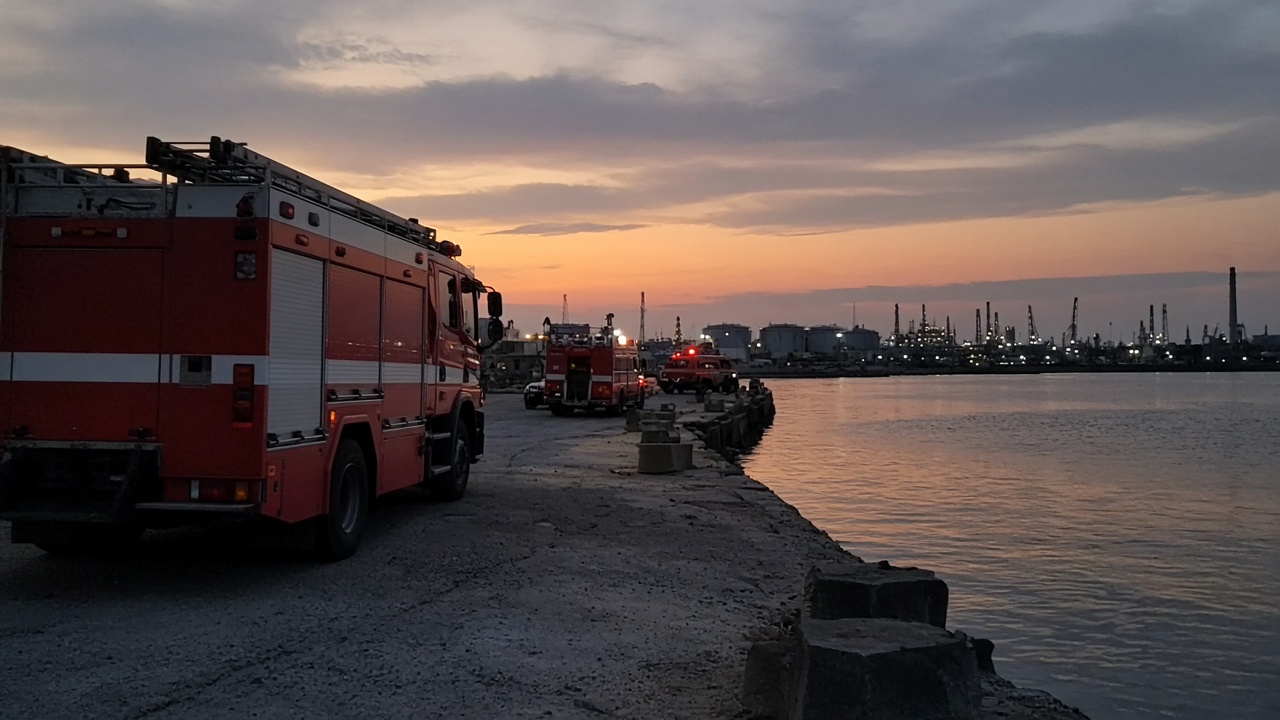
Saudi Arabia’s Civil Defence issued emergency “potential danger” alerts on Thursday for Yanbu, the kingdom’s main Red Sea oil-export hub, and for Sharurah near the Yemeni border, then declared both areas safe again without explaining what had triggered the warnings. The flurry of cellphone alerts landed as Yemen’s Houthis kept up missile and drone pressure on Saudi territory, widening the economic spillover from the U.S.–Israel war on Iran beyond the blocked Strait of Hormuz.
What residents were told
Messages sent through the National Early Warning Platform urged people in Yanbu governorate to move indoors, stay away from windows and avoid filming. Motorists were told to pull over away from bridges and high-rise buildings. Similar instructions went to Sharurah in Najran region. Within minutes, Civil Defence posts on X said the danger had passed in both places while asking the public to keep following official guidance.
The agency did not describe the nature of the threat. That opacity is familiar in a kingdom that often treats security incidents as operational secrets, but it leaves traders and insurers guessing when Yanbu—the terminus of the East–West pipeline that lets Saudi crude bypass Hormuz—is involved.
Missile intercept near Medina
Almost simultaneously, the Saudi-led coalition said air defences destroyed a ballistic missile the Houthis fired toward the Medina region. Coalition spokesman Turki al-Malki announced the intercept on X; it was not clear whether the launch was linked to the Yanbu alert. The Houthis had not claimed a fresh attack on Saudi soil by Thursday afternoon, though they said on Wednesday they had struck Riyadh’s King Khalid International Airport during a visit by Syria’s president—an assertion Saudi authorities have not confirmed.
Analysts have noted that Yanbu and the pipeline network have carried more export volume since Hormuz traffic thinned, making any warning there a market signal even when details stay classified.
Second front in a wider war
Reuters and regional outlets framed Thursday’s alerts as part of a renewed Houthi campaign that intensified in October, with projectiles reportedly aimed at airports, energy sites and military installations. The Saudi-led coalition has fought the group since 2015, but the current cycle coincides with Tehran-aligned forces opening additional axes as the Iran conflict drags on.
Riyadh has been seeking defensive help from Washington and European capitals while keeping its own export architecture functioning. Crown Prince Mohammed bin Salman hosted Syria’s Ahmed al-Sharaa this week for a defence agreement whose details remain undisclosed, part of a broader effort to shore up regional partners as Houthi claims against airports and ports stack up.
For now, the Civil Defence cycle—warn, stand down, warn again—shows how physical security and oil logistics remain tightly coupled on the Red Sea coast even when no strike is publicly confirmed. Shipping insurers will read Thursday’s Yanbu ping as one more reason to price Red Sea voyages separately from pre-war norms.